
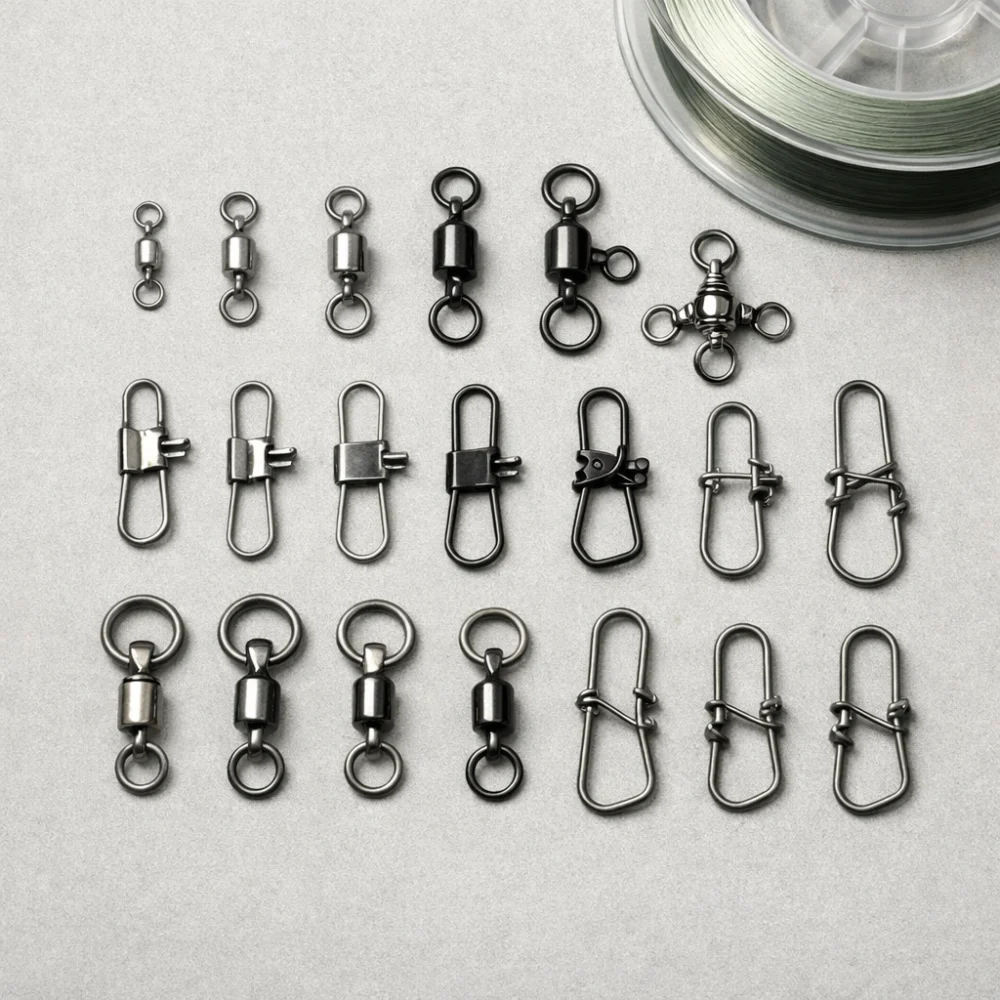
Fishing swivels and snaps are small terminal tackle items that help connect, change or manage components on a rig. They are often chosen for convenience, reduced line twist or quicker lure and leader changes, but the right choice depends on how you fish and how much strength, freedom of movement or ease of swapping you need.
Because they are small pieces of tackle, it is easy to overfocus on one detail and overlook the rest of the setup. This guide helps you compare the practical differences so you can choose a swivel or snap that suits your line, rig and fishing style.
What should you look for first?
Start with how the swivel or snap will be used. If you want to reduce twist, a swivel design is the main point; if you want quick lure or leader changes, a snap or snap swivel may be more convenient. After that, check the connection style, the stated size or strength, and whether the shape suits the way you fish. Specifications vary by model, so always check the individual product page before buying.
| Feature | What it means | Why it matters | What to check |
|---|---|---|---|
| Swivel type | The way the swivel rotates and connects to the rest of the rig | Different designs suit different levels of line twist control and movement | Whether you need a basic swivel, rolling swivel or a swivel with added freedom of movement |
| Snap style | How the clip or fastener opens and closes around a lure or trace | Affects how quickly you can change tackle and how secure the connection feels | The closure design and whether it is intended for easy changes or a more fixed setup |
| Size and strength | The stated size, load rating or suitability for different line classes | Too small may be unsuitable for your setup; too large can be more noticeable in the rig | The individual product details and how they match your line and target use |
| Material and finish | The material used and any coating or colour treatment | Can influence durability and suitability for different water conditions | Whether the product page mentions corrosion resistance or a finish you prefer |
| Connection format | How the swivel or snap joins to line, leader or trace | Impacts tying, rig building and ease of use | Whether it matches your knot choice and the rest of your terminal tackle |
Key decision criteria
Rotation and line twist control
The main reason many anglers use a swivel is to help manage twist in the line or rig. A more freely moving design may suit tactics where twisting is common, while a simpler swivel may be enough for lighter or less demanding setups. The trade-off is usually between smoother movement and the level of bulk or complexity you want in the rig.
Quick-change convenience
Snaps and snap swivels are useful when you want to change lures, traces or attachments without retying every time. That can save time on the bank, but the convenience should not be the only factor. Check that the closure style feels appropriate for your intended use and that you are comfortable with the level of security it provides for your setup.
Strength and rig balance
It is sensible to match the swivel or snap to the rest of the terminal tackle rather than treating it as an isolated part. A component that is too light may not suit the rest of the rig, while an unnecessarily heavy one may be more than you need. Focus on the stated product details and how they fit your line, hooklength or lure choice.
Size and visibility
Smaller tackle can be less obtrusive, but very small parts are not always the right answer if they are awkward to handle or not suited to the task. Larger components may be easier to use, but they can also add more bulk. The practical balance depends on your fishing style, the fish you are targeting and how much you want the terminal tackle to stand out.
Common types and variants
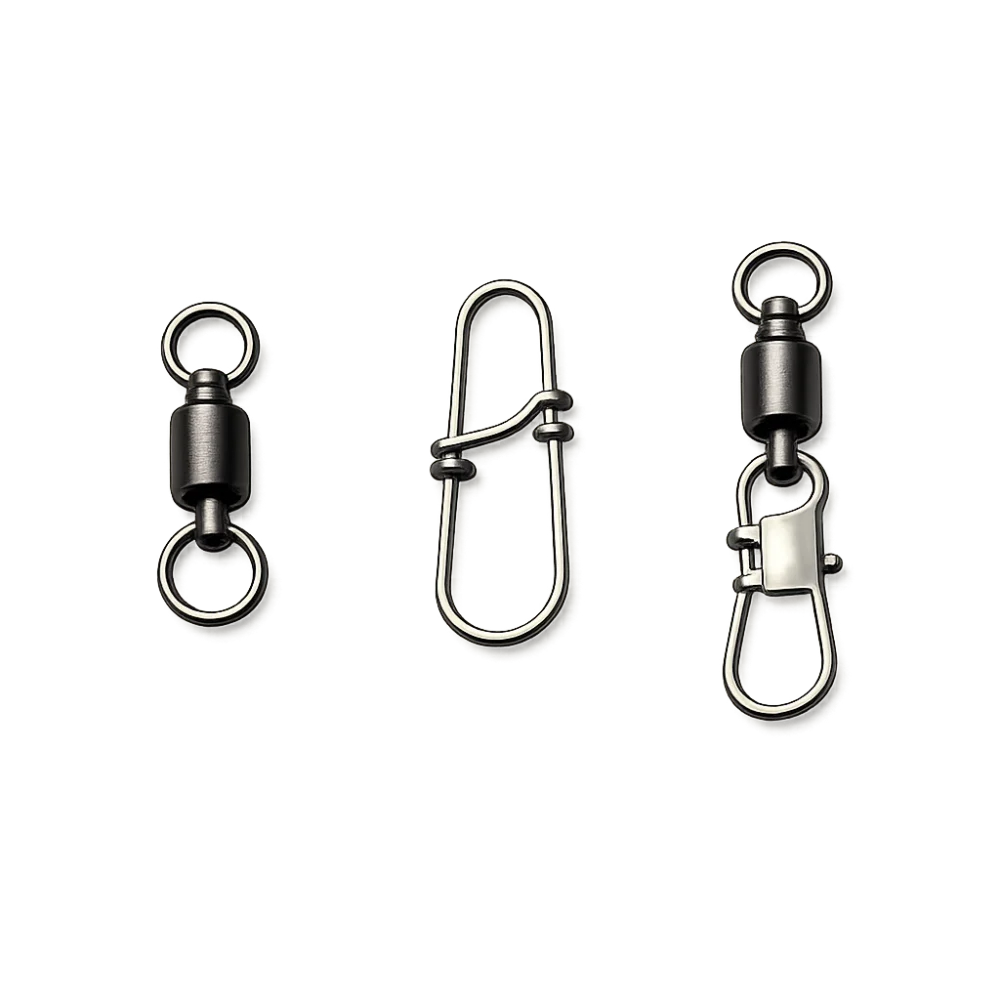
Within this category, the main variations are usually about function rather than dramatic design changes. Some are aimed at general rig building, some are better suited to lure changes and some place more emphasis on smooth rotation. Snap swivels combine two jobs in one part, while separate swivels and snaps let you build the rig more deliberately.
If you only need a simple connection, a basic swivel may be the least complicated choice. If you regularly change lures or traces, a snap or snap swivel may be more practical. If your priority is reducing twist in more active use, look for a swivel style that matches that need rather than choosing on appearance alone.
Which option suits different buyers?
| Buyer need | Likely priority | What to favour | What to avoid |
|---|---|---|---|
| Beginner setting up basic terminal tackle | Simplicity and ease of use | Clear connection style and straightforward sizing information | Overly specialised parts that are harder to match with the rest of the rig |
| Lure angler changing setups often | Speed and convenience | Snap or snap swivel designs suited to frequent changes | Parts that seem convenient but are awkward to open, close or handle |
| Angler concerned about line twist | Rotation and rig behaviour | Swivel designs intended to help the line move more freely | Choosing only by size without considering how the swivel will function |
| Rigger matching different terminal tackle parts | Consistency and fit | Components that suit the rest of the rig in size and use | Mixing parts that are poorly matched in purpose or scale |
Common mistakes and misunderstandings
- Choosing by strength alone: a higher stated figure does not automatically mean the part is the right fit. The design and intended use matter as well.
- Buying a snap when a swivel is needed: a snap helps with changes, but it does not replace the function of a swivel if line twist is the main issue.
- Ignoring the rest of the rig: the right part should fit the whole setup, not just one component in isolation.
- Overlooking handling: a small or fiddly fastener may be frustrating if you change tackle often or fish in poor light.
Suitability and care considerations
Fishing swivels and snaps are small parts, so suitability depends on matching the product to the task and checking the individual product information. If you fish in saltwater, pay attention to any material or finish details the product page provides, as different models may be intended for different conditions. Keep in mind that these items are only one part of the terminal tackle system and should be chosen with the whole rig in mind.
Maintenance and storage
These components usually need little day-to-day care, but keeping them clean and dry after use can help them stay in better condition. Store them so they do not tangle with other terminal tackle or rub against sharp edges. If you buy in bulk, a simple organised container can make it easier to find the right size when rigging.
How to compare options efficiently
- Decide whether you mainly need rotation control, quick changes, or both.
- Check the connection style and whether it suits your rig-building habits.
- Compare size, strength and general suitability against your line and target use.
- Consider whether a separate swivel and snap, or a combined snap swivel, is more practical.
- Read the individual product page carefully before buying.
Summary buyer decision checklist
- Does the part match the main job you need it to do?
- Will it suit the rest of your rig and terminal tackle?
- Is the size or stated strength appropriate for your setup?
- Do you need a simple swivel, a snap, or a combined design?
- Have you checked the individual product page for the exact details?
Frequently asked questions
What is the difference between a swivel and a snap?
A swivel is mainly used to help rotation and reduce line twist, while a snap is mainly used to make changing tackle quicker. Some products combine both functions, which can be convenient if you want one part to do two jobs. The right choice depends on whether your priority is movement control or fast changes.
Are snap swivels always the best choice?
Not always. They are useful when convenience matters, but a separate swivel or snap may be a better fit if you want more control over how the rig is put together. Choose based on the job, not just because one item combines functions.
How do I know what size to choose?
Use the product page details and match the component to your line, rig and intended use. Smaller parts may be less noticeable, but they are not suitable for every setup. The practical question is whether the item fits comfortably into the rest of the terminal tackle rather than looking at size in isolation.
Do I need different swivels for different fishing styles?
Sometimes, yes. A setup for quick lure changes may benefit from a different connection style than a rig focused on line twist management. If you fish in more than one way, it can be sensible to keep a few different styles on hand.
Can I use the same snap or swivel for every rig?
It is better to choose according to the rig and the conditions than to assume one part suits everything. Different styles offer different levels of convenience, movement and visibility. Matching the component to the task usually gives a more practical result.
What should I check on the product page before buying?
Check the stated size or strength, the connection style, and any details that suggest how the part is intended to be used. Also consider whether it suits your line and the rest of your setup. If the product information is limited, it is wise to stay conservative and choose something clearly suitable.

