
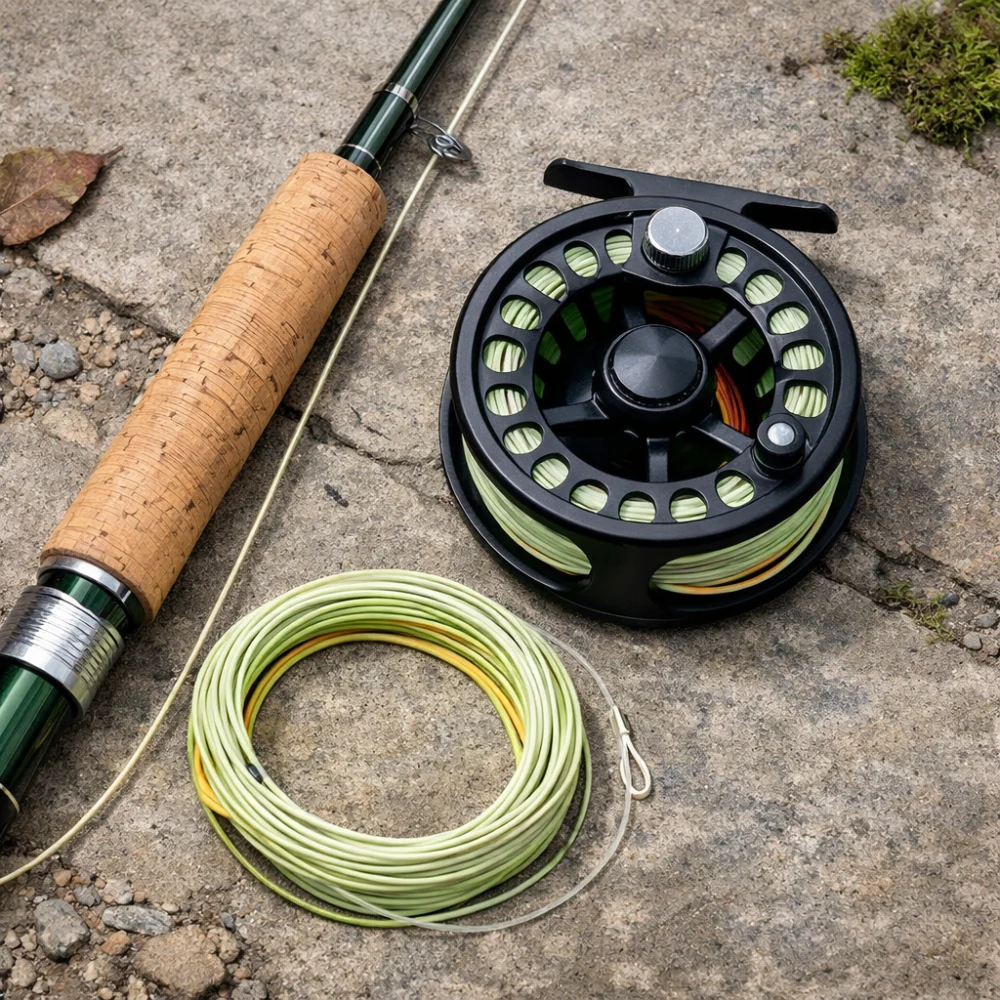
Fly fishing reels can look similar at first glance, but the right choice depends on how you fish, what rod and line weight you use, and how much importance you place on balance, smoothness and ease of use. Some buyers want a simple reel that gets the job done, while others are looking for finer control, quicker line pickup or a different feel in the hand.
This guide focuses on the decisions that matter most when comparing fly reels at category level. It is designed to help you narrow the options without getting lost in model names or assumptions about performance.
What should you look for in a fly fishing reel?
The best starting point is whether the reel suits your rod, line weight and usual fishing conditions. After that, compare the drag system, reel size, spool style and overall build quality. A good match should feel balanced on your rod and be easy to manage when you are changing line or dealing with a fish. Specifications vary by model, so always check the individual product page before buying.
| Feature | What it means | Why it matters | What to check |
|---|---|---|---|
| Line weight match | The reel is intended to work with a particular fly line weight range. | It affects balance, capacity and how well the outfit feels in use. | Check the stated line weight range and match it to your rod and line choice. |
| Drag system | The mechanism that adds resistance when line is being taken. | It influences control and how smoothly pressure can be applied. | Look for the drag type described on the product page and consider how much adjustment you want. |
| Reel size | The physical size and capacity of the reel. | It affects rod balance, handling and whether the reel suits lighter or heavier setups. | Check the recommended rod or line class and the overall dimensions if provided. |
| Spool style | The design of the spool and how line sits on it. | It can affect line management, retrieval and how easy it is to change line. | See whether the product is described as standard or large arbor, if that matters for your use. |
| Construction | The materials and build approach used for the reel body and spool. | It affects weight, feel and how robust the reel may seem in regular use. | Check the material description and whether the finish is suited to your environment. |
Key decision criteria
Rod and line compatibility
Compatibility is the first filter because a reel that feels wrong on the rod can make the whole outfit awkward. Many fly reels are chosen around a line weight range, so it is worth checking that the reel is intended for the same general setup you already use or plan to use. If you are buying for an existing rod, use that rod’s line rating as your anchor point rather than guessing from appearance.
Drag and control
The drag system matters if you want more control over how line comes off the reel during a fight. Some buyers prefer a straightforward setup with simpler adjustment, while others want a system that feels more refined. The important thing is not to assume that a more complex-looking drag is automatically better for every angler; choose the level of control you will actually use.
Balance and feel
A reel can be technically suitable but still feel wrong if it upsets the balance of the rod. That matters most if you fish for longer periods or prefer a lighter setup in hand. Balance is hard to judge from photos alone, so check the reel size and the line weight range it is designed for, then think about the rod it will sit on.
Ease of use
Some reels are intended to be simple and easy to live with, while others are aimed at anglers who want finer adjustment or a more specific set-up. If you fish occasionally, straightforward handling may be more useful than extra refinement. If you change line or spool arrangements more often, check how the reel is described and whether the page explains the setup clearly.
Types and variants you may see
Fly fishing reels usually differ more in size, construction and spool style than in very different operating principles. The main practical choices are often between lighter and heavier reels, simpler and more adjustable drag systems, and standard or large arbor designs.
- Lighter reels may suit smaller rods and more delicate setups, but they are not the right answer for every fishing situation.
- Heavier reels can suit more demanding setups, though they may feel excessive on a lighter rod.
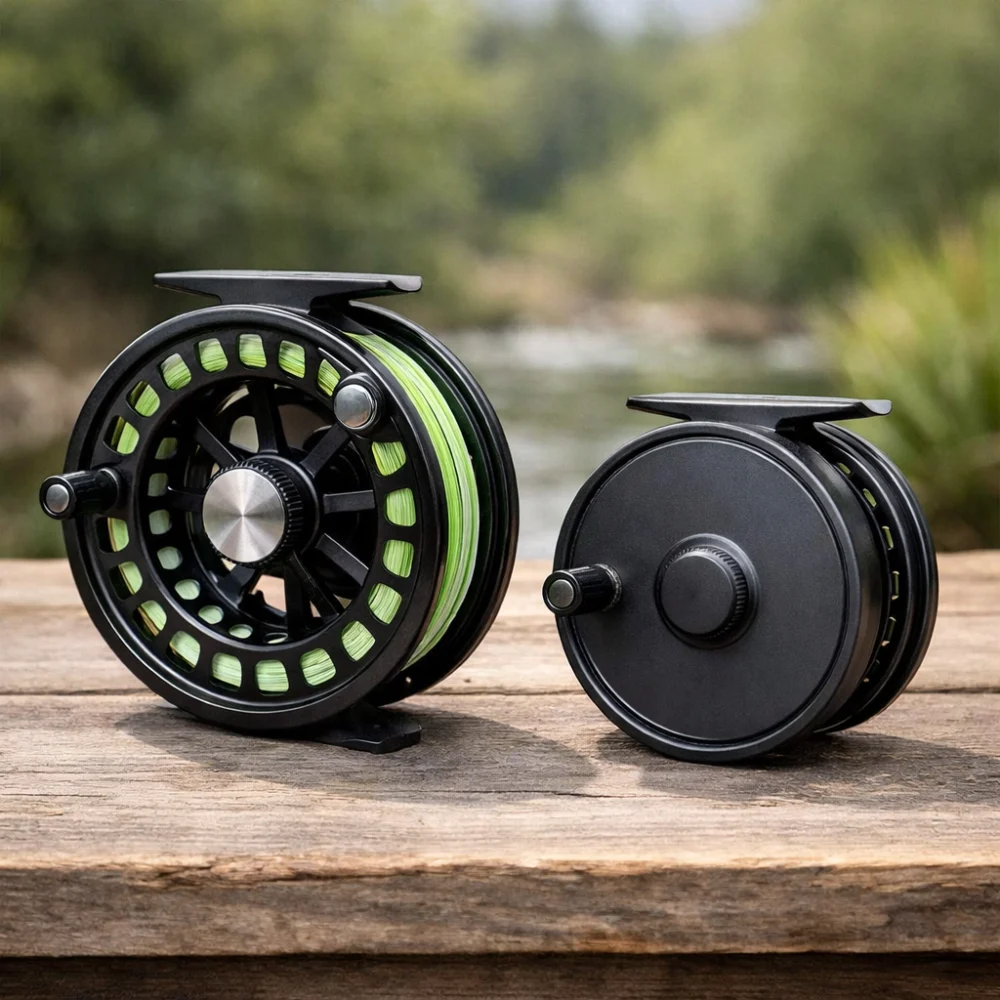
- Large arbor designs are often chosen when quicker line pickup or a different retrieve feel is preferred.
- Pre-loaded reels can appeal to buyers who want a more convenient starting point, but the supplied line may not suit every angler.
Which reel suits which buyer?
| Buyer need | What to prioritise | Why |
|---|---|---|
| First-time fly angler | Clear line weight match, simple setup, easy handling | That reduces guesswork and makes the reel easier to pair with the rest of the outfit. |
| Existing rod owner | Compatibility with current rod and line rating | The reel needs to suit what you already own rather than forcing a rebuild of the whole setup. |
| Frequent angler | Comfort, balance and a drag system you are happy to use repeatedly | Small differences matter more when you spend longer with the reel in hand. |
| Convenience-focused buyer | Clear product information and any pre-loaded or ready-to-fish description | That can reduce the number of separate choices you need to make. |
Common mistakes to avoid
- Choosing by appearance alone. A reel can look suitable and still be a poor match for your rod or line weight.
- Ignoring balance. If the reel is too small or too heavy for the rod, the outfit may feel awkward in use.
- Assuming every drag system is the same. The amount of control and adjustability can vary, so read the product description carefully.
- Overlooking the supplied line or ready-to-fish details. These can be helpful, but only if they match your own plan for the setup.
Suitability, care and ownership considerations
Fly reels are generally a straightforward purchase, but it still helps to think about where and how you fish. If you are buying for mixed conditions, check whether the materials and finish are described in a way that suits your expected use. For any model, keep in mind that line, backing and regular rinsing or cleaning needs may differ from reel to reel.
Storage and maintenance are usually simple, but they still affect long-term satisfaction. A reel that is easy to dry, store and keep organised may be more convenient than one that needs more attention after every outing.
How to compare options efficiently
- Start with the rod and line weight you intend to use.
- Check whether the reel is described for a similar line class or setup.
- Compare drag, size and spool style against how you fish.
- Decide whether you want simplicity or a more adjustable feel.
- Read the individual product page for any model-specific details before choosing.
Fly fishing reel buying checklist
- Does the reel suit your rod and line weight?
- Is the drag system simple enough or adjustable enough for your needs?
- Will the reel feel balanced on your rod?
- Is the reel size appropriate for the way you fish?
- Do the product details clearly explain what is included?
- Have you checked the individual product page for model-specific information?
Frequently asked questions
What is the main job of a fly fishing reel?
The reel holds fly line and backing and helps you manage line while fishing. In many setups, it is also part of the overall balance of the rod. For that reason, it should be chosen as part of the full outfit rather than as a separate accessory.
Do I need a large arbor reel?
Not necessarily. A large arbor design may suit anglers who want quicker line pickup or a different feel, but it is not automatically the right answer for everyone. The better question is whether that design matches how you like to fish.
Should I buy a pre-loaded reel?
A pre-loaded reel can be convenient if you want to reduce setup steps or start fishing more quickly. The trade-off is that the supplied line may not be the line you would have chosen yourself. Check what is included before deciding.
How important is drag on a fly reel?
It depends on the type of fishing you do and how much control you want. Some anglers value a simple setup, while others prefer more adjustment. Read the description carefully so you understand how the drag is meant to work.
Can I use the same reel on different rods?
Sometimes, but only if the reel suits the rod and line weight range you are using. A reel that works well on one outfit may feel unbalanced or impractical on another. Always check the intended line class before moving it between rods.
What should I check if I am buying a reel as a gift?
Try to confirm the recipient’s rod type, line weight and whether they prefer a simple or more adjustable reel. If you are unsure, a clearly described reel with easy-to-understand compatibility information is usually safer than relying on appearance alone.

