
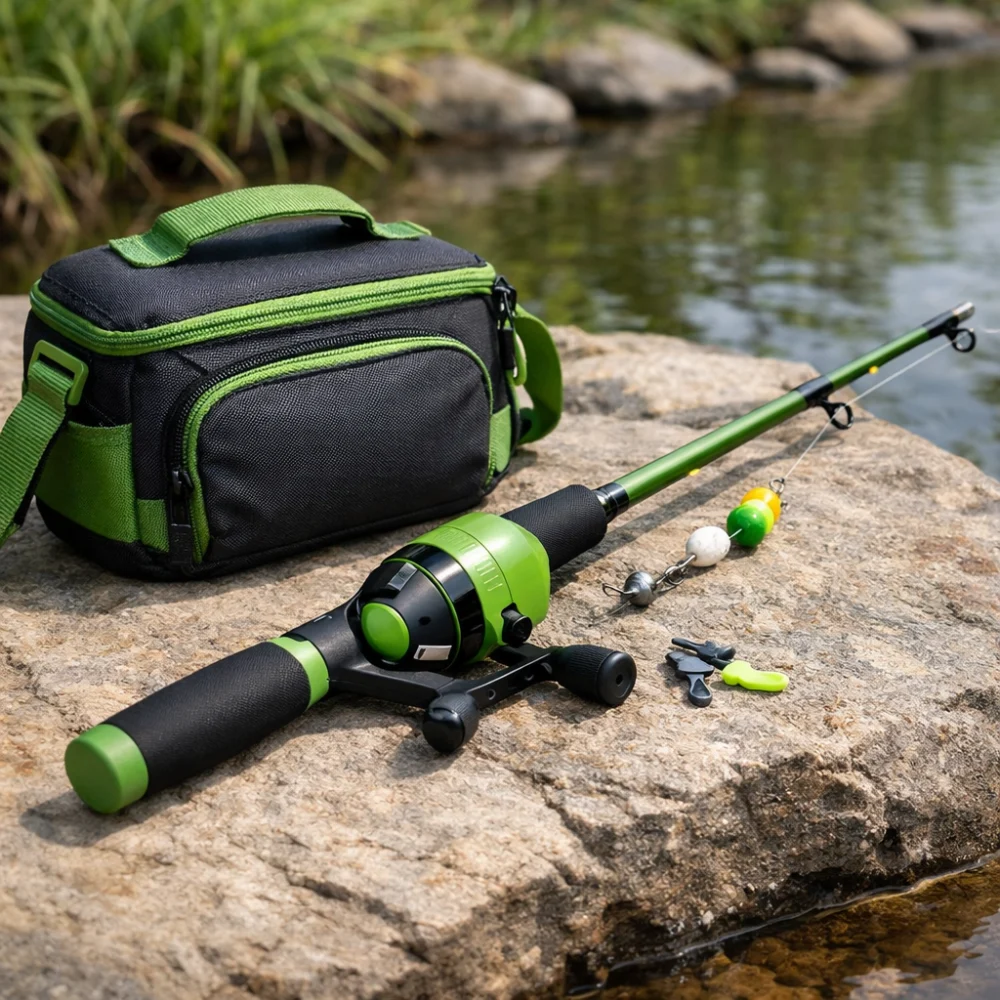
Kids fishing rods are designed to make fishing easier to approach for younger anglers, whether you are buying for a first trip, a family day out or a gift. The main choice is not simply length or colour; it is how well the rod suits the child’s size, the type of fishing they will actually do and how much help they will need using it.
A good starting point is to think about control, comfort and simplicity rather than chasing advanced features. Some setups are aimed at very young beginners and are kept straightforward, while others are closer to small versions of adult rods and may suit children who are already comfortable around the water.
This guide helps you compare the main buying factors so you can choose a rod that feels manageable, practical and appropriate for the intended use.
What should you look for in a kids fishing rod?
The best starting point is a rod that a child can hold, lift and use without unnecessary strain. After that, look at the overall setup: some options are simple starter rods, while others come as rod and reel combos or compact telescopic designs that are easier to carry. Specifications vary by model, so always check the individual product page before buying.
| Feature | What It Means | Why It Matters | What To Check |
|---|---|---|---|
| Length | The overall size of the rod. | Affects how easy it is for a child to handle and transport. | Whether the rod looks manageable for the child’s height, reach and confidence. |
| Rod type | Simple rod, combo set or telescopic style. | Changes convenience, learning curve and storage. | Whether the child needs a very simple setup or something with a reel included. |
| Weight and balance | How heavy the rod feels and where the weight sits. | A lighter, better-balanced rod is usually easier for beginners to use comfortably. | Any product description that suggests a compact or lightweight design. |
| Grip and handle size | The shape and thickness of the handle area. | Affects how securely a child can hold the rod. | Whether the handle looks easy for smaller hands to control. |
| Storage and portability | How easy the rod is to pack away and carry. | Useful for family trips, short sessions and keeping gear tidy. | Whether it is telescopic, short, or sold as a ready-to-carry set. |
Key decision criteria explained
Size and handling
A child’s rod should be easy to hold for more than a few minutes at a time. A rod that is too long or awkward can make casting, reeling and even walking to the bank feel tiring. If the child is very young or new to fishing, a shorter and simpler setup is often easier to manage.
Rod and reel arrangement
Some kids fishing rods are sold as simple poles, while others are combos with a reel already matched to the rod. A combo can reduce guesswork, especially for a first purchase, but it is still worth checking how the setup is intended to be used. If the goal is easy learning, a ready-to-use package may be more convenient than buying the pieces separately.
Portability
Families often want gear that is easy to pack for day trips, holidays or occasional sessions. Telescopic or compact designs can be attractive for that reason, but portability should not come at the expense of comfort in the child’s hands. Think about where the rod will be stored, carried and used most often.
Age and confidence level
The right rod is often the one that matches the child’s current skill, not the one they might grow into later. Beginners usually benefit from straightforward handling and less clutter in the setup. More confident young anglers may be ready for a rod that feels closer to a standard fishing setup, provided it still suits their size.
Common kids fishing rod variants
Simple starter rods
These suit first-time use where the aim is to make the experience easy and low-fuss. They can be a good match for younger children, but they may offer fewer convenience features.
Rod and reel combos
These are useful when you want a more complete setup without having to match parts separately. They often appeal to gift buyers and parents who want an easier buying decision, though the overall suitability still depends on size and handling.
Telescopic rods
These collapse down for easier carrying and storage, which can be helpful for family outings. The trade-off is that the user should be comfortable extending and packing the rod away correctly.
Which type suits which buyer?
| Buyer need | What tends to matter most | Practical buying approach |
|---|---|---|
| First-time young angler | Simplicity, easy handling and confidence | Look for a straightforward setup that is not overly long or complicated. |
| Family day trips | Portability and easy storage | Consider compact or telescopic options that are simple to carry. |
| Gift buying | Ease of use and all-in-one convenience | A combo set can be easier than choosing separate parts, provided it suits the child. |
| Child with some experience | Better control and a more familiar feel | Check whether the rod feels closer to a standard fishing setup while still being child-friendly. |
Common mistakes to avoid
- Choosing on appearance alone. A bright design may be appealing, but comfort and manageability matter more.
- Picking a rod that is too large. A bigger rod is not automatically better and may be harder for a child to control.
- Assuming every combo is the same. Check whether the setup is intended for beginners and whether it feels practical for the child’s age and size.
- Ignoring storage needs. If the rod will travel in a car or be kept at home between trips, portability can make a real difference.
Safety and suitability considerations
Choose a rod that matches the child’s supervision level, experience and the place where it will be used. It is sensible to check whether the setup is comfortable for the intended user before relying on it for a trip. The main buying question is suitability: if the rod is awkward to hold or too complex to use, it may not be the right option even if it looks suitable on paper.
Maintenance, storage and lifespan
Fishing gear usually lasts longer when it is rinsed or wiped down after use and stored dry. If the rod is telescopic or includes a reel, it is worth checking how it folds, locks and packs away so it stays tidy between outings. A child’s first rod may also need to be easy to carry and store, because gear that is simple to look after is often used more often.
How to compare kids fishing rods efficiently
- Decide who the rod is for and how much help they will need.
- Choose the broad style: simple rod, combo or compact/telescopic setup.
- Compare the key handling points: size, weight, grip and portability.
- Check what is included so you know whether it is a complete setup or just part of one.
- Read the individual product page carefully before buying.
Quick buyer checklist
- Does the rod suit the child’s size and confidence level?
- Is the setup simple enough for first-time use?
- Will it be easy to carry, store and take on trips?
- Does it come as a complete setup if that is what you want?
- Have you checked the individual product page for model-specific details?
Frequently asked questions
What size kids fishing rod should I choose?
Choose a size that the child can hold comfortably and manage without strain. Shorter, simpler rods are often easier for younger or less experienced children, while older or more confident users may cope better with a larger setup.
Is a rod and reel combo better for beginners?
It can be, because it removes some of the guesswork of matching parts. That said, the setup still needs to suit the child’s size and the kind of fishing they will actually do.
Are telescopic kids fishing rods a good idea?
They can be useful when portability matters, especially for family trips and easy storage. The trade-off is that the child or adult helper needs to be comfortable extending and packing the rod away properly.
What is the most important thing to check before buying?
The most important check is whether the rod will be manageable for the intended child. Length, weight, balance and ease of use usually matter more than appearance or extra features.
Can one kids fishing rod suit every child?
Not really, because comfort and handling depend on age, size and experience. A rod that works well for one child may feel awkward or too large for another.
Should I buy a kids rod now or something they can grow into?
If the rod is for a first fishing experience, it is usually better to choose something manageable now. A child is more likely to enjoy using a rod that feels easy and confidence-building than one that is sized mainly for later use.

