
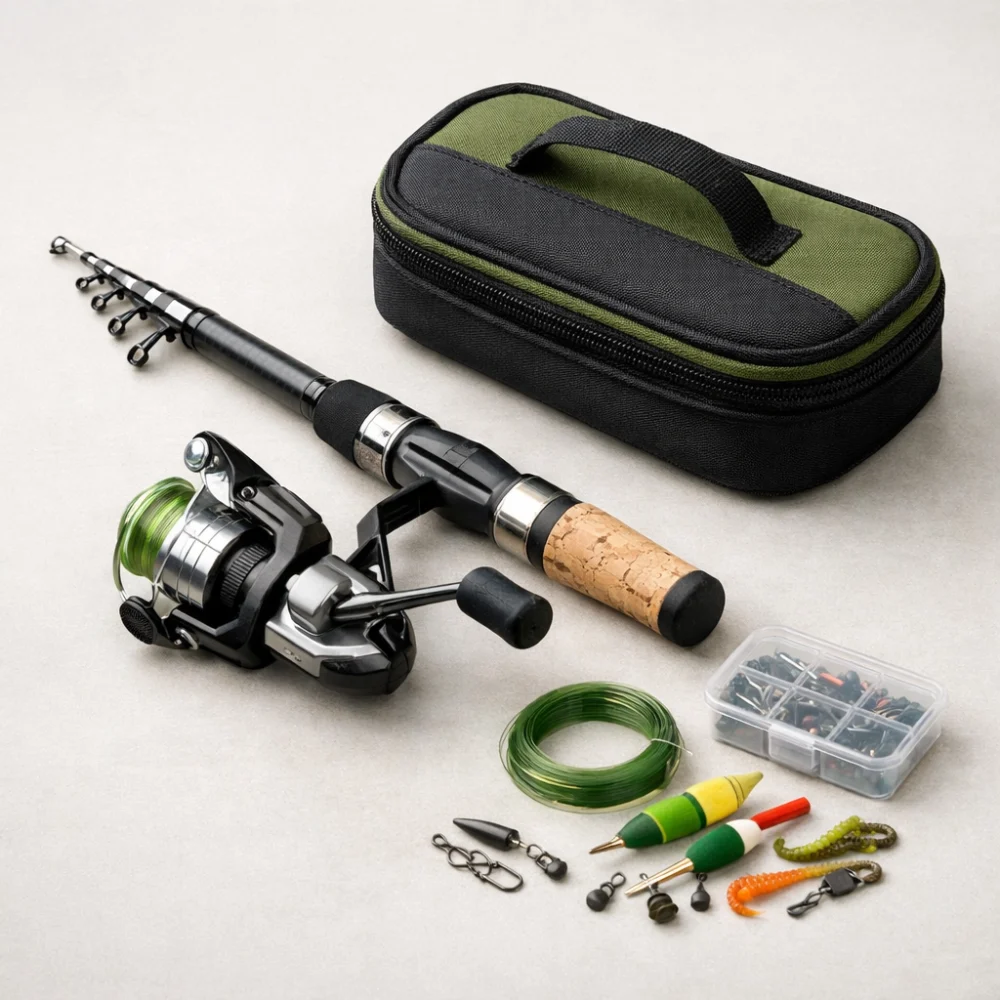
Travel rods are designed for anglers who need a rod that packs down neatly for journeys, short trips or limited storage space. They can be a sensible choice for holidays, public transport, walking to a swim or keeping a rod in the car for occasional use.
The main buying decision is usually a balance between portability and fishing feel. Shorter packed size can make a rod easier to carry, but the way it breaks down or folds may affect the action, convenience and the style of fishing it suits.
This guide focuses on the practical checks that matter before you choose a travel rod, so you can compare options without getting distracted by marketing terms.
What should you look for in a travel rod?
The best starting point is to think about how you will transport it and what kind of fishing you want to do. A compact rod is useful only if it still suits your usual waters, casting style and preferred tackle. Specifications vary by model, so always check the individual product page before buying.
| Feature | What it means | Why it matters | What to check |
|---|---|---|---|
| Packed length | How short the rod becomes when stored or carried | Usually the biggest factor for luggage, commuting and small storage spaces | Whether the packed size fits your bag, case or vehicle storage |
| Section design | How the rod breaks down for transport | Affects convenience, setup time and the way the rod feels in use | Whether it is multi-piece, telescopic or another travel-focused design |
| Rod action | How much and where the rod bends under load | Influences casting feel, bite detection and fish-playing control | Whether the action suits your preferred technique and target species |
| Rod power | The general strength or backbone of the rod | Helps match the rod to the tackle and fish you expect to handle | Whether the rod is intended for light, medium or heavier use |
| Handle and grip | The shape and material of the grip area | Can improve comfort, especially on longer sessions or when travelling light | Whether the handle feels comfortable and practical for your style of fishing |
| Reel compatibility | Whether the rod suits the reel type and size you plan to use | Important for balance, casting and overall ease of use | Any product guidance about reel seat size or intended reel style |
Key decision criteria explained
Packed size versus fishing performance
Travel rods exist to make carrying easier, but shorter packed size can come with compromises. A very compact rod may be ideal for a suitcase or day bag, while a slightly longer packed rod may feel closer to a conventional rod when fishing. Think about whether ease of transport is your top priority, or whether you want the rod to feel as close as possible to your usual setup.
Section style
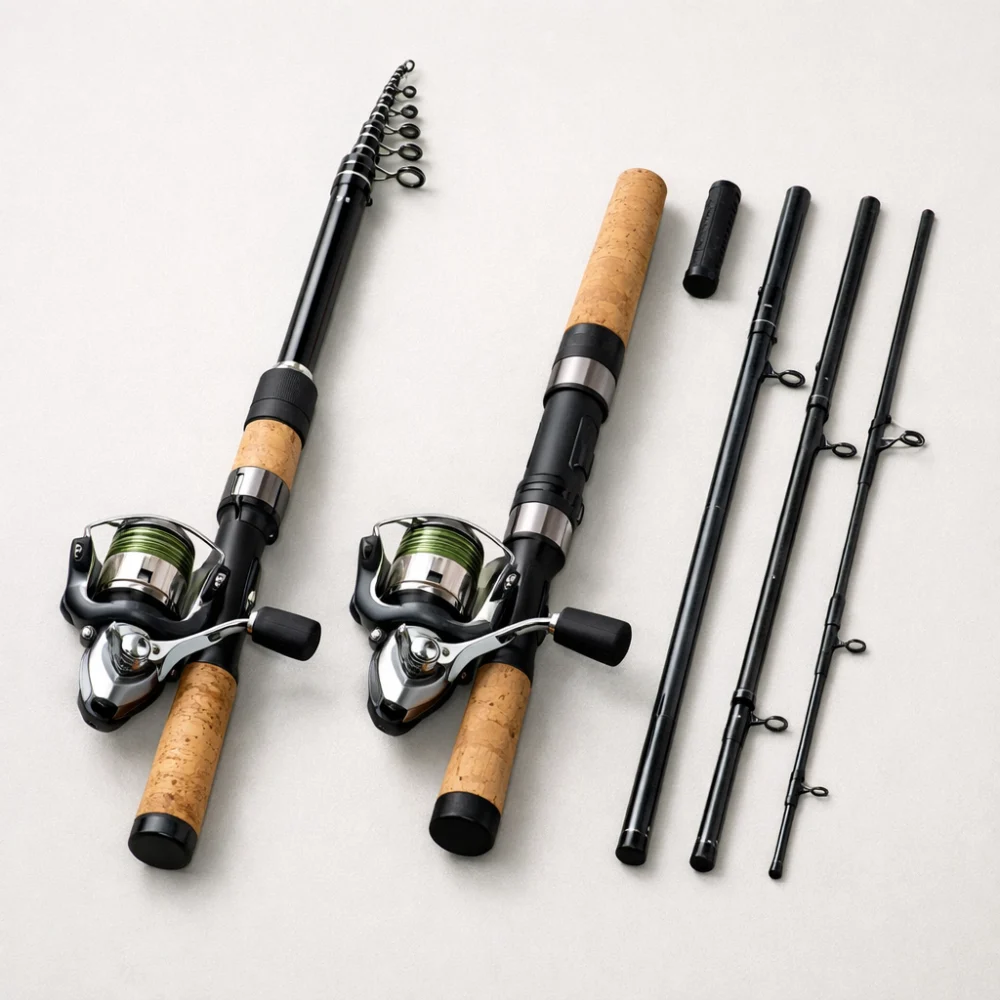
Many buyers compare multi-piece rods with telescopic designs. Multi-piece rods often break down into separate sections that can be convenient and relatively familiar to fish with, while telescopic rods collapse into a very short length for storage. The trade-off is usually between compactness, setup convenience and the way the rod feels in hand.
Length when assembled
The working length of the rod matters just as much as the packed length. A longer rod may cast and control line differently from a shorter one, even if both pack down neatly. Consider the waters you fish most often, because bankside space, casting room and the size of the fish you target can all affect which length feels more suitable.
Action and power
Action describes how the rod bends, while power gives a broader idea of strength. These features affect how responsive the rod feels, how it casts and how it handles pressure from fish. A travel rod used for lighter lure fishing may suit a different feel from one chosen for stronger species or heavier tackle.
Build quality and fittings
On a travel rod, the joints, guides, reel seat and handle all matter because the rod is designed to be assembled and packed away repeatedly. Buyers often focus on compactness and overlook the practical details that affect day-to-day use. Look for clear product information about the rod’s construction and intended use rather than relying on the travel label alone.
Common travel rod variants
Travel rods usually fall into a few broad styles, even though individual designs vary. Knowing the difference makes it easier to compare them.
- Multi-piece travel rods: These break into several sections and are often a good middle ground between portability and a familiar fishing feel.
- Telescopic rods: These collapse to a very compact size and can be convenient for spontaneous trips, but may feel different from a more traditional rod.
- Integrated rod and reel setups: Some travel-focused products combine the rod and reel for simplicity, which can suit casual use or a spare setup.
If you are unsure which style suits you, start with the way you travel rather than the look of the rod. A design that is easy to carry but awkward to use is unlikely to feel like good value.
Which travel rod suits which buyer?
| Buyer need | Features to prioritise | Main trade-off |
|---|---|---|
| Holiday or luggage use | Very compact packed size, secure storage, simple assembly | May sacrifice some casting feel or rod length |
| Car or boat backup rod | Ease of storage, quick access, all-round practicality | May not be the most specialised rod for one technique |
| Walking or commuting angler | Light carrying weight, manageable case size, fast setup | Compact designs can be less refined than standard rods |
| Beginner or occasional user | Straightforward design, clear intended use, easy handling | May not offer the most tuned performance |
| Experienced angler wanting a spare | Reliable build, sensible balance, compatible reel and tackle pairing | A very compact rod may still feel different from a main rod |
Common mistakes and misunderstandings
- Choosing only by packed length: Compactness is useful, but the rod still needs to suit your fishing style and target fish.
- Assuming all travel rods feel the same: A telescopic rod and a multi-piece rod can behave quite differently.
- Ignoring the assembled length: A rod can pack small yet still be too short or too long for your preferred fishing.
- Overlooking the reel and tackle match: The rod should be suitable for the setup you plan to use, not just easy to carry.
- Expecting one rod to do everything: Travel rods are usually a compromise, so it helps to decide which compromise matters least to you.
Safety and suitability caveats
Travel rods are generally chosen for convenience, but they still need to be used within their intended style and tackle range. Check that the rod suits the waters, species and casting demands you expect, and read the individual product information carefully. If you plan to travel by air or use the rod in shared luggage, it is sensible to check packing requirements before you buy.
Maintenance, storage and lifespan considerations
Because travel rods are packed and assembled more often than a one-piece rod, storage and care matter. Keep sections clean before packing them away, store the rod dry and avoid forcing joints together. A protective case or sleeve can also help with transport and reduce wear from repeated movement.
It is also worth thinking about the practical life of the rod in daily use. More frequent packing, carrying and assembly can make the quality of the fittings and joints especially important.
How to compare options efficiently
- Start with how you will carry the rod most often, such as in a bag, car, case or suitcase.
- Choose the section style that matches your priorities for compactness and ease of use.
- Check the assembled length, action and power against the kind of fishing you actually do.
- Look at the handle, reel fit and general build details so the rod feels practical, not just portable.
- Compare the product page information for each option before deciding.
Summary buyer decision checklist
- Does the packed size suit how you travel and store tackle?
- Is the rod style a good match for the way you like to fish?
- Does the assembled length fit your waters and fishing space?
- Are the action and power appropriate for your target species and tackle?
- Will the reel and setup you plan to use work comfortably with the rod?
- Is the rod easy to pack, carry and protect between trips?
Frequently asked questions
Are travel rods only for holidays?
No. They are useful anywhere compact storage or easy transport matters, including car boots, commuter bags and backup fishing kits. Many anglers choose them for convenience rather than for travel abroad specifically.
Is a telescopic rod better than a multi-piece travel rod?
Not necessarily. Telescopic rods are often more compact, while multi-piece rods may feel more like a conventional rod in use. The better choice depends on whether storage size or fishing feel matters more to you.
Can a travel rod replace a standard rod?
It can for some anglers, especially if portability is the main priority. However, many people still keep a standard rod for situations where they want a more specific action, length or handling feel.
What should I check if I am buying a travel rod as a spare?
Think about whether it will genuinely be practical to use in the situations you expect. A spare rod should still suit your reel, tackle and target fish, not just fit neatly in the car or cupboard.
Do shorter packed rods always mean lower quality?
No, but more compact designs can involve different construction choices and trade-offs. The important point is to check whether the design suits your intended use rather than assuming compactness alone is a drawback.
How important is the rod’s action on a travel model?
Very important, because action affects how the rod casts, responds and handles fish. A compact rod is still a fishing rod first, so the feel of the blank should be part of the decision.

