
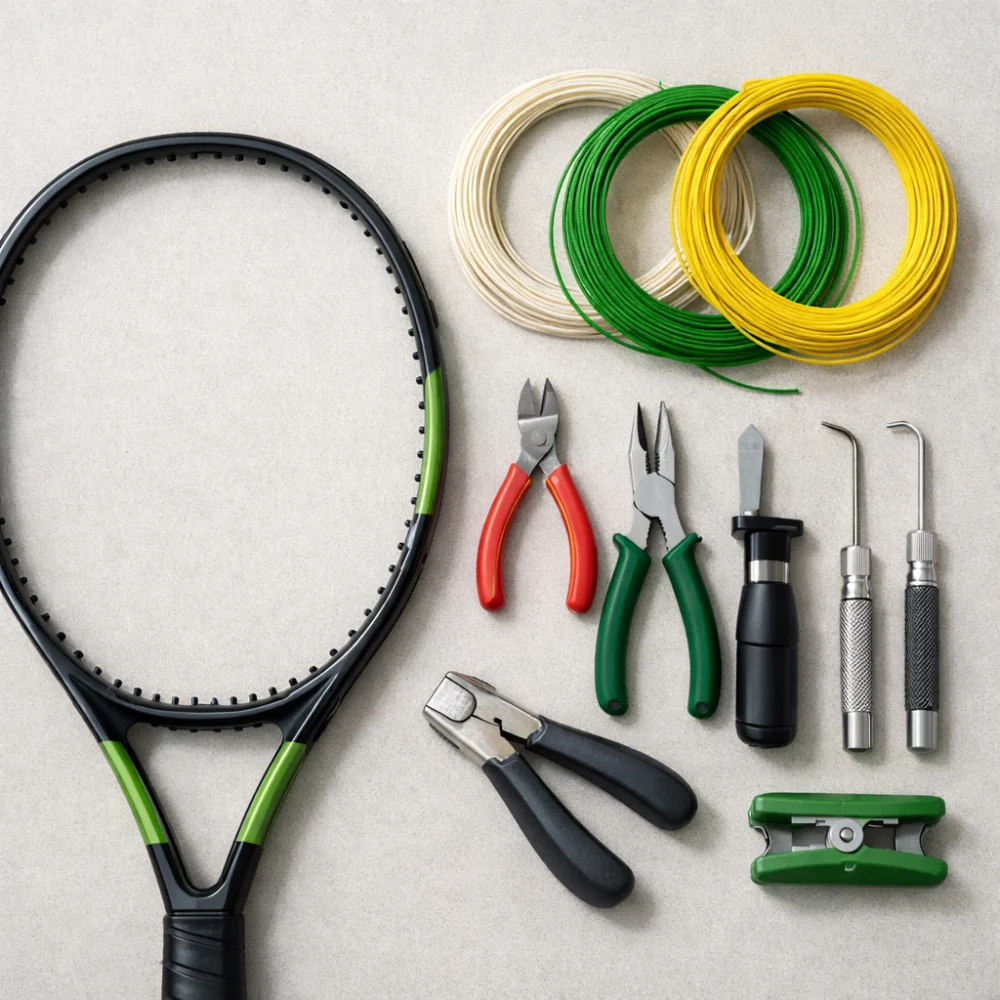
Tennis racket strings can change how a racket feels as much as the frame itself. If you are restringing a current racket, replacing worn strings or choosing a different setup, the main challenge is balancing feel, control, power and durability.
This guide focuses on the buying decisions that matter most for strings themselves. It helps you compare common string types, choose a suitable gauge and think about tension without assuming one setup suits every player.
Specifications vary by model, so always check the individual product page before buying.
What should I look for when choosing tennis racket strings?
The most useful starting point is to match the string to how you play and how often you restring. A player who wants a softer, more forgiving feel may value comfort and power, while someone who wants more direct response may prioritise control and durability. The key trade-off is that string types rarely maximise every characteristic at once.
| Feature | What it means | Why it matters | What to check |
|---|---|---|---|
| String type | The construction and material of the string | Usually the biggest influence on feel, power and durability | Whether you want more comfort, more control or a more durable setup |
| Gauge | The thickness of the string | Thicker strings tend to be more durable, while thinner ones often feel more responsive | The gauge listed on the product page and whether that suits your use |
| Tension | How tightly the string is installed in the racket | Changes the mix of control, power and feel | Your racket’s recommended tension range and your preferred playing feel |
| Set or reel | How the string is supplied | Influences convenience and how much string you have for repeated restringing | Whether you need one restring or a longer supply for multiple jobs |
| Playing style fit | How well the string matches your game | Helps avoid a setup that feels too lively, too firm or too short-lived for your needs | Whether the product description points to control, comfort, spin or durability |
Key decision criteria explained
String construction
Different constructions are chosen for different priorities. Some strings are aimed at comfort and a more forgiving response, while others are designed to feel firmer and more controlled. The practical trade-off is that the most comfortable option is not always the most durable, and the most durable option may feel less lively.
Gauge or thickness
Gauge affects both feel and lifespan. A thinner string can feel more responsive and may suit players who want more touch, while a thicker string can be a sensible choice if durability matters more. If you are unsure, compare the stated gauge carefully rather than assuming all strings in the same family will feel alike.
Tension and feel
Tension is one of the main ways string performance changes in use. Higher tension generally gives a firmer, more controlled response, while lower tension can feel more powerful and forgiving. If you are buying string only, remember that the result still depends on the racket, the player and the stringing job itself.
Length and supply format
Strings may be sold as a single set or as a reel. A set can be a straightforward choice for one restring, while a reel is often more practical if you restring regularly. Check the supplied length and make sure it is suitable for your racket and your intended use.
Types and variants you may see
Within this category, shoppers usually compare string families rather than dramatically different product types. The main differences are in construction, gauge and how the string is packaged. That means the buying decision is often about choosing the right balance rather than finding a completely separate style of product.
- Comfort-focused strings suit players who want a softer feel and easier response.
- Control-focused strings suit players who prefer a firmer, more precise hit.
- Durability-focused strings suit frequent hitters or anyone who wants the string bed to last longer before restringing.
- Reel formats suit regular restringing and repeated use.
- Set formats suit a single restring or occasional replacement.
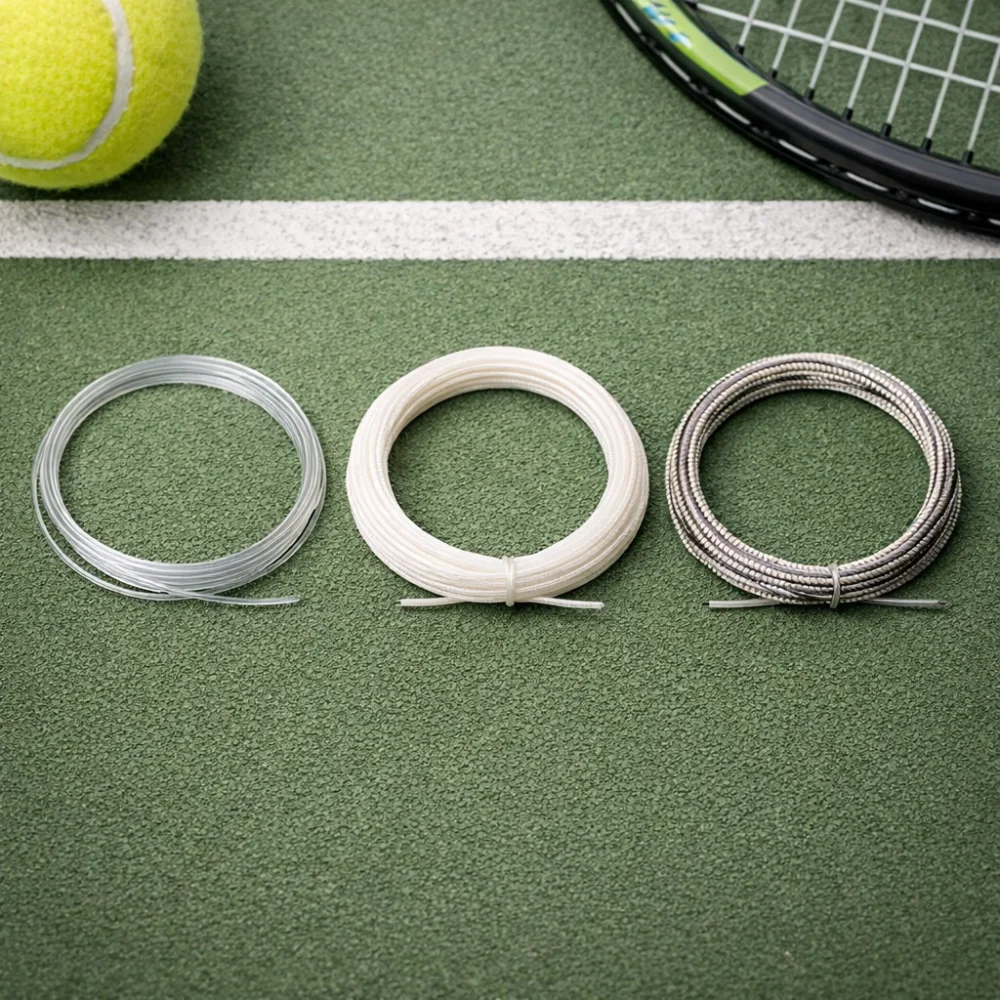
Which string suits which kind of buyer?
| Buyer need | More suitable characteristics | Why |
|---|---|---|
| Beginners or returning players | Comfortable, forgiving string with a balanced feel | Helps keep the racket easy to use while you build confidence |
| Frequent players | Durable construction and sensible gauge | Usually gives a better balance between lifespan and performance |
| Players seeking more control | Firmer feel and a setup suited to control | Can make directional placement feel more predictable |
| Players wanting more easy power | More responsive, forgiving string choice | Can help the ball leave the strings more readily |
| Anyone restringing often | Reel format and a gauge that suits regular use | May be more convenient if you need multiple restring jobs |
Common mistakes and misunderstandings
- Choosing by brand name alone: the construction, gauge and tension matter more than the label on its own.
- Assuming thinner always means better: thinner strings can feel livelier, but they may not suit everyone or every playing pattern.
- Ignoring tension: the same string can feel very different depending on how it is installed.
- Buying a reel when you only need one restring: a reel is useful for regular restringing, but a set may be simpler for occasional use.
- Forgetting racket compatibility: even if a string sounds appealing, it still needs to suit the racket and the intended stringing approach.
Safety and suitability caveats
Tennis strings are a performance choice rather than a safety product, but suitability still matters. Always check your racket’s recommended stringing information and avoid assuming that every string suits every frame or every player. If you are unsure about tension or construction, the individual product page is the right place to confirm the details that apply to that string.
Maintenance, storage and lifespan considerations
Strings naturally lose performance over time, especially with regular play and repeated string movement. That means durability and maintenance expectations are part of the buying decision, not an afterthought. Store strings in a dry place and keep in mind that a more durable string may still need replacing when feel or response changes.
How to compare options efficiently
- Start with how often you play and how often you restring.
- Decide whether comfort, control, power or durability matters most.
- Compare string construction, gauge and supply format.
- Check the product page for the exact length and stated details.
- Make sure the choice suits your racket and your preferred feel.
Frequently asked questions
Do all tennis racket strings feel the same?
No. Different constructions, gauges and tensions can produce a noticeably different feel. Even strings that look similar on the page may suit different preferences once they are installed.
Is a thicker string always more durable?
Thicker strings are often chosen for durability, but the overall lifespan still depends on how often you play and how you hit the ball. Durability is important, but it is only one part of the choice.
Should I choose a set or a reel?
A set is often the simplest option if you need one restring. A reel is usually more practical if you restring regularly or want a longer supply.
How important is tension when buying strings?
Tension matters because it changes the feel and response of the string bed. If you are unsure, it is worth checking both the product details and your racket’s recommended stringing range.
Can one string suit every type of player?
Not really. Players differ in swing style, touch preference and how often they restring, so the better choice is usually the one that matches those needs most closely.
What should I compare first if I feel overwhelmed?
Start with string type, then gauge, then whether you need a set or reel. Those three checks usually narrow the choice quickly without needing to overthink the rest.

