
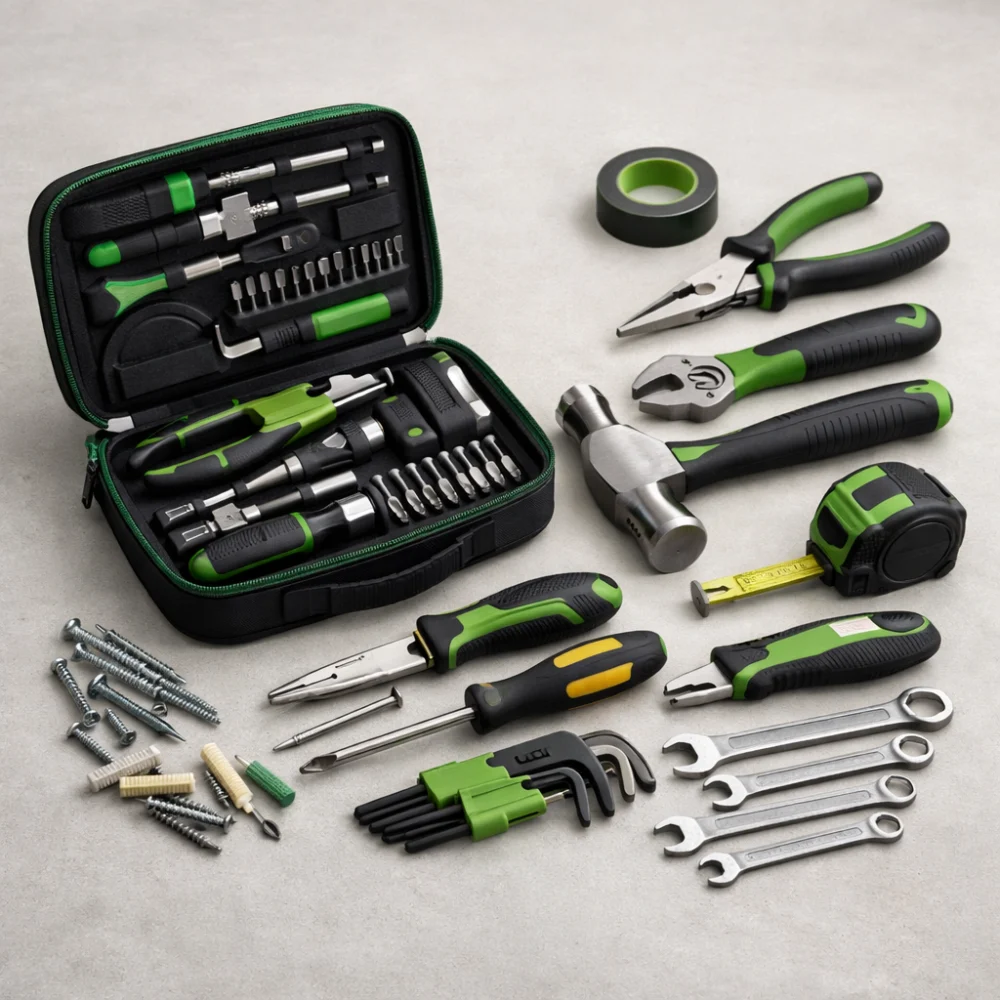
Tool kits are a practical way to get started with everyday repairs, assembly jobs and light DIY without buying each item one by one. They can suit first-time buyers, people replacing lost tools and anyone who wants a compact, organised set for occasional use.
The main choice is not just how many pieces are included, but whether the kit contains the right mix of hand tools, fixings and storage for the work you expect to do. A smaller set may be easier to store and carry, while a larger set may cover more tasks but include items you rarely use.
If you are comparing kits for a home, garage or workshop, focus on the contents and the case first, then check the detail of individual tools. Specifications vary by model, so always check the individual product page before buying.
What should you look for in a tool kit?
The best starting point is the type of work you need the kit to handle. For simple household jobs, a basic hand tool set may be enough. For more varied DIY, a broader kit can reduce the need to buy extra items later, but only if the included tools are actually useful to you.
| Feature | What it means | Why it matters | What to check |
|---|---|---|---|
| Tool mix | The types of tools included in the set | Determines which jobs the kit can realistically cover | Look for the items you are likely to use often, not just a high piece count |
| Case or storage | How the tools are kept together | A tidy case makes the kit easier to store and find quickly | Check whether the layout suits the tools and whether pieces are likely to stay in place |
| Hand tool quality | The build and finish of the individual tools | Affects comfort, confidence and how often replacements may be needed | Read the product details for material, grip design and any included accessories |
| Portable size | How easy the kit is to move or carry | Useful for shared households, van storage or occasional site use | Consider overall bulk as well as piece count |
| Specialist extras | Any tools beyond a basic household set | Can make a kit more versatile, but only if you will use them | Check whether extras are practical additions or just padding |
Key decision criteria
Contents versus piece count
Piece count can be a rough guide, but it does not tell the whole story. A smaller kit with the right tools may be more useful than a large set filled with duplicates or rarely used accessories. Look at the actual list of tools and think about the jobs you do most often.
Portability and storage
If the kit will live in a cupboard, boot or utility room, storage matters almost as much as the tools themselves. A well-organised case can save time and reduce the chance of losing parts. If you expect to carry the kit around, size and weight become more important than having every possible item included.
Comfort and ease of use
Handle shape, grip comfort and the general feel of the tools can make a real difference during repeated tasks. This is especially relevant for buyers who will use the kit for assembly, tightening or routine maintenance. If you are buying for someone else, a simple, easy-to-handle set is often safer than an overcomplicated one.
Specialist versus general-purpose kits
Some kits are aimed at broad household use, while others are better suited to a specific task such as bicycle maintenance or office or home DIY. A more focused kit can be better value if it matches your needs closely, but it may be limiting if you want one set for many different jobs.
Types of tool kit
Most buyers will see a few broad patterns rather than completely separate product families.
- Basic household kits are a sensible starting point for small fixes, furniture assembly and simple maintenance.
- Broader DIY kits suit buyers who want a wider mix of tools in one place for a variety of jobs.
- Task-specific kits are designed around a narrower use, which can make them more efficient for that purpose but less flexible elsewhere.
The right type depends on whether you value simplicity, versatility or a closer match to one regular task.
Which kit suits which buyer?
| Buyer need | More suitable features | Why |
|---|---|---|
| First-time buyer | Clear tool mix, tidy storage, straightforward layout | Makes the set easier to understand and use confidently |
| Occasional home repairs | General-purpose hand tools and a compact case | Covers common jobs without taking up much space |
| Regular DIY use | Broader contents and more robust storage | Better suited to repeated use and a wider range of tasks |
| Gift buyer | Practical, easy-to-use set with a sensible mix of tools | Helps avoid buying something too specialised |
| Task-specific buyer | Tools matched to one job or hobby | Can be more useful than a general set for that purpose |
Common mistakes when buying a tool kit
- Choosing by piece count alone. A large number is not automatically better if the tools are not the ones you need.
- Ignoring storage. Loose or awkward storage can make a kit harder to use and easier to misplace.
- Buying a specialist kit for general jobs. This can leave gaps for everyday household tasks.
- Overbuying for occasional use. A simpler kit may be the better value if you only need it now and then.
- Not checking the tool list carefully. The same broad category can include very different combinations of items.
Safety and suitability caveats
Choose a kit that matches the intended user and the kind of work you want to do. Some kits are better for light domestic jobs than for tougher or more frequent use, and some may include items that are not needed for your situation. It is sensible to check what is included, how the tools are stored and whether any accessories are relevant before buying.
Maintenance, storage and lifespan
Tool kits usually last longer when the tools are kept clean, dry and returned to their case after use. Storage matters because missing or damaged pieces quickly reduce the value of the set. If a kit includes moving parts, batteries or specialist accessories, consider whether those parts will be easy to look after over time.
How to compare tool kits efficiently
- Start with the jobs you expect to do most often.
- Decide whether you need a basic, broad or task-specific kit.
- Compare the actual tool list rather than only the number of pieces.
- Check storage, portability and how easy the kit looks to keep organised.
- Read the individual product page for any details that affect suitability.
Summary buyer decision checklist
- Does the kit include the tools you are most likely to use?
- Is the storage case or organiser practical for your space?
- Is the kit simple enough for the intended user?
- Does the size feel right for occasional, regular or portable use?
- Have you checked the product page for the exact contents?
Frequently asked questions
Is a bigger tool kit always better?
Not necessarily. Bigger kits can be useful if you need a wide range of tools, but they may also contain items you will never use. A smaller, better-matched kit is often more practical for routine household jobs.
What is the main advantage of buying a tool kit?
The main advantage is convenience. A kit brings related tools together in one organised purchase, which can be easier than assembling a set piece by piece. It can also help with storage and keeping track of what you own.
Should I choose a general kit or a task-specific kit?
Choose a general kit if you want flexibility for everyday use. Choose a task-specific kit if you already know the kind of work you will do most often and want the contents to match that purpose more closely.
How do I know whether a kit is suitable for a beginner?
Look for a straightforward contents list, sensible storage and a layout that is easy to understand. A beginner usually benefits from a kit that covers common jobs without too many specialist extras.
What should I check if I am buying a kit as a gift?
Try to match the kit to the recipient’s likely use rather than choosing the largest set. A practical, well-organised kit is often more useful than a complicated one with lots of niche items.
Why do two kits with similar names look so different?
Category names can cover quite different contents. One kit may be aimed at light household use, while another may add more specialist tools or accessories. The detailed contents list is the most reliable comparison point.

