
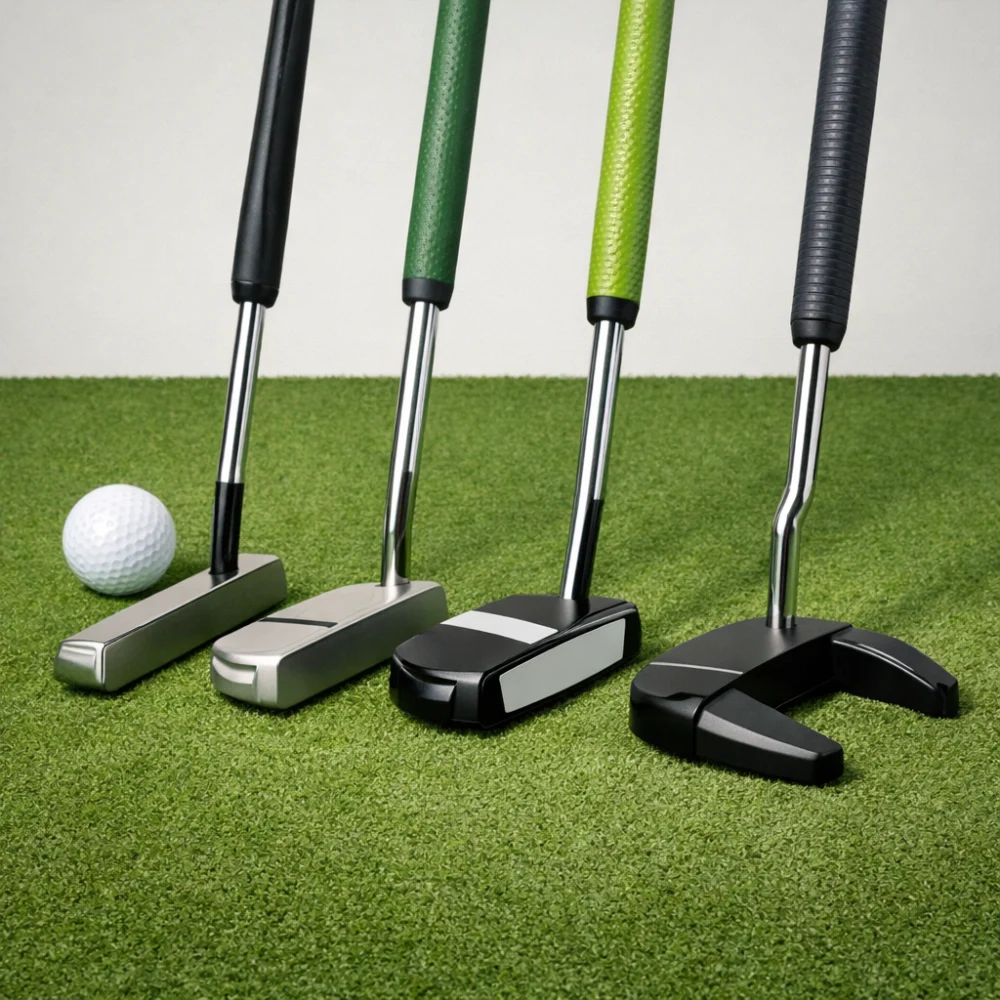
A putter is the club you use most often on the green, so small differences in shape, feel and setup can make a real difference to comfort and consistency. If you are replacing a worn club, building a first set or looking for a style that suits your stroke better, it helps to know what matters before you choose.
Golf putters are not about distance in the way drivers or irons are. They are about control, alignment and the confidence to start the ball on the intended line. That makes them one of the most personal club choices in the bag.
What should I look for in a golf putter?
Start with the putter head shape, the length that suits your posture and the feel you prefer at impact. Those three factors usually influence comfort and control more than any extra description on the label. A putter that feels natural to address is often easier to use under pressure than one chosen only for looks.
The main trade-off is usually between forgiveness and feel. Larger heads can help some golfers with alignment and stability, while simpler shapes may appeal to players who want a more traditional look and clearer feedback. Specifications vary by model, so always check the individual product page before buying.
| Feature | What it means | Why it matters | What to check |
|---|---|---|---|
| Head shape | The overall form of the putter head | Can affect alignment, confidence and how stable the head feels through the stroke | Whether the shape looks easy to aim and suits your eye at address |
| Length | The distance from grip to head | Influences posture, hand position and comfort | Whether the listed length matches the stance and setup you normally use |
| Balance and feel | How the club feels weighted and controlled | Can affect stroke rhythm and touch on short putts | Any balance description given on the product page and how it compares with your current club |
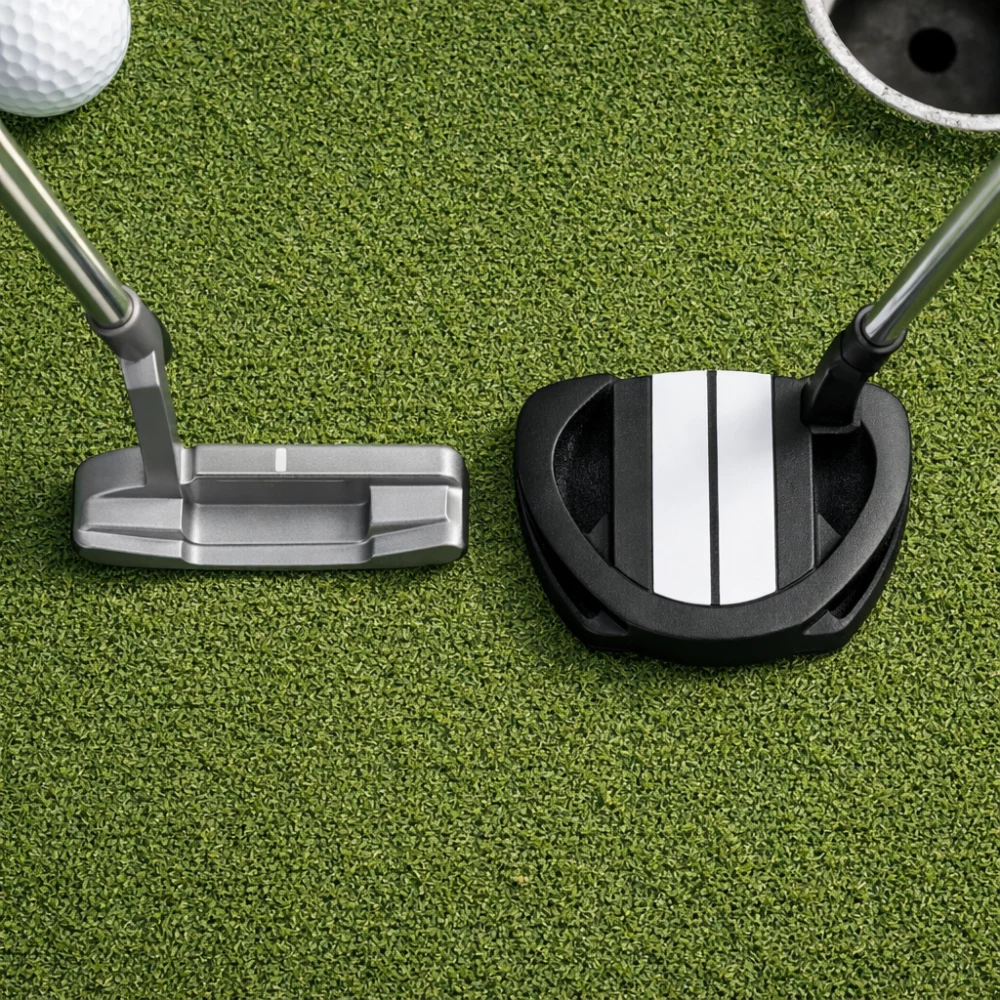
| Alignment help | Visual cues on the head or top line | May make it easier to set the face square to the target | Whether the markings are clear and helpful to you, not just attractive |
| Grip style | The shape and thickness of the handle | Can change hand comfort and how steady the club feels | Grip shape if shown, especially if you prefer a slimmer or fuller feel |
Which putter type suits which player?
The main variation within this category is usually the head style. Traditional blade putters are often chosen by golfers who like a compact look and clear feedback. Mallet putters tend to have a larger head and may feel more stable or easier to aim for some players. A mid-mallet sits somewhere between the two, offering a more balanced visual shape.
There is no universal answer here. The right choice depends on how you set up over the ball, how you like the club to look at address and whether you want more simplicity or more visual guidance. If you are unsure, compare the shape against the putters you already use comfortably.
Blade putters
Blade putters are usually slimmer and more traditional in appearance. They may suit golfers who prefer a straightforward look and a lot of visual feedback from the face. The trade-off is that the smaller head can feel less forgiving to some players.
Mallet putters
Mallet putters are generally larger and may offer stronger alignment features. Many golfers find them reassuring because the broader shape can be easier to line up. The trade-off is a less traditional look, which not every player prefers.
Mid-mallet putters
Mid-mallet designs combine elements of both styles. They can be a sensible middle ground if you want a little more alignment help than a blade without moving to a larger mallet. They are worth considering if you are between styles and want a balanced feel.
What matters most when comparing options?
It helps to compare putters in the same order every time: first shape, then length, then feel, then grip. That keeps the decision practical and avoids choosing on appearance alone. A putter that suits your posture and eye line is often easier to live with than one that simply looks appealing online.
| Buyer need | What to prioritise | Why |
|---|---|---|
| Beginner or occasional golfer | Clear alignment and a shape that feels easy to address | Simplicity helps reduce uncertainty on the green |
| Player wanting more stability | Larger or more confidence-inspiring head shape | Some golfers find this easier to keep steady through the stroke |
| Player who values feedback | Compact shape and a feel that gives clear response | Can help with touch and awareness of strike quality |
| Replacement purchase | Length, grip and general head style similar to the club you already like | Makes the change easier and reduces adjustment |
| Gift buyer | Broadly familiar shape and a standard-looking setup | Safer when you do not know the recipient’s stroke preferences |
Common mistakes to avoid
- Choosing only by appearance: a good-looking putter is not always a comfortable one. Check whether the head shape and length make sense for the way you address the ball.
- Ignoring length: even a small mismatch can affect posture and hand position. Compare the listed length with the club you already use, if you have one.
- Assuming bigger is always easier: larger heads can help some golfers, but not everyone prefers them. The best choice is the one that looks stable and natural to you.
- Overlooking the grip: grip thickness and shape can influence feel more than expected. If you are sensitive to hand comfort, this is worth checking closely.
Safety and suitability notes
Putters are low-risk golf equipment, but suitability still matters. Check that the club is appropriate for the intended user, especially if you are buying for someone else. If a product page includes handedness, length or grip information, review it carefully so the club matches the player’s normal setup.
It is also sensible to think about where and how the club will be used. A putter is designed for putting strokes on the green, not for general practice with every type of shot.
Care, storage and everyday use
Simple care usually goes a long way with a putter. Keep the head clean, avoid unnecessary knocks and store the club in a way that protects the finish and face. A headcover can help reduce wear during transport if one is supplied or used with the club.
If you are comparing putters for long-term use, think about the grip as well as the head. Grips can wear over time, and a comfortable grip makes the club more enjoyable to use.
How to compare putters efficiently
- Decide whether you want a blade, mallet or mid-mallet style.
- Check the listed length and think about your normal putting posture.
- Compare alignment features and decide whether you want a cleaner or more guided look.
- Look at grip shape and overall feel, especially if you are replacing a favourite club.
- Read the individual product details carefully before buying.
Golf putter buyer checklist
- Does the head shape suit your eye at address?
- Is the listed length appropriate for your posture?
- Do you prefer a compact, balanced or larger-looking design?
- Are the alignment markings helpful rather than distracting?
- Does the grip look and feel suitable for your hands?
- Have you checked the individual product page for any model-specific details?
Frequently asked questions
What is the difference between a blade and a mallet putter?
A blade putter is usually smaller and more traditional in shape, while a mallet putter is generally larger and may offer more visual alignment help. Many golfers choose based on which shape feels easier to set behind the ball. Neither style is automatically better for everyone.
How important is putter length?
Length matters because it affects posture, hand position and how naturally you stand over the ball. A club that is too long or too short can make the stroke feel awkward. If possible, compare the listed length with your current putter or the setup you already find comfortable.
Do alignment lines really help?
For some golfers they do, because they provide a clear visual reference when aiming the face. Others prefer a simpler head with less distraction. The useful question is not whether alignment lines are popular, but whether they help you set up more confidently.
Is a heavier putter better?
Not necessarily. Some players like a more substantial feel because it can encourage a smooth stroke, while others prefer a lighter response and more touch. Weight and balance are matters of preference, so it is worth comparing them with what you already use.
Can a beginner use any putter?
A beginner can use many different styles, but a clear, simple design is often easier to learn with. The best starting point is usually a putter that feels comfortable, lines up easily and matches the player’s natural stance. A straightforward shape can reduce confusion while you build consistency.
Should I choose a putter based on handedness?
Yes. Make sure the putter matches the golfer’s natural handedness and normal setup. That is a basic check, but an important one, especially when buying as a replacement or gift.
Do I need to match my putter to the rest of my clubs?
Not exactly, but it should fit your putting style and feel consistent with the way you play. A putter is more personal than many other clubs, so comfort and confidence matter more than matching the rest of the bag.

