
DJI drones cover a wide range of buyer needs, from simple, portable models for casual flying to more advanced options for creators who want stronger camera control and a steadier flying experience. If you are new to drones, the hardest part is usually not the brand itself, but deciding which features are genuinely useful for the way you plan to fly.
This guide focuses on the buying decisions that matter most: image quality, portability, ease of use, flight time, controller style and the kind of flying you expect to do. It is meant to help you narrow the choice before you look at individual product pages.
Specifications vary by model, so always check the individual product page before buying.
What should you look for when choosing a DJI drone?
The best starting point is to match the drone to your main use. A compact model may suit travel and casual flying, while a more advanced drone can better suit users who care about camera quality, stability and a broader feature set. The main trade-off is usually between portability and capability: smaller drones are easier to carry, while larger or more advanced options may offer more control and a richer camera experience.
| Feature | What it means | Why it matters | What to check |
|---|---|---|---|
| Camera focus | How much the drone is designed around capturing photos or video | Important if you want aerial footage rather than just flying for fun | Camera specification, stabilisation and the intended use on the product page |
| Portability | How easy the drone is to carry and store | Useful for travel, day trips and frequent use away from home | Folded size, weight and what is included in the bundle |
| Flight controls | How the drone is operated and how simple it feels to use | Matters for beginners, occasional flyers and anyone who values convenience | Controller type, app requirements and included accessories |
| Stability and handling | How confidently the drone can be flown and positioned | Helps with smoother footage and easier control in real-world use | Stabilisation features and the flight aids listed for that model |
| Flight time | How long a battery can last in typical use | Affects how long you can fly before stopping to recharge | Quoted flight time and whether extra batteries are part of the bundle |
| Return-to-home and flight aids | Assistance features that can help manage basic flying | Can reduce anxiety for newer users and improve convenience | The exact assistance features described for the individual model |
Key decision criteria explained
Camera and content creation needs
If you want to capture footage, think about how seriously you will use the camera. Some buyers mainly want occasional holiday clips, while others want a drone that forms part of a regular photo or video workflow. Look for the camera and stabilisation details on the product page, and decide whether convenience or more control matters more to you.
Size, weight and transport
Compact drones are often easier to pack and more likely to be used often because they are simpler to carry. Larger drones may offer more advanced handling or camera options, but they are less discreet to transport and may feel like a bigger commitment. For many buyers, the right choice is the one they will actually take out regularly.
Beginner-friendliness
If this is your first drone, simplicity matters more than a long list of features. Consider how quickly you can get airborne, how clear the controls feel and whether the bundle includes what you need to start comfortably. A straightforward setup can matter more than technical complexity if you are still learning the basics.
Bundle contents and accessories
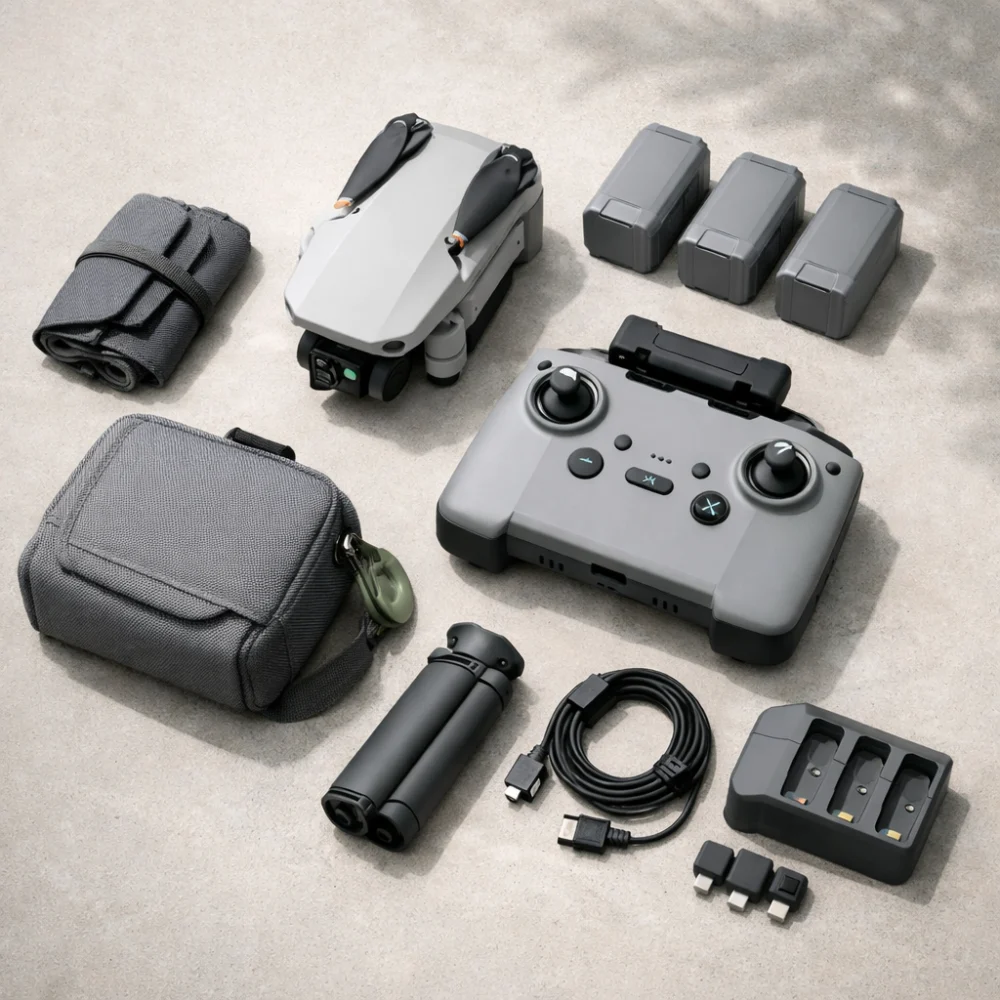
Drone bundles can differ in how complete they are. Some include only the essentials, while others add extras that reduce the need for separate purchases. Check the individual listing carefully so you understand what is included and whether the package suits your intended use.
Common DJI drone types and variants
Within this category, buyers will usually be choosing between a few broad styles rather than completely different product families.
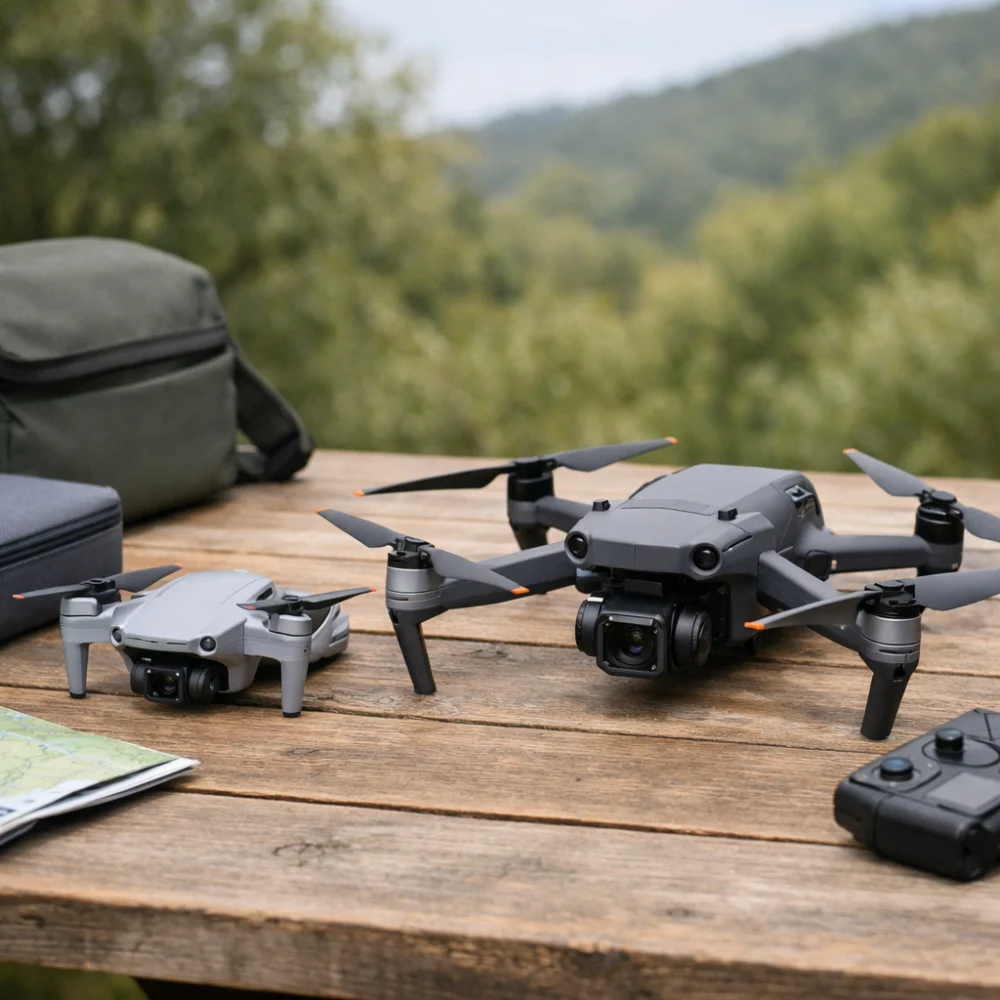
- Compact everyday drones are often the easiest choice for new or casual flyers who want something portable and simple to use.
- Camera-focused drones suit buyers who care more about photo and video capability and are willing to carry a slightly larger or more involved setup.
- FPV-style drones are aimed at buyers who want a more immersive flying experience and are comfortable with a different style of control and use.
- Fly More style bundles can suit people who want a more complete package, but the value depends on whether the extra items are genuinely useful to you.
Which DJI drone suits which kind of buyer?
| Buyer need | What tends to matter most | What to prioritise |
|---|---|---|
| First-time flyer | Simple controls and easy setup | Clear flight aids, straightforward controller options and a manageable learning curve |
| Travel and day trips | Portability and quick pack-away | Compact size, lighter carry weight and a bundle that is easy to transport |
| Video and photography | Camera quality and stabilisation | Camera specification, gimbal or stabilisation details and steady flight characteristics |
| Casual recreational use | Ease of use and convenience | Simple operation, dependable battery expectations and a setup that feels low effort |
| More committed hobby use | Control, features and flexibility | Broader flight aids, accessory support and the ability to grow into the drone over time |
Common mistakes buyers make
- Choosing by camera headline alone. A strong camera is useful, but handling, portability and control style may matter more if you will fly often.
- Ignoring what is in the box. Some bundles are more complete than others, so check whether the included accessories match your needs.
- Buying more drone than you need. A feature-rich model can be wasted if you mainly want occasional, simple flights.
- Overlooking ease of use. A drone that is awkward to set up or carry may end up being used less than a simpler option.
Safety and suitability to check before you buy
Drone purchases should be matched to the intended use and to the buyer’s comfort with flying. Check the product page for the exact model details, and make sure you understand the controls, included accessories and any information that affects where and how you plan to use it. If you are buying for someone else, think about whether a simpler model would be a better fit than a more demanding one.
Maintenance, storage and ownership considerations
Most drone buyers should think beyond the initial purchase and consider practical ownership needs such as battery charging, safe storage and keeping accessories together. A more complete bundle may reduce the need for extra purchases, but it can also mean more items to organise. If you expect to fly regularly, it is worth choosing a setup that is easy to keep ready to use.
How to compare DJI drones efficiently
- Start with your main use: casual flying, travel, content creation or more involved hobby use.
- Decide whether portability or capability matters more for your situation.
- Compare camera, control and stabilisation details on the product page.
- Check the bundle contents so you know what you are actually getting.
- Choose the model that fits your confidence level and how often you expect to use it.
Summary buyer decision checklist
- Do I want a compact drone or one with more advanced features?
- Is the camera capability enough for how I plan to use it?
- Will the controller and setup suit my experience level?
- Is the drone easy enough to carry and store?
- Do the flight aids and bundle contents match my needs?
- Have I checked the individual product page for the exact specification?
Frequently asked questions
Are DJI drones a good choice for beginners?
They can be, especially if you choose a simpler model with straightforward controls and useful flight aids. Beginners should focus on ease of use and portability rather than chasing the most advanced feature set.
What is the main difference between compact and more advanced DJI drones?
Compact models are usually easier to carry and simpler to live with, while more advanced options may offer stronger camera or control features. The right choice depends on whether convenience or capability matters more to you.
Should I choose a Fly More bundle?
It depends on how often you plan to fly and whether the extras are useful to you. A bundle can be practical if it includes accessories you would otherwise buy separately, but it is less valuable if the extra items will not get used.
What should I check if I mainly want aerial video?
Look closely at the camera and stabilisation details, then consider how stable and easy the drone is to handle. A drone that is comfortable to fly is often more useful than one with a strong specification but awkward operation.
How important is portability?
Very important if you want to take the drone out regularly. A drone that is easy to carry is more likely to be used often, especially for travel or day trips.
Do I need to compare the controller as well as the drone?
Yes, because the controller can affect how convenient and confident the drone feels to use. Check what is included and whether the control setup suits your experience level.

