
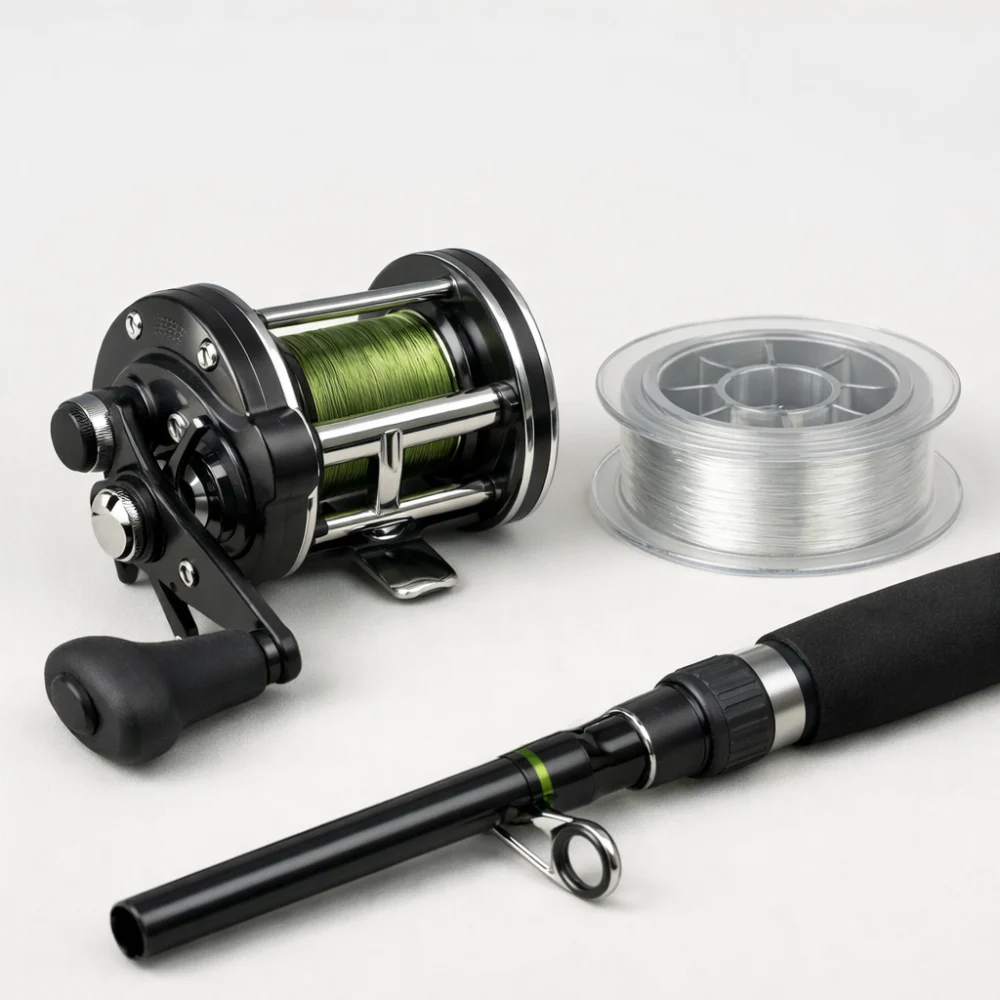
Multiplier reels are chosen for fishing situations where controlled line release, winding power and direct line handling matter more than simplicity. They are commonly used by anglers who want a reel that suits boat work, sea fishing, trolling or other setups where the reel’s design makes a practical difference to casting and line management.
If you are new to this category, the main decision is not simply which reel looks strongest. It is about matching the reel type to the rod, line and method you plan to use, then checking the controls and layout that will feel comfortable in your hands.
Because multipliers are used for different methods and environments, the details on the individual product page matter. Specifications vary by model, so always check the individual product page before buying.
What should you look for in a multiplier reel?
The right multiplier reel is the one that fits your fishing style, your rod and your preference for control. Start with the intended method, then compare drag style, retrieve feel, line capacity and whether the reel is set up for left- or right-hand use. A reel that is well suited to your fishing method will usually feel easier to manage than one chosen only by size or brand.
| Feature | What it means | Why it matters | What to check |
|---|---|---|---|
| Intended use | The fishing method or environment the reel is designed to suit | Different multiplier reels are better suited to sea, boat, trolling or general specialist use | Match the reel to your planned fishing style and rod setup |
| Retrieve feel | How the handle and gearing feel when winding line back in | Comfort and control matter during repeated use | Look for the reel layout and gearing description that suit your pace and preference |
| Drag system | The braking control that resists line being pulled out | Helps you manage pressure on the line during a fight with a fish | Check how the drag is described and whether adjustment feels convenient for you |
| Line capacity | How much line the spool can hold | Important if you need enough line for your method or expected distances | Compare the reel’s stated capacity with the line type and strength you plan to use |
| Handedness | Whether the reel is intended for left- or right-hand winding | Affects comfort and ease of use | Confirm the retrieve side before buying |
| Build and materials | The general construction of the reel body and spool | Can influence feel, corrosion resistance and durability expectations | Check the materials and whether the reel is suitable for the environment you fish in |
Key decision criteria explained
Fishing method and location
Multiplier reels are not a one-size-fits-all choice. A reel aimed at sea fishing may prioritise line handling and sturdiness, while another may be better suited to a different specialist method. The key is to match the reel to the demands of your fishing rather than choosing solely by size or appearance.
Retrieve and control
Some anglers prefer a reel that feels direct and deliberate when winding, while others want a smoother, easier retrieve. The trade-off is often between control and convenience, so think about how long you will use the reel in a session and whether comfort matters more than a particular technical feature.
Drag and line handling
The drag is one of the most important practical features because it affects how the reel manages pressure under load. A reel with a drag that is easy to adjust can be more reassuring than one that looks more technical but is awkward to set. Do not assume a more complicated system is automatically better for your needs.
Spool and capacity
Spool design and line capacity matter if you need a reel that can cope with a particular line choice or a longer run. If you fish in a way that uses lighter or shorter line setups, extra capacity may be less important than a compact, comfortable layout. Check the product page for the stated line capacity and compare it with your preferred line type.
Left- or right-hand winding
Handedness is easy to overlook, yet it strongly affects comfort. Some anglers are happy to adapt, but many find it easier to start with the side they naturally prefer. If you are buying for someone else, this is worth checking before anything else.
Types and variants within multiplier reels
There are a few practical ways multiplier reels can differ, even when they share the same broad category. Some are aimed at general specialist use, while others are more purpose-built for sea fishing, trolling or heavier work. You may also see differences in gearing, spool style and whether the reel includes extra line-management features.
The useful question is not which variation is technically most advanced, but which one fits the way you fish. A simpler reel can be the better choice if you want straightforward use, while a more specialised reel may suit a particular setup more closely.
Which buyer needs suit which reel?
| Buyer need | What to prioritise | Why |
|---|---|---|
| Beginner to multiplier reels | Simple controls, clear handedness, manageable line capacity | Helps reduce confusion and makes the reel easier to learn |
| Sea or boat angler | Appropriate build, reliable control, suitability for heavier use | The reel needs to match the demands of the environment and method |
| Trolling or specialist angler | Control, retrieve feel and line handling suited to the technique | Consistency matters more than extra features you may not use |
| Gift buyer | Known preferred hand, general method and comfort | These are the details most likely to make the reel feel right to the recipient |
| Replacement buyer | Similar handedness, similar capacity and familiar layout | Matching the old setup can make the swap much easier |
Common mistakes and misunderstandings
- Choosing by size alone: a reel that looks substantial is not automatically the right match. Check whether its intended use fits the way you fish.
- Ignoring handedness: the wrong retrieve side can make the reel awkward to use. Confirm this before ordering.
- Overlooking line capacity: if the reel cannot suit your line choice, it may not feel right on the rod. Compare the stated capacity with your setup.
- Assuming more features are always better: extra complexity can be unnecessary if you want a straightforward reel. Focus on what you will actually use.
- Not checking the rod pairing: a multiplier reel should be considered alongside the rod and method, not in isolation.
Safety and suitability notes
Multiplier reels are specialist fishing equipment, so suitability matters more than one universal rule. Check that the reel is appropriate for the environment and technique you plan to use, and avoid assuming a product is suitable for every kind of fishing. If you are buying for a younger or less experienced angler, keep the setup simple and make sure the reel is comfortable to hold and operate.
Maintenance, storage and ownership considerations
Like most fishing reels, multiplier reels benefit from sensible care after use, especially if they are used near salt water. Rinse and dry the reel in line with the maker’s guidance, store it somewhere clean and dry, and keep an eye on moving parts for signs of wear. If the reel uses specific line types or has a more involved mechanism, that can also affect how much upkeep you should expect.
How to compare multiplier reels efficiently
- Decide what fishing method you need the reel for.
- Check whether the reel is comfortable for your preferred hand.
- Compare drag, retrieve feel and line capacity.
- Think about how much control versus simplicity you want.
- Read the individual product page carefully before you choose.
Summary buyer decision checklist
- Does the reel suit your fishing method and environment?
- Is the retrieve side right for you?
- Does the line capacity fit your planned setup?
- Are the drag and control features appropriate for your use?
- Does the reel feel simple enough or specialised enough for your needs?
- Have you checked the individual product page for model-specific details?
Frequently asked questions
What is a multiplier reel used for?
A multiplier reel is used in fishing setups where controlled line handling and a direct winding feel are useful. It is commonly chosen for specialist fishing methods rather than general everyday use. The most suitable option depends on how and where you fish.
Is a multiplier reel suitable for a beginner?
It can be, provided the setup is kept simple and the reel matches the intended method. Beginners often benefit from clear handedness and straightforward controls. A reel that is easy to understand will usually be more useful than one with features that are not needed.
How do I know which handedness to choose?
Choose the side that feels most natural for your winding hand, unless your usual fishing style suggests otherwise. If you already use a similar reel, matching that layout is often the safest choice. For a gift, checking the recipient’s current reel setup is a sensible approach.
Do all multiplier reels suit sea fishing?
No, not every multiplier reel is aimed at the same environment. Some are better suited to sea or boat work, while others are designed for different specialist uses. Always check the product page for the reel’s intended application.
What matters more: drag or line capacity?
Both matter, but in different ways. Drag affects how you manage pressure during use, while line capacity affects how much line the reel can hold. The more important factor depends on your fishing method and the line you plan to use.
Should I choose the most feature-rich reel?
Not necessarily. More features can mean more complexity, and that is not always helpful if you want a simple, reliable reel. Choose the layout that fits your experience level and the way you fish.
Can I use the same multiplier reel for different methods?
Sometimes, but only if the reel suits the requirements of each method. A reel that works well in one situation may feel less suitable in another because of line capacity, retrieve feel or general build. It is better to buy for the main use first.

