
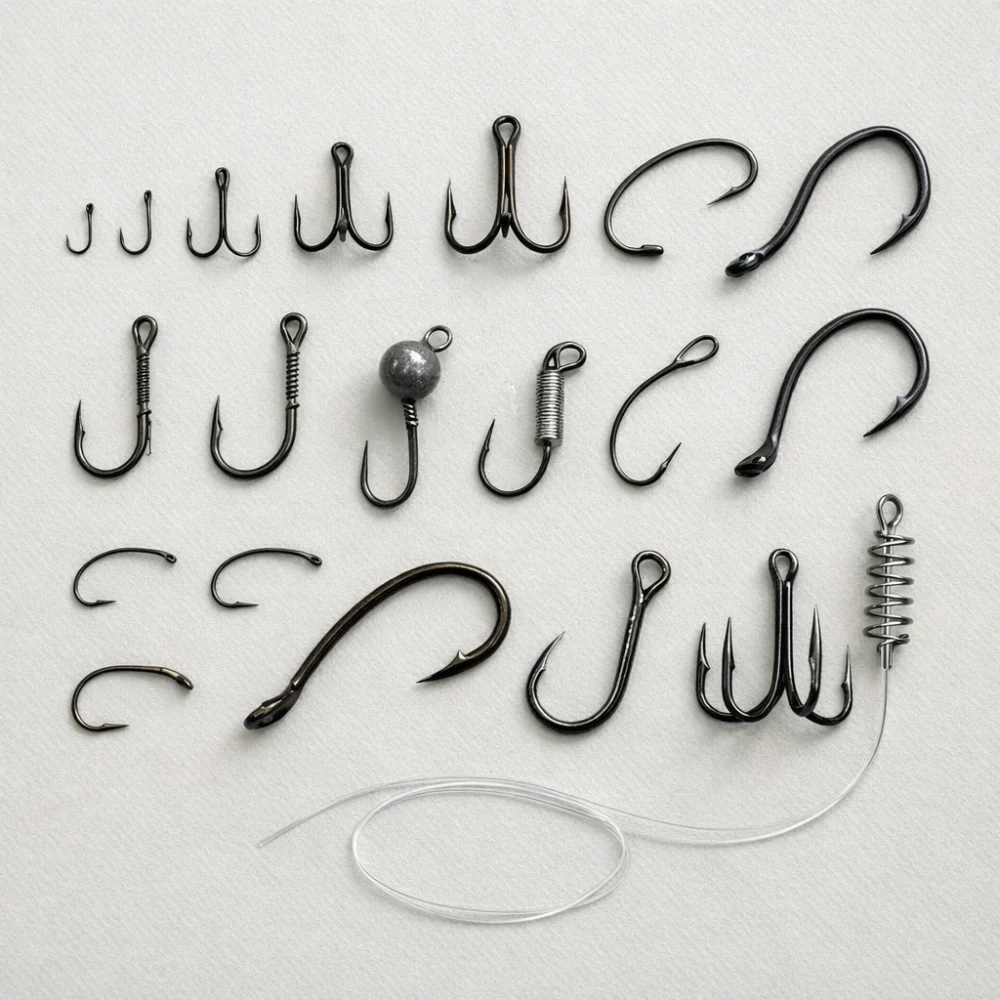
Fishing hooks are small components, but they do a lot of work. The right choice affects how neatly a bait sits, how securely a hook can be tied to line and how well the setup matches the fishery, species and method you have in mind.
This guide helps you compare hook patterns, sizes and finishing details without getting lost in jargon. It is aimed at anglers replacing a familiar hook, trying a different style or buying terminal tackle for a new setup.
Because hooks are sold in many forms, the main decision is rarely just “which one is strongest?”. It is usually about choosing a pattern and size that suits your bait, target species and presentation.
What should I look for when buying fishing hooks?
Start with the fishing method and bait, then narrow the choice by hook pattern, size and eye style. A hook that suits one rig or bait may be awkward for another, even if it looks similar. The most useful comparison is often between how the hook is shaped and how you intend to present the bait.
| Feature | What it means | Why it matters | What to check |
|---|---|---|---|
| Hook pattern | The overall shape of the hook, including shank, bend and gape | Influences bait presentation and how the hook sits in the mouth of a fish | Match the pattern to your bait, rig and target species |
| Hook size | The relative size of the hook | Too large or too small can affect presentation and bite conversion | Check the stated size and compare it with the bait and method you plan to use |
| Barbed or barbless | Whether the hook point has a barb | Affects how the hook behaves during unhooking and during use | Check the hook description and any fishery rules that apply |
| Eye style | The shape and angle of the eye where the line is tied | Can affect how a knot sits and how the hook aligns in a rig | Confirm whether the hook is eyed and whether that suits your rig |
| Wire gauge | The thickness and firmness of the hook wire | Changes the feel, weight and suitability for different fish or baits | Look for wording that suggests finer or stronger wire, where supplied |
| Pack quantity | How many hooks are included | Useful for budgeting and for anglers who lose hooks regularly | Check the pack count and size consistency before ordering |
Key decision criteria explained
Hook pattern
Pattern is usually the biggest influence on suitability. Different shapes can suit live bait, bottom bait, feeder fishing or general coarse fishing, and some are designed to hold bait in a particular way. Look for the pattern name and think about whether it matches the rig you already use, rather than choosing purely by appearance.
Hook size
Size affects presentation more than many buyers expect. A smaller hook may look neater with a small bait, while a larger hook may be more suitable where a bigger bait or stronger setup is planned. Specifications vary by model, so always check the individual product page before buying.
Barbed or barbless
Barbed hooks and barbless hooks can both be useful, but they are not interchangeable for every situation. Some anglers prefer barbless hooks for quicker unhooking, while others choose barbed styles for their own reasons and where rules allow it. The important point is to check what your venue permits and what suits your own fishing style.
Eye and knot compatibility
Eyed hooks are often chosen for rigs that rely on a loop or knot at the eye. The angle and finish of the eye can affect how neatly the knot seats, so it is worth checking that the hook type suits your line and rig choice. If you already use a known rig, compare the hook description with the one you are replacing.
Wire thickness and strength feel
Hook wire influences how the hook handles different bait sizes and how bold or subtle the presentation feels. Finer wire can be useful when presentation matters, while a firmer wire may better suit harder-fighting fish or more robust baits. Avoid assuming that a thicker hook is automatically better; the right feel depends on the fishing method.
Common hook types and variants
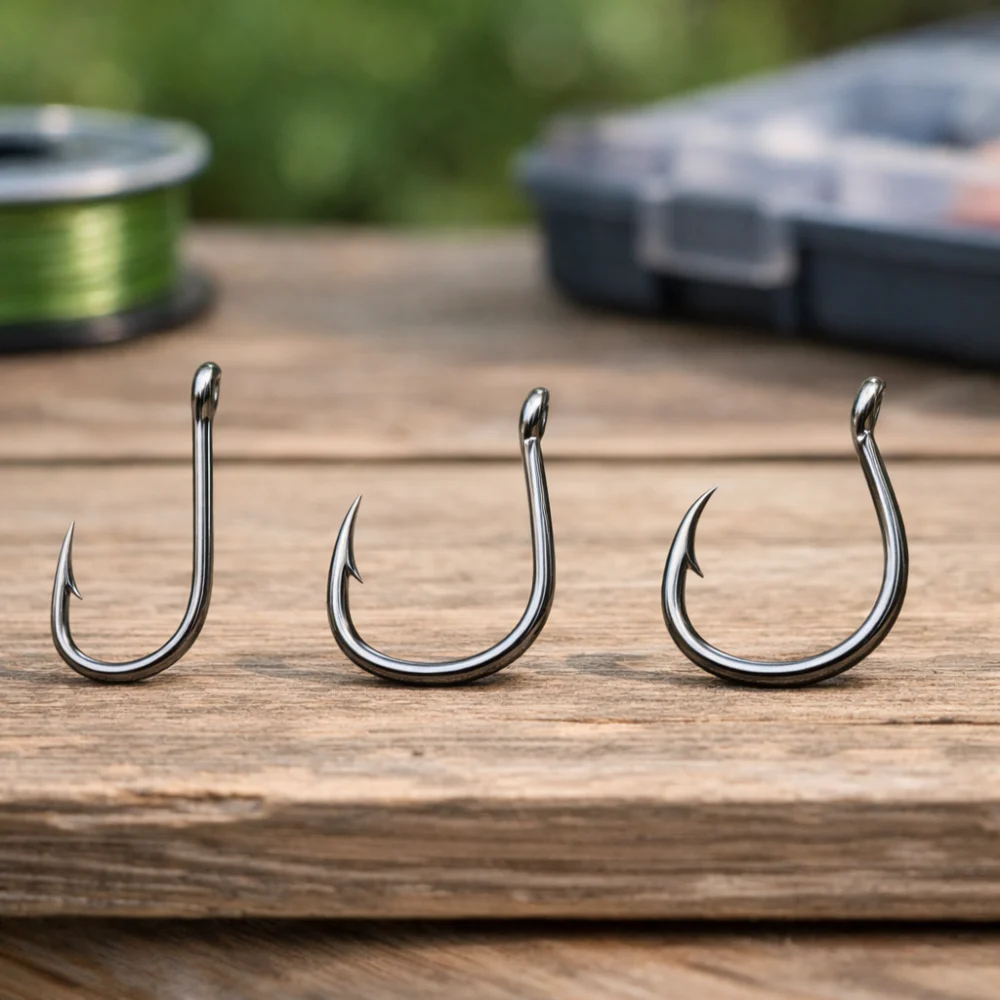
Within this category, the useful differences are usually practical rather than dramatic. You will commonly see patterns intended for general bait fishing, wider-gape styles, longer-shank forms and treble hooks for specific applications. The main limitation of any one pattern is that it may work well for one presentation but feel awkward for another.
- General-purpose patterns suit anglers who want one style that can cover everyday fishing situations.
- Wide-gape styles can offer more space around the bait and may suit certain bait presentations.
- Long-shank styles are often chosen when the shape helps with baiting or unhooking preferences.
- Treble hooks are a different form with three points and are used for specific applications rather than general bait fishing.
Which hook suits which kind of angler?
| Buyer need | What to prioritise | Why |
|---|---|---|
| Beginner building a basic tackle box | Simple, general-purpose patterns and clear sizing | Makes it easier to match a hook to common bait and learn what works |
| Angler replacing a favourite setup | Close match to the existing pattern, size and eye style | Helps preserve a rig or presentation you already trust |
| Fishery-rule-conscious buyer | Barbed or barbless status and venue requirements | Prevents buying hooks that do not suit the rules you need to follow |
| Angler changing bait or method | Pattern and gape suited to the new presentation | A different bait often benefits from a different hook shape |
| Value-focused buyer | Pack size and consistency | Helps compare cost per hook without ignoring fit for purpose |
Common mistakes and misunderstandings
- Choosing by size alone: size matters, but the hook pattern and eye style can be just as important.
- Assuming one hook suits every bait: a hook that works well with one presentation may be a poor fit for another.
- Ignoring venue rules: barbed and barbless choices can be restricted, so check before you buy.
- Mixing up similar-looking patterns: small shape differences can change how the rig behaves.
- Focusing only on pack count: a larger pack is not better if the pattern is wrong for your fishing.
Safety and suitability caveats
Fishing hooks are sharp and should be selected and handled with care. Choose a hook that suits the intended species, rig and venue, and avoid assuming that one style is appropriate for every situation. If you are buying for a specific fishery, check its rules as well as the product description.
Maintenance, storage and lifespan considerations
Hooks do not need complicated maintenance, but storage matters. Keep them dry and organised so they are easier to find and less likely to dull or corrode in storage. If you fish regularly, think about whether you want a few larger packs of a familiar pattern or smaller packs of several different styles for experimentation.
How to compare fishing hooks efficiently
- Decide what you are fishing for and how you plan to present the bait.
- Narrow the choice to the hook pattern that suits that method.
- Check size, eye style and whether the hook is barbed or barbless.
- Compare pack quantity only after the practical fit is right.
- Read the individual product page carefully before buying.
Summary buyer decision checklist
- Does the hook pattern suit your bait and rig?
- Is the size appropriate for the presentation you want?
- Do you need barbed or barbless hooks for your venue?
- Does the eye style suit the knot or rig you use?
- Have you checked the pack quantity and any listed variations?
- Does the product page give enough detail for your intended use?
Frequently asked questions
What is the most important thing when choosing a fishing hook?
The most important thing is fit for purpose. A hook should match your bait, rig and target species, rather than being chosen only because it looks strong or comes in a large pack. If those three things line up, the rest of the decision becomes much easier.
Are barbless hooks always better than barbed hooks?
Not always. Barbless hooks are often preferred in some situations, but the right choice depends on your fishing style and the rules of the venue. Compare the hook type with how you fish, rather than assuming one option is universally better.
Why do hook shapes vary so much?
Different shapes help with different bait presentations and rig styles. Some are designed to hold bait a certain way, while others are shaped to suit a particular mouth entry or unhooking preference. That is why it helps to think about the whole setup, not just the hook on its own.
Should I buy one type of hook or several different ones?
If you are new to fishing, starting with one or two practical patterns can make sense. More experienced anglers often keep several types for different baits or venues. The right answer depends on whether you want simplicity or flexibility.
Does a bigger hook always mean a stronger hook?
No. Size and strength are related only in a general sense, and they are not the same thing. A larger hook may suit a different bait or presentation, but you should still check the product description for the style and intended use.
What should I check on the product page before ordering?
Check the hook pattern, size, eye style, whether it is barbed or barbless, and the pack quantity. If the description gives any further guidance about intended use, compare that with your own rig and venue. That is usually enough to avoid the most common mismatches.

