
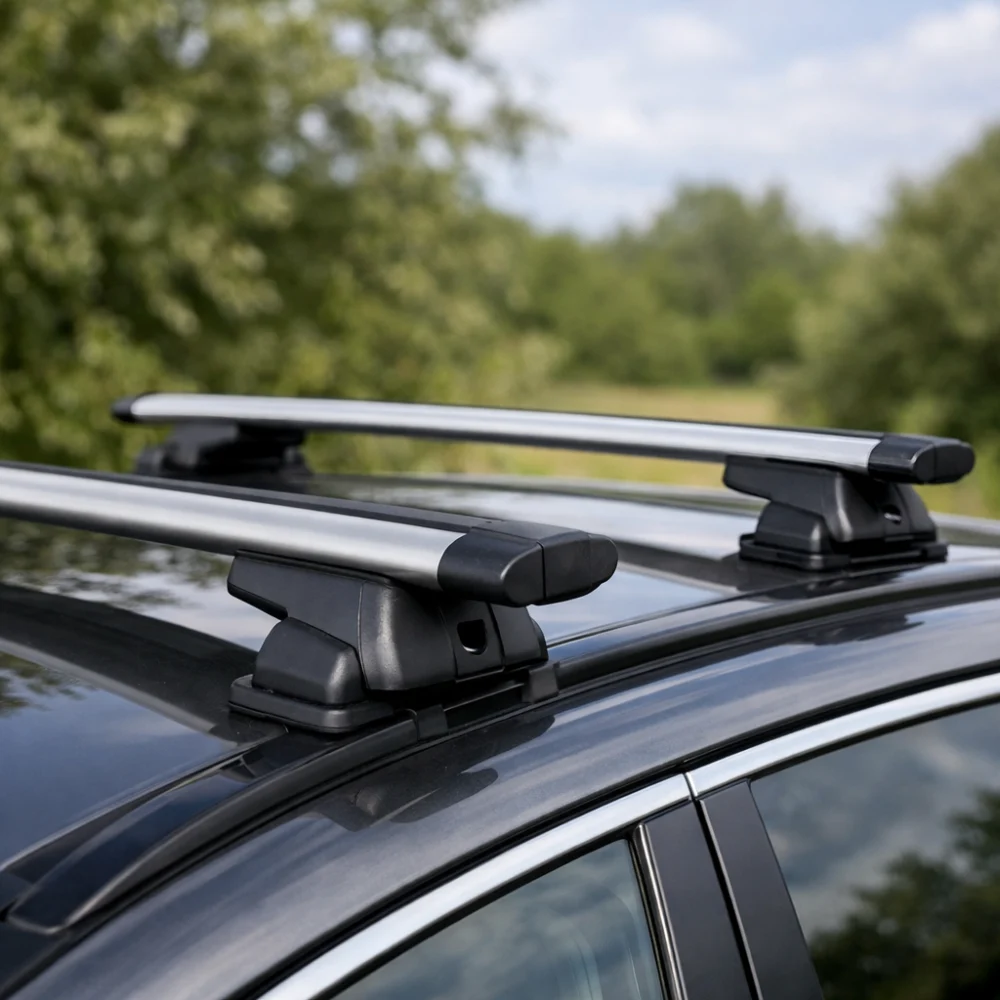
Roof racks are a practical way to carry awkward or bulky items on a vehicle roof, but the right choice depends on the vehicle, the load and how often you will use it. Some buyers want a simple setup for occasional luggage, while others need a more permanent system for regular outdoor gear or work use.
The main challenge is not just choosing a style, but making sure the rack suits your roof type and the items you plan to carry. A good match should feel secure, be convenient enough for everyday use and leave enough flexibility for other accessories you may want later.
What should you look for in a roof rack?
The best starting point is fit: the rack must suit the specific roof arrangement on your vehicle. After that, compare how much loading space you need, how often you will remove the rack and whether you want a more streamlined option or a more versatile carrier.
Specifications vary by model, so always check the individual product page before buying.
| Feature | What it means | Why it matters | What to check |
|---|---|---|---|
| Roof fit | The way the rack attaches to the vehicle roof | Fit determines whether the rack is suitable at all | Match the rack to your roof style and the vehicle details on the product page |
| Load carrying style | Whether it is a bar set, a basket, or a soft temporary solution | Different styles suit different loads and frequency of use | Think about luggage, sports gear or general cargo and choose accordingly |
| Removal and storage | How easy the rack is to take off and put away | Useful if you only need it occasionally | Consider weight, fitting method and how often you will swap it on and off |
| Security | Whether the rack has locking or other theft-deterring features | Important if the rack will stay on the vehicle for long periods | Check whether locks are included or required separately |
| Accessory compatibility | How well the rack works with carriers and add-ons | Helpful if you may later carry bikes, boxes or other equipment | Look for crossbar shape, spacing and any stated compatibility notes |
Key decision criteria
Roof type and vehicle fit
Roof racks are not one-size-fits-all. Some are designed for raised rails, some for flush rails, and some suit vehicles with no obvious external rails at all. The most important buying check is whether the product matches your vehicle roof arrangement, because a rack that does not fit properly is not a sensible buy.
What you plan to carry
A rack for general luggage may not be the best choice for sports equipment, and a carrier for bulky outdoor kit may be unnecessary for occasional light loads. Think about the shape of the items first, then choose the rack style that gives you enough support and tie-down options.
How often you will use it
If the rack will stay on the vehicle, ease of fit may matter less than stability and convenience. If you plan to remove it after trips, simple handling and straightforward storage become more important. The right balance depends on whether this is a regular utility item or an occasional travel accessory.
Material and construction style
Roof racks are commonly compared by their build style rather than a single performance figure. For buyers, the practical question is whether the construction feels robust enough for the intended use and whether the finish is suited to regular exposure outdoors. Check the listed materials and any stated load or vehicle-use limits.
Common roof rack types and variants
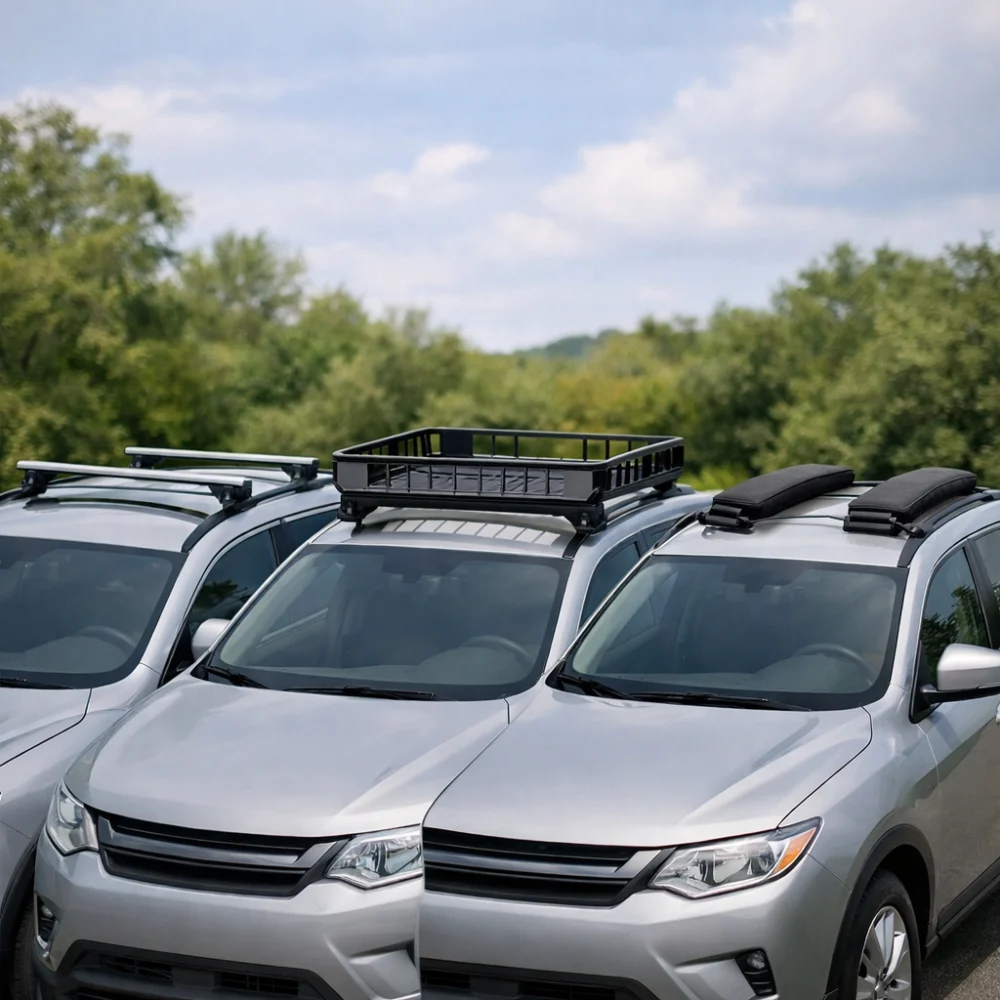
Within this category, buyers usually choose between bar-based systems, basket-style carriers and softer temporary solutions. Bar systems are often the foundation for other accessories. Basket-style carriers provide a more open cargo area. Soft rack options can suit occasional use when a full permanent system would be more than you need.
Bar sets
Cross bars are a common starting point for roof carrying. They are useful when you want a base for other accessories or need a straightforward platform for bags and equipment. Their limitation is that the load still needs to be secured correctly, and not every accessory will suit every bar shape.
Basket carriers
A basket gives you a defined cargo area and can feel more convenient for loose or awkward items. It may, however, add more bulk to the roof and can be less ideal if you want a low-profile setup. Check the external dimensions and how it will sit on your vehicle.
Soft roof racks
Soft racks are generally aimed at temporary or occasional use. They can suit buyers who want a simpler option for transporting sports equipment without committing to a permanent structure. Their trade-off is that they rely more heavily on correct positioning, tie-downs and sensible load choice.
Which roof rack suits which buyer?
| Buyer need | What to prioritise | Main trade-off |
|---|---|---|
| Occasional holiday use | Simple fit, easy removal, enough space for luggage | Convenience may matter more than permanent robustness |
| Regular outdoor trips | Secure attachment, accessory compatibility, durability | A more capable system may be less discreet on the vehicle |
| Mixed family use | Versatility and straightforward handling | A general-purpose setup may not be ideal for specialist loads |
| Sports equipment transport | Support for the item shape and suitable add-ons | Specialist accessories can narrow future flexibility |
Common mistakes to avoid
- Choosing by appearance first and fit second. The roof style and vehicle details should come before any other preference.
- Assuming one rack will suit every load. Different items need different support, spacing and securing methods.
- Overlooking removal and storage. A rack that is awkward to handle may be fine for permanent use but frustrating for occasional trips.
- Ignoring compatibility with future accessories. If you may add a roof box, bike carrier or cargo basket later, check the base system can support that plan.
Safety and suitability to check
A roof rack should always be chosen for the specific vehicle and intended use. Check the product information for vehicle fit, stated load guidance and any notes about accessories or installation requirements. Do not assume that a universal description means universal suitability.
It is also worth considering height clearance, wind noise and whether you will need the rack fitted for everyday driving or only for trips. Those practical concerns can matter as much as the rack itself.
Maintenance, storage and ownership considerations
Roof racks are exposed to weather, road dirt and repeated handling, so basic care matters. Cleaning, occasional inspection and sensible storage when not in use can help the rack stay in better condition. If the product includes locks or moving parts, check whether any ongoing care is needed.
Think too about where the rack will live when removed. A bulky system can be awkward to store in a garage or shed, while a lighter setup may be easier to manage but less substantial in use.
How to compare roof rack options efficiently
- Start with your vehicle roof type and confirm the rack is intended for it.
- Decide what you will carry most often and choose a style that matches that load.
- Compare handling, removal and storage if you will not leave it fitted all the time.
- Check any stated compatibility with accessories you may want later.
- Read the individual product page carefully for model-specific limits and fitting details.
Summary buyer decision checklist
- Does it match your vehicle roof type?
- Does the rack style suit the load you want to carry?
- Will it be easy enough to fit, remove and store?
- Are any locking or security features suitable for your use?
- Is it compatible with the accessories you may want later?
- Have you checked the individual product page for model-specific details?
Frequently asked questions
Do I need a roof rack or a roof box?
That depends on what you want to carry. A roof rack is usually the base system, while a roof box is an enclosed carrier that may use bars or a compatible mounting setup. If you need open support for kit or future accessories, the rack is often the starting point.
Are roof racks universal?
No, not in the sense that every rack fits every vehicle. Some systems are designed for particular roof layouts, and some are only suitable for specific bar or rail styles. Always check the fit notes carefully rather than relying on the word universal alone.
What matters most: strength or fit?
Fit comes first because a rack has to suit the vehicle before it can be useful at all. After that, strength, handling and accessory compatibility become the next priorities. A well-fitted rack that suits your intended load is usually the better choice than a stronger system that does not match the car.
Can I leave a roof rack on the vehicle all the time?
Some buyers do, but it depends on how often you use it and how the rack affects your driving or parking situation. Leaving it fitted may be convenient, but it can also add bulk and change noise or clearance. Check whether your use pattern justifies keeping it in place.
Will a roof rack work with other accessories?
Sometimes, but not always. Compatibility depends on the rack style, the bar shape and the accessory mounting system. If you may add bikes, a box or a basket later, it is sensible to check that the base rack can support that plan.
How do I choose between a basket and bars?
Bars are often the more flexible base for multiple accessory types. A basket is more defined and can feel easier for loose cargo, but it adds more structure on the roof. Choose bars if you want a platform for different add-ons, or a basket if your main need is straightforward cargo carrying.
What should I check before first use?
Before using a roof rack, confirm the fit, the fastening method and the load guidance shown on the product page. It is also sensible to make sure the load is secured properly and that the vehicle height is still manageable for your usual routes and parking spaces.

