
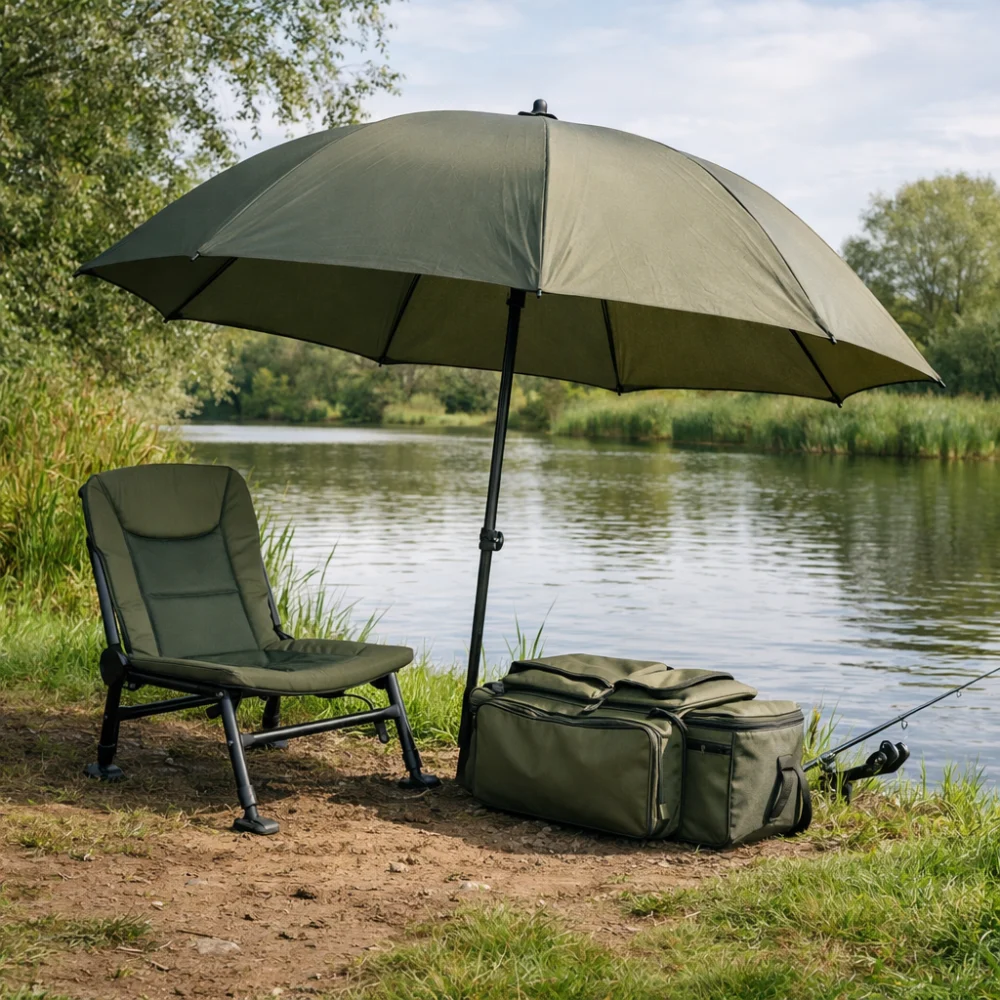
Fishing umbrellas are a practical way to add overhead cover while keeping your set-up light and simple. They are commonly used for rain, wind or strong sun, but the right choice depends on how you fish, how much space you want and how much shelter you need.
This guide helps you compare the main features without getting lost in model names or unnecessary detail. It focuses on the factors that usually matter most: coverage, adjustability, stability, packed size and whether you want a straightforward brolly or a more enclosed shelter style.
If you mainly want quick protection for short sessions, a basic fishing umbrella may be enough. If you spend longer periods on the bank or fish in more changeable weather, it is worth paying closer attention to side panels, tilt options and how securely the umbrella can be positioned.
What should you look for in a fishing umbrella?
The best starting point is to decide how much cover you actually need. A simpler umbrella is usually easier to carry and set up, while a more elaborate shelter-style version can give extra protection but may be bulkier and take longer to arrange. The key trade-off is always convenience versus coverage.
Specifications vary by model, so always check the individual product page before buying.
| Feature | What it means | Why it matters | What to check |
|---|---|---|---|
| Coverage | The amount of overhead and side protection the umbrella provides | It affects how much shelter you get from rain, wind and sun | Look at the canopy size and whether there are side panels or extra coverage |
| Tilt or angle adjustment | The ability to change the canopy angle | Helps you position the umbrella against changing weather or low sun | Check how the tilt works and whether it offers enough adjustment for your peg or bank position |
| Height adjustment | How much you can raise or lower the umbrella shaft | Useful for fitting the umbrella around your chair, box or ground conditions | Confirm the adjustment range and whether it suits the rest of your set-up |
| Stability | How securely the umbrella stands in use | Important in windy conditions and on softer ground | Check fixing points, ground spike style and whether extra guying or pegging is supported |
| Packed size and weight | How easy the umbrella is to carry and transport | Matters if you walk to your swim or carry several items | Compare the stored length, overall bulk and whether a carry bag is included |
| Extra enclosure | Panels, windows or wraparound sections that extend the basic umbrella | Can improve comfort, but usually adds weight and complexity | Decide whether the extra protection is worth the added setup and carry effort |
Key decision criteria explained
Coverage and weather protection
Think about whether you need a simple overhead shield or something that gives more side cover too. A basic umbrella is often enough for short sessions or fair weather, while a shelter-style design may suit anglers who want more protection from driving rain or wind. The downside of more coverage is usually more weight, more fabric and less compact storage.
Tilt and positioning
Tilt adjustment is useful because weather rarely arrives from the same direction all day. An adjustable umbrella is easier to angle over a seat, bait area or tackle box, but the exact mechanism and range vary. If you fish on awkward banks or uneven pegs, this is worth checking carefully.
Height and set-up flexibility
Some anglers want the umbrella low and close in; others prefer more headroom. Height adjustment helps you match the shelter to your seating position and to the space available on the bank. A higher set-up can feel more comfortable, but it may be less resistant to wind if it is left too exposed.
Stability on the bank
How an umbrella is fixed matters as much as the canopy itself. Softer ground, open swims and breezier venues usually demand a more secure set-up than a sheltered spot. Look for details that suggest how the umbrella is anchored and whether the design is intended for calmer conditions or more exposed use.
Carry comfort and transport
If you move swims often or carry your gear a long way, the smallest practical option can be the better buy. More features usually mean more bulk, so it is worth being honest about how much equipment you actually want to carry. A simple umbrella can be a better fit than a more complex shelter if mobility matters most.
Types and variants within the category
Fishing umbrellas tend to fall into a few practical styles. A plain umbrella is the lightest and simplest option, making it suitable for anglers who want quick cover without much fuss. Tilted or adjustable versions add more flexibility and are useful when weather or sun direction changes.
Some designs extend into brolly shelters with side sections or wraparound panels. These can give a more enclosed feel and more all-round protection, but they are usually less minimal than a standard umbrella. If you want maximum simplicity, avoid paying for features you will rarely use.
Which type suits different buyers?
| Buyer need | Likely priority | What usually suits that need |
|---|---|---|
| Short sessions | Speed and easy carry | A simple umbrella with straightforward setup |
| Longer sits | Comfort and more consistent shelter | An adjustable model, possibly with extra side coverage |
| Exposed venues | Better stability and weather protection | A design that can be secured firmly and angled effectively |
| Mobile anglers | Low bulk and lighter transport | A compact umbrella without unnecessary add-ons |
| Anglers who stay put | Greater comfort in one swim | A more enclosed shelter-style umbrella if space and weight are less important |
Common mistakes and misunderstandings
- Choosing by size alone: a larger canopy is not automatically better if it becomes awkward to carry or hard to secure.
- Ignoring ground conditions: an umbrella that feels fine on firm ground may be less convenient on soft or uneven banks.
- Overlooking side protection: overhead cover helps, but wind and rain often come from an angle.
- Buying more umbrella than needed: if you only want occasional cover, a complex shelter may add weight and cost without much benefit.
- Assuming all adjusters work the same way: tilt and height mechanisms vary, so check how much control a model really gives you.
Safety and suitability caveats
Always match the umbrella to the conditions you actually fish in. A fishing umbrella is a comfort and shelter item, not a guarantee of protection in severe weather, and it should be used with sensible judgement about venue exposure and setup security. If you fish in changeable conditions, check the product description carefully for any limits on how it is intended to be used.
Maintenance, storage and lifespan considerations
General care is usually simple: allow the umbrella to dry before packing it away, keep the fabric clean and store it somewhere dry and uncrushed. That helps reduce wear and makes the umbrella easier to use next time. If the model includes extra panels, windows or a carry bag, those parts may also affect how neatly it stores and how long it stays convenient to use.
How to compare options efficiently
- Start with how you fish: short sessions, longer sits, mobile use or more settled bank fishing.
- Choose the level of cover you actually need, from simple overhead shelter to more enclosed protection.
- Compare the features that matter most: tilt, height, stability, packed size and any extra side coverage.
- Consider the trade-off between comfort and portability.
- Check the individual product page for the exact dimensions, adjustments and included accessories before deciding.
Summary buyer decision checklist
- Does the umbrella suit your usual weather and venue conditions?
- Is the level of cover right for your sessions, without adding unnecessary bulk?
- Will the tilt and height adjustment suit your bank position?
- Is the umbrella likely to be stable enough for the places you fish?
- Are the packed size and carry weight realistic for how you travel to the water?
- Do you want a simple brolly or a more shelter-like design?
Frequently asked questions
What is the difference between a fishing umbrella and a brolly shelter?
A fishing umbrella usually means a simpler canopy for overhead cover, while a brolly shelter often adds side sections or extra enclosure. The shelter-style option can feel more protective, but it is often less minimal and may take more effort to carry and set up.
Is a larger umbrella always better?
Not necessarily. A larger canopy can give more cover, but it may also be bulkier, heavier and more awkward in windy conditions. The right size is the one that fits your setup and the places you fish.
Do I need tilt adjustment?
Tilt is useful if you fish in changing weather or want more control over where the canopy sits. It is not essential for everyone, but it can make an umbrella more flexible and easier to position.
Should I choose a model with side panels?
Side panels can improve comfort when rain or wind comes in at an angle. The trade-off is extra bulk and a little more setup. If you usually fish in calmer spots, a simpler design may be enough.
What should I check before buying for a first fishing umbrella?
Focus on coverage, stability, the type of adjustment offered and how easy it will be to carry. It is also worth checking whether the umbrella is intended for quick shelter or a more enclosed bank setup.
How important is packed size?
Very important if you walk to your swim or carry a lot of other tackle. A compact umbrella is easier to live with on the bank, even if it offers less extra protection than a larger shelter-style option.

