BUYERS GUIDE
Hair Straightener Buyers Guide
Hair Straighteners are heated styling appliances designed to smooth, straighten and shape hair by pressing sections between heated plates. They are often bought for everyday styling, frizz control, smoothing thick hair, styling fringes, touching up hair between washes, creating soft waves, travel use and replacing older straighteners that no longer feel practical.
This guide helps you choose the right hair straightener by explaining the practical details that matter before buying. The right choice depends on your hair type, plate width, temperature settings, heat up time, plate material, cord length, handle comfort, storage, safety features and how often you style your hair.
A hair straightener is not just about getting hot. Fine hair may need different heat control from thick or coarse hair. Short hair and fringes may suit narrower plates, while longer or thicker hair may be easier with wider plates. The best choice is the one that fits your hair, styling routine and comfort level.
Specifications vary by model, so always check the individual product page before buying.
Quick Answer
The right Hair Straightener is the one that suits your hair type, styling routine and heat control needs. For fine or delicate hair, adjustable lower temperature settings may be important. For thick, long or coarse hair, wider plates and steady heat control may be more practical. If you travel often, check voltage guidance, heat resistant storage and safety shut off where included. Always compare plate width, temperature range, plate material, cord length, heat up information, safety features, storage, cleaning guidance and product page details before buying.
Quick Product Comparison Framework
| Feature | What It Means | Why It Matters | What To Check |
|---|---|---|---|
| Plate width | The size of the heated plates | Affects speed, control and suitability for hair length | Check narrow, standard or wide plate design |
| Plate material | Ceramic, titanium, tourmaline style or other coating where stated | Affects glide, feel and heat behaviour | Check the product page and care guidance |
| Temperature control | Fixed or adjustable heat settings | Important for different hair types | Check temperature range and controls |
| Heat up time | How quickly the straightener reaches styling temperature | Useful for busy routines | Check stated heat up information |
| Floating plates | Plates that move slightly under pressure where included | Can help maintain contact with hair | Check whether this feature is listed |
| Rounded barrel | Curved outer edges where included | Useful if creating waves or curls | Check shape and styling suitability |
| Cord length | Length of the power cable | Affects comfort at mirrors and sockets | Check cord length where supplied |
| Swivel cord | Cord design that rotates where included | Helps reduce cable twisting during styling | Check feature details |
| Auto shut off | Turns off after a period where included | Adds reassurance if forgotten | Check timing and feature details |
| Heat resistant mat or pouch | Storage accessory where supplied | Useful for cooling and travel | Check what is included |
| Travel suitability | Voltage guidance, compact size or travel lock where included | Important for holidays and work trips | Check travel information carefully |
| Wet hair suitability | Whether use on damp hair is supported | Most straighteners are for dry hair only unless stated | Check product guidance before use |
Key Decision Criteria Explained
Hair Type And Styling Routine
Your hair type should guide the straightener you choose. Fine hair may need careful heat control and a lighter approach. Thick, coarse or long hair may need wider plates, more time and a model that feels comfortable during longer styling sessions.
Short hair, fringes and detailed styling often suit narrower plates because they are easier to position close to the roots and around smaller sections. Longer hair may be quicker with standard or wider plates.
Think about your real routine. Do you straighten every day, only for nights out, mainly smooth the ends, style a fringe or create waves as well as straight styles? The right model depends on use, not just specification.
Plate Width
Plate width affects how the straightener handles different hair lengths and styles. Narrow plates can be useful for short hair, fringes, roots and more detailed styling. Standard width plates may suit many everyday users. Wide plates can help cover larger sections of long or thick hair.
However, wider plates can be less precise for short hair or curls. Narrower plates may take longer on very thick hair.
Choose plate width based on the hair you style most often.
Temperature Control
Temperature control is one of the most important buying factors. A fixed temperature straightener may be simple, but it gives less flexibility. Adjustable temperature settings allow you to choose lower or higher heat depending on hair type and styling need.
Fine, fragile or colour treated hair may need more cautious heat use. Thick or coarse hair may need a different setting, depending on the model and routine.
More heat is not automatically better. A good straightener should let you style with control rather than forcing you to use one high temperature.
Plate Material And Coating
Straightener plates may be described as ceramic, titanium, tourmaline style or coated in another material where stated. These terms can relate to glide, heat distribution and styling feel, but performance varies by model.
Do not choose only by a material term. The whole design matters, including temperature control, plate smoothness, plate movement, handle comfort and how the straightener is maintained.
Check the product page carefully and follow care guidance to avoid damaging the plates.
Heat Up Time
Heat up time matters if you style your hair before work, school runs or quick outings. A faster heat up time can be convenient, but it should not outweigh temperature control and safe use.
Some models may include indicator lights or displays that show when the straightener is ready. This can help prevent guessing.
Always wait until the appliance is ready according to the product guidance.
Floating Plates And Hair Grip
Floating plates move slightly as they pass over the hair where included. This may help maintain more even contact and reduce snagging, depending on the model.
A straightener should grip the hair enough to style it, but not pull harshly. Smooth glide, plate alignment and the way the plates close can all affect comfort.
If hair snagging is a concern, look closely at plate design and product information.
Shape For Straightening And Curling
Some straighteners have rounded outer edges, which can make them more useful for creating waves, flicks or loose curls. A very square or bulky design may be less comfortable for this.
If you only want sleek straight hair, shape may matter less. If you want one tool for straightening and occasional curls, rounded edges and a comfortable swivel cord may be more important.
Check whether the product page shows styling versatility before relying on it.
Cord Length And Swivel Cord
Cord length affects how comfortable the straightener is to use. A short cable can be awkward if your mirror is not near the socket. A longer cable gives more freedom, but still needs safe positioning.
A swivel cord can reduce twisting while styling, especially when turning the straightener to shape ends or create waves.
Check cord length and cable design where supplied.
Safety Features
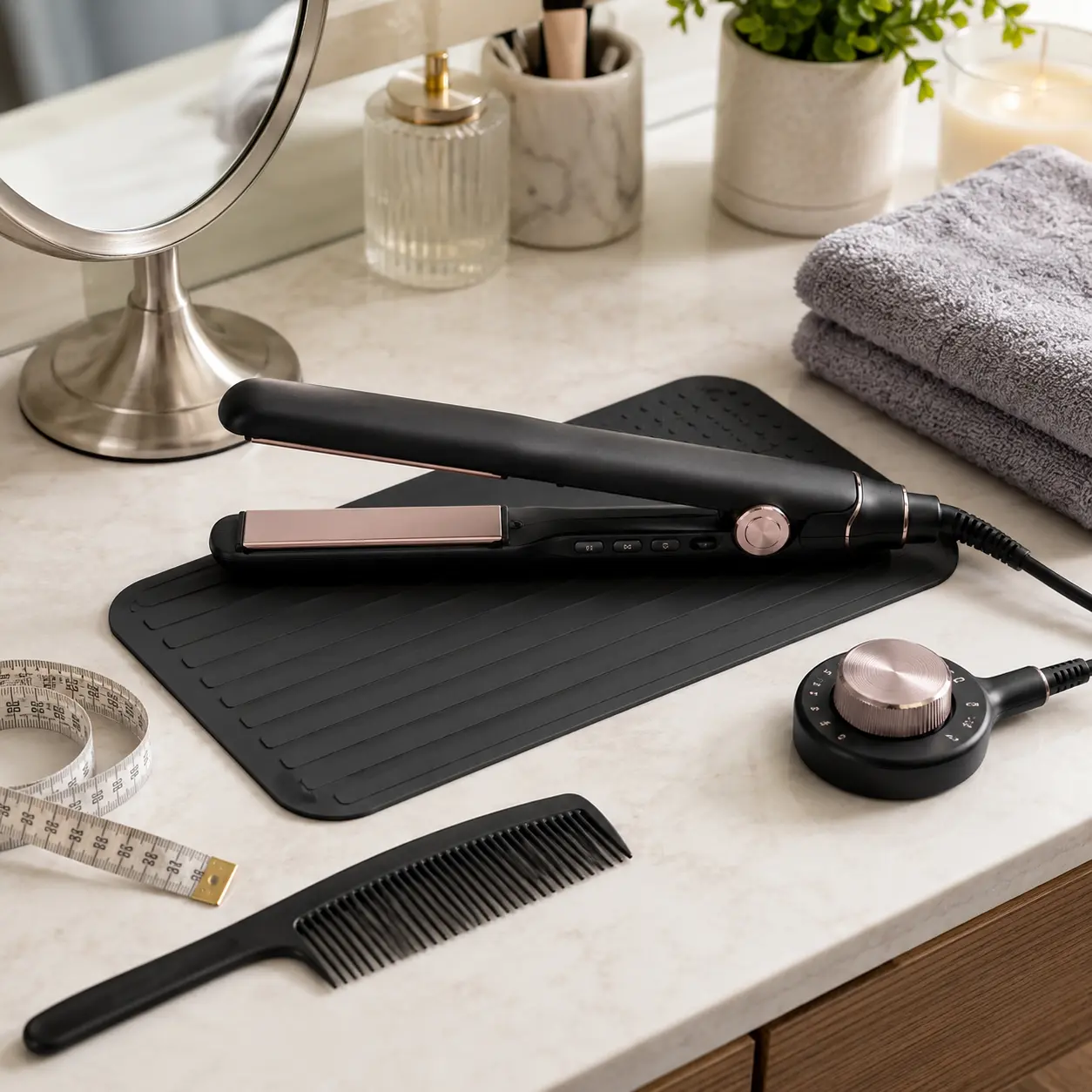
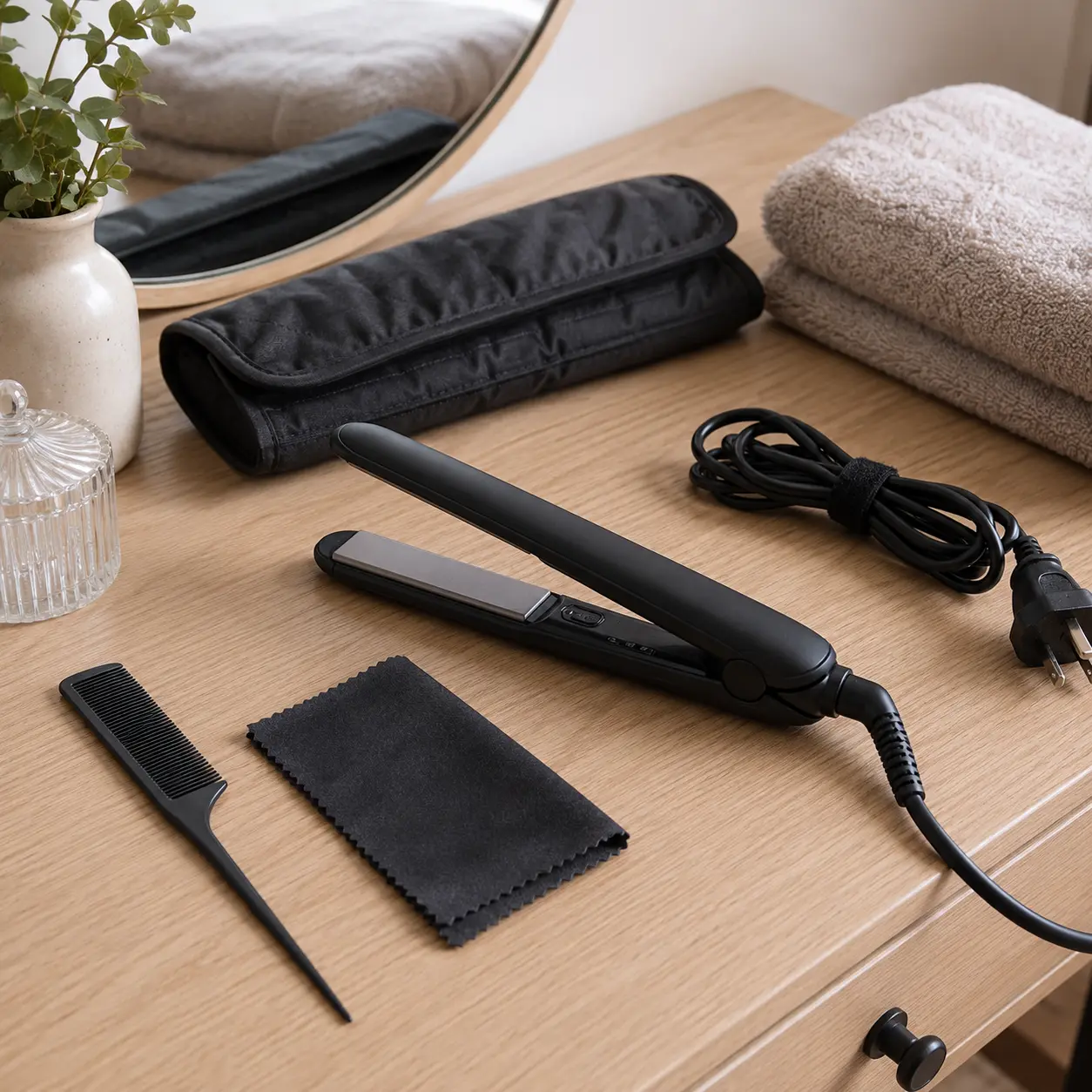
Hair straighteners get very hot, so safety features matter. Some models may include automatic shut off, heat resistant mats, heat resistant pouches, plate locks or ready indicators where stated.
These features add reassurance, but they do not replace safe use. The straightener should be kept away from flammable items, children, pets and water.
Always allow plates to cool before storage unless the product guidance and storage accessory clearly support earlier packing.
Travel And Storage
If you travel regularly, check compact size, travel lock, voltage guidance and whether a heat resistant pouch is included. Not every straightener is suitable for overseas use, so travel voltage should be checked carefully.
At home, think about storage. A plate lock, hanging loop or heat mat can make the appliance easier to store safely once cool.
A straightener that is awkward to store may end up left on a surface, which is not ideal around busy bathrooms or bedrooms.
Product Type Differentiation And Variants
Standard Hair Straighteners
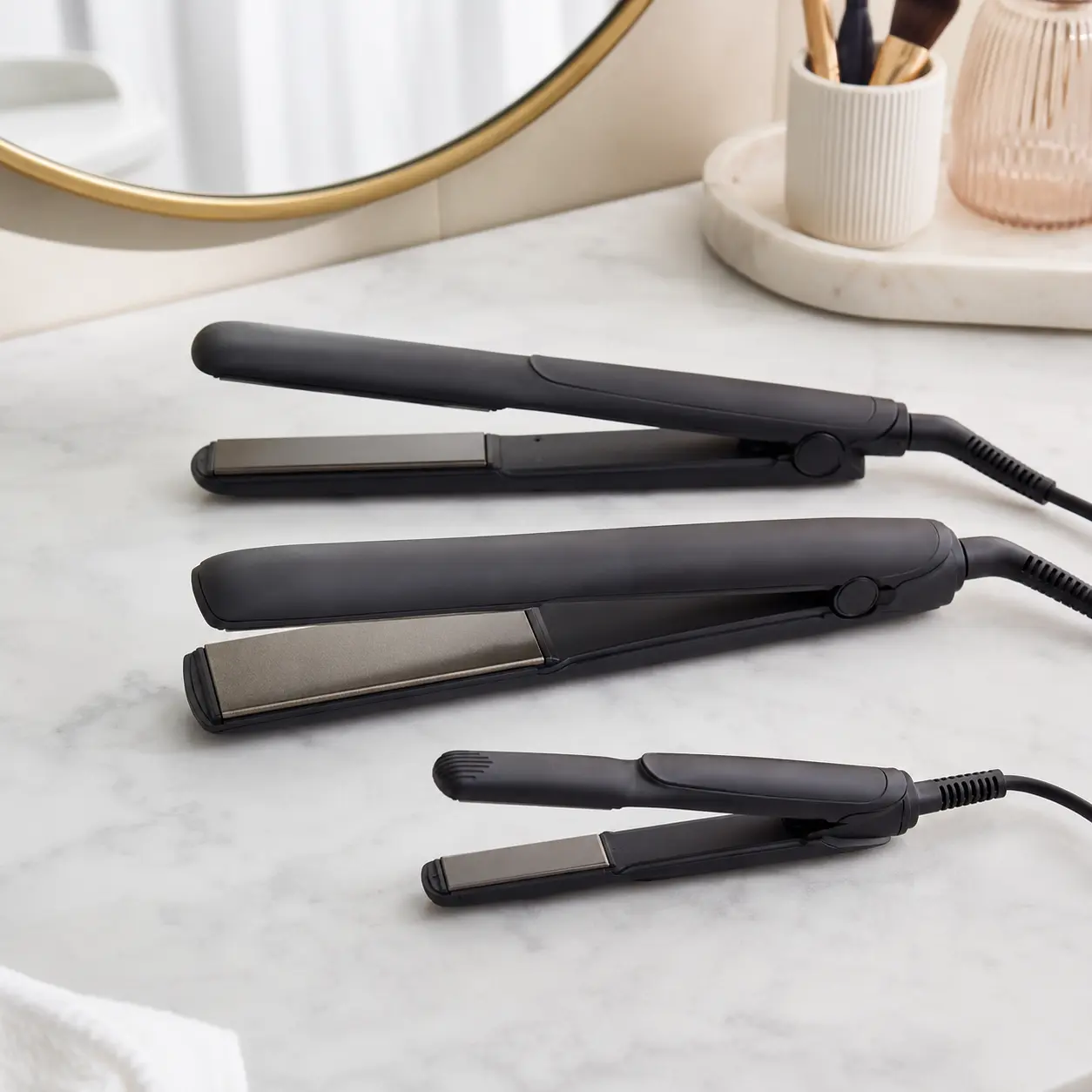
Standard hair straighteners usually have mid width plates and are designed for everyday smoothing and straightening. They may suit many users with medium length hair and general styling needs.
The limitation is that they may not be ideal for very short hair, very thick hair or travel use depending on the model.
Wide Plate Hair Straighteners
Wide plate straighteners are often chosen for long, thick or coarse hair because they can cover larger sections.
The limitation is precision. They may be less suitable for fringes, short hair or creating smaller curls.
Narrow Plate Hair Straighteners
Narrow plate straighteners may suit short hair, fringes, roots, edges and more detailed styling.
The limitation is speed. They may take longer on thick or long hair.
Travel Hair Straighteners
Travel straighteners are usually smaller and easier to pack. They may suit holidays, gym bags, work trips or occasional use away from home.
The limitation is that compact models may not suit long, thick hair or full daily styling. Check voltage and plug requirements before travel.
Cordless Hair Straighteners
Cordless straighteners may suit buyers who want flexible styling without a cable where stated by the product page.
The limitation is battery life, charging time and heat consistency. Check runtime and charging guidance carefully.
Steam Or Wet Use Straighteners
Some straighteners may be designed for steam styling or use with damp hair where clearly stated. These are specialist designs and should not be confused with standard straighteners.
The limitation is suitability and care. Do not use ordinary straighteners on wet hair unless the product guidance clearly supports that use.
Specifications vary by model, so always check the individual product page before buying.
Suitability By Buyer Type Or Need
| Buyer Type Or Need | What To Prioritise | What To Be Careful About |
|---|---|---|
| Fine hair user | Lower temperature settings and smooth glide | Avoid relying on high heat |
| Thick hair user | Wider plates and suitable heat control | Styling may still take time |
| Short hair user | Narrow plates and precise handling | Wide plates may feel bulky |
| Long hair user | Standard or wide plates and comfortable grip | Check weight for longer sessions |
| Curly hair user | Adjustable heat, smooth plates and section control | Technique and heat protection matter |
| Frequent traveller | Compact size, voltage guidance and travel pouch | Check plug and charging needs |
| Daily user | Comfort, heat control and auto shut off where included | Repeated heat use needs care |
| Occasional user | Simple controls and safe storage | Avoid paying for unused features |
| Buyer wanting waves | Rounded barrel and swivel cord | Not every straightener curls well |
| Gift buyer | Adjustable heat and common styling features | Avoid specialist models unless wanted |
Common Mistakes And Misunderstandings
Choosing The Hottest Straightener
A higher temperature is not automatically better. Too much heat may be unnecessary and unsuitable for some hair types.
Choose a model with useful temperature control rather than focusing only on maximum heat.
Ignoring Hair Type
Fine, thick, short, long, curly and colour treated hair can all need different styling approaches.
Match the straightener to the user’s hair and routine.
Assuming All Plates Are The Same
Plate width, coating, smoothness, alignment and movement can all affect styling feel.
Check the full plate design, not just one material term.
Using Straighteners On Wet Hair
Most straighteners are intended for dry hair only unless the product page clearly says otherwise. Using a standard straightener on wet hair can be unsafe and unsuitable.
Always follow product guidance.
Forgetting About Cord Length
A straightener can be difficult to use if the cable is too short for your mirror and socket position.
Check cord length and swivel design where listed.
Overlooking Safety Storage
Straighteners remain hot after use. They need safe cooling and storage away from children, pets, bedding, towels and heat sensitive surfaces.
Check whether a heat mat, pouch or plate lock is included.
Buying Wide Plates For Short Hair
Wide plates can be useful for long thick hair, but they may feel awkward on fringes, short styles or close root work.
Choose plate width around the hair length.
Expecting One Tool To Suit Everyone
A straightener that suits one person may not suit another. Hair type, hand comfort, heat preference and styling routine all matter.
For shared households, adjustable settings may be especially useful.
Safety And Suitability Caveats
Hair Straighteners should be used only as intended and in line with the manufacturer’s instructions. They involve high heat, electricity and direct contact with hair, so careful handling is essential.
Use the straightener on suitable hair conditions only as stated by the product guidance. Do not use on wet or damp hair unless the model clearly supports that use. Keep the appliance away from water, sinks, baths and wet surfaces.
Do not leave heated plates touching towels, bedding, carpets, furniture or other heat sensitive materials. Allow the appliance to cool safely before storage unless the supplied storage accessory and instructions say otherwise.
Keep straighteners away from children and pets during and after use. Do not use a damaged straightener, plug or cable. Do not modify, dismantle or attempt to repair the appliance.
Always check the individual product page for plate type, temperature range, safety features, cord length, heat up time, storage guidance, electrical information and intended use before buying.
Maintenance, Storage And Lifespan Considerations
Hair straighteners need simple care to remain practical. Product residue, hair products and dust can build up on plates over time, so clean only as directed by the manufacturer.
Allow the plates to cool before cleaning. Avoid abrasive cleaning methods that may damage the plate surface. Keep the cable in good condition and avoid wrapping it too tightly around the appliance unless the guidance allows it.
Store straighteners in a dry place once cool. If a heat resistant pouch, mat or plate lock is included, use it according to the product instructions.
The lifespan of a hair straightener depends on model, frequency of use, cleaning, storage, cable care and how carefully it is handled.
How To Compare Models Efficiently
- Decide what hair type the straightener needs to suit.
- Choose the right plate width for hair length and thickness.
- Check adjustable temperature settings.
- Review plate material and care guidance.
- Check heat up time and ready indicators.
- Look for floating plates where useful.
- Check cord length and swivel cord design.
- Review safety features such as auto shut off where included.
- Consider travel and storage accessories.
- Read the individual product page before buying.
Summary Buyer Decision Checklist
Before buying Hair Straighteners, check the following:
| Buying Check | Why It Matters |
|---|---|
| Hair type suitability | Different hair needs different heat and plate design |
| Plate width | Affects speed and precision |
| Temperature control | Helps suit different hair types |
| Plate material | Affects glide and care requirements |
| Heat up time | Useful for busy routines |
| Floating plates | May help with smoother contact where included |
| Rounded edges | Useful for waves and curls |
| Cord length | Affects comfort near mirrors and sockets |
| Auto shut off | Adds reassurance where included |
| Heat mat or pouch | Helps with safer storage |
| Travel guidance | Important for holidays and work trips |
| Product page details | Specifications vary by model |
Frequently Asked Questions
For everyday use, look for adjustable temperature settings, comfortable handling, suitable plate width and useful safety features such as auto shut off where included. The best choice depends on your hair type and how often you style it.
Wide plates can be useful for long, thick or coarse hair because they cover larger sections. They may be less practical for short hair, fringes or detailed styling. Choose plate width around your hair length and routine.
Short hair usually benefits from narrower plates because they are easier to control around roots, fringes and smaller sections. Check plate size and handle comfort before buying.
Adjustable temperature settings are useful because different hair types need different heat levels. They are especially helpful if more than one person will use the straightener.
Some straighteners can be used to create waves or curls, especially models with rounded outer edges and a swivel cord. Not every design is comfortable for curling, so check the shape and styling guidance.
Only if the product page and instructions clearly say the model is suitable for wet or damp hair. Most standard straighteners are intended for dry hair only.
Check size, voltage guidance, plug requirements, travel lock and whether a heat resistant pouch is included. Do not assume every straightener is suitable for international travel.
Ceramic plates are common, but no single plate material is automatically best for everyone. Check plate smoothness, temperature control, width, care guidance and user suitability rather than choosing by material alone.
Let the plates cool according to the product guidance, keep them away from heat sensitive materials, and store them in a dry place. Use a heat mat, pouch or plate lock where supplied and suitable.
Check the recipient’s hair type, hair length, styling routine, need for adjustable temperature, travel use and preferred plate width. A good gift should suit how they actually style their hair.