BUYERS GUIDE
Ice Cream Maker Buyers Guide
Ice Cream Makers are kitchen appliances designed to churn and freeze dessert mixtures into ice cream, frozen yoghurt, sorbet, gelato style desserts or similar frozen treats, depending on the model and recipe used. They are often bought for family desserts, summer entertaining, homemade recipes, dairy free options, lower sugar recipes, children’s activities, gifts and anyone who wants more control over ingredients.
This guide helps you choose the right ice cream maker by explaining the practical details that matter before buying. The right choice depends on machine type, freezing method, bowl capacity, batch size, preparation time, cleaning, storage space, noise, recipe flexibility and how often you plan to use it.
An ice cream maker is not just about pressing a button and getting instant ice cream. Some models need the bowl frozen in advance, while others include built in freezing where stated. Some suit occasional family treats, while others are more practical for regular use or larger batches. The best choice is the one that fits your kitchen, freezer space and dessert routine.
Specifications vary by model, so always check the individual product page before buying.
Quick Answer
The right Ice Cream Maker is the one that suits how often you make frozen desserts, how much freezer space you have and how much preparation you are happy to do. For occasional use, a freezer bowl model may be enough if you can pre freeze the bowl. For more frequent use, a compressor style ice cream maker may be more convenient because it can freeze as it churns where stated. Always check capacity, freezing method, preparation time, bowl size, cleaning guidance, recipe suitability, dimensions, noise and product page details before buying.
Quick Product Comparison Framework
| Feature | What It Means | Why It Matters | What To Check |
|---|---|---|---|
| Machine type | Freezer bowl, compressor, soft serve style or attachment based design | Different types suit different routines | Match the type to your main use |
| Freezing method | Pre frozen bowl or built in freezing where included | Affects preparation time and convenience | Check whether the bowl needs freezing first |
| Bowl capacity | How much mixture the bowl can hold | Affects portion size and batch planning | Check stated capacity and usable fill guidance |
| Batch size | How much finished dessert can be made at once | Important for families and entertaining | Check serving expectations carefully |
| Churning time | How long the machine takes to churn a batch | Affects convenience | Check product guidance and recipe notes |
| Preparation time | Whether ingredients or bowls must be chilled in advance | Important for planning | Check instructions before buying |
| Paddle design | The part that churns the mixture | Affects texture and cleaning | Check removable parts and care guidance |
| Timer | Manual or digital timer where included | Helps manage churning time | Check control details |
| Add in chute | Opening for chocolate, fruit or nuts where included | Useful for mixing extras near the end | Check whether this feature is supplied |
| Cleaning | How easy the bowl, paddle and lid are to clean | Sticky dairy and sugar mixtures need careful cleaning | Check removable parts and washing guidance |
| Storage | Space needed for machine, bowl and accessories | Some models are bulky | Check dimensions and freezer bowl size |
| Noise | Churning motors and compressors may make sound | Important in open plan kitchens | Check noise information where supplied |
Key Decision Criteria Explained
Machine Type
The first decision is the type of ice cream maker you need. A freezer bowl ice cream maker uses a bowl that must usually be frozen before use. This can suit occasional buyers because the machine may be simpler and more compact, but it needs planning.
A compressor ice cream maker has built in freezing where stated. It can be more convenient for regular use because it does not usually need the bowl pre frozen, but it is often larger, heavier and more expensive.
Some machines are designed for soft serve style desserts, while others may be attachments for stand mixers or other kitchen appliances where compatible. Choose the type that suits your routine, not just the most impressive looking machine.
Freezer Bowl Versus Compressor
Freezer bowl models can work well if you have freezer space and remember to freeze the bowl in advance. The limitation is flexibility. If the bowl is not cold enough, the mixture may not churn properly. You may also need to wait before making a second batch.
Compressor models are more self contained where built in freezing is included. They may suit buyers who want to make ice cream more often or who do not want to store a bowl in the freezer.
The trade off is cost, size, weight and storage. A compressor model may be more convenient, but it may not suit a small kitchen.
Capacity And Batch Size
Capacity matters because frozen dessert expands and thickens as it churns. A bowl may have a stated capacity, but the usable amount of mixture may be lower depending on the product guidance.
A small machine may suit one or two people, occasional treats or testing recipes. A larger machine may suit families, parties or meal prep style dessert making.
Avoid choosing capacity by litres alone. Think about how many people you usually serve and whether you want leftovers.
Preparation Time
Ice cream making often involves more preparation than buyers expect. Recipes may need ingredients chilled before churning. Freezer bowl machines may need the bowl frozen for several hours or overnight, depending on the model.
This is not necessarily a problem, but it affects convenience. If you want spontaneous desserts, a model that needs long pre freezing may feel limiting.
Check the preparation process before buying so the machine suits how you actually cook.
Texture And Recipe Expectations
Texture depends on the machine, recipe, ingredients, churning time and freezing method. Homemade ice cream can feel different from shop bought tubs because commercial products may use different equipment and ingredients.
Sugar, fat, dairy content, stabilisers and freezing time all affect softness, iciness and scoopability. Sorbets, frozen yoghurt and dairy free recipes may behave differently from traditional ice cream.
Choose a machine with realistic expectations and follow recipes designed for that appliance type.
Churning Time And Controls
Churning time varies by model and recipe. Some machines use simple on and off controls, while others include digital timers or automatic programmes where stated.
A timer can be useful, but it does not replace checking the mixture texture. Over churning or under churning can affect results, depending on the recipe and machine.
Simple controls may suit occasional use, while more detailed controls may appeal to regular users.
Add Ins And Mix Ins
Many buyers want to add chocolate chips, fruit, biscuit pieces, nuts or swirls. Some machines include an opening in the lid for add ins where supplied.
Add ins usually need to be added at the right stage so they mix through without stopping the churn. Large or hard pieces may not suit every paddle design.
Check product guidance and recipe advice before adding extras.
Cleaning And Hygiene
Cleaning is especially important with ice cream makers because mixtures often contain dairy, sugar and sometimes eggs depending on the recipe. Bowls, paddles, lids and seals should be cleaned according to the product instructions.
Some parts may be removable, but not all parts may be dishwasher safe. Compressor bases and motor units need careful cleaning and should not be immersed unless product guidance clearly allows a part to be washed.
If cleaning looks awkward, the machine may be used less often.
Freezer Space And Storage
Freezer bowl models need space in the freezer for the bowl. This can be a major issue if the bowl is large or your freezer is usually full.
Compressor models may avoid freezer bowl storage, but the appliance itself may be bulky and heavy. It may need permanent worktop space or a large cupboard.
Before buying, check both appliance dimensions and any bowl storage requirements.
Noise And Kitchen Use
Ice cream makers use motors, paddles and sometimes compressors. They can make noise while churning, and compressor models may also make cooling sounds.
This may not matter in a separate kitchen, but it can be noticeable in open plan rooms. If the machine will run while people are eating, working or watching TV, noise may matter.
Check noise information where supplied and think about when you will use it.
Product Type Differentiation And Variants
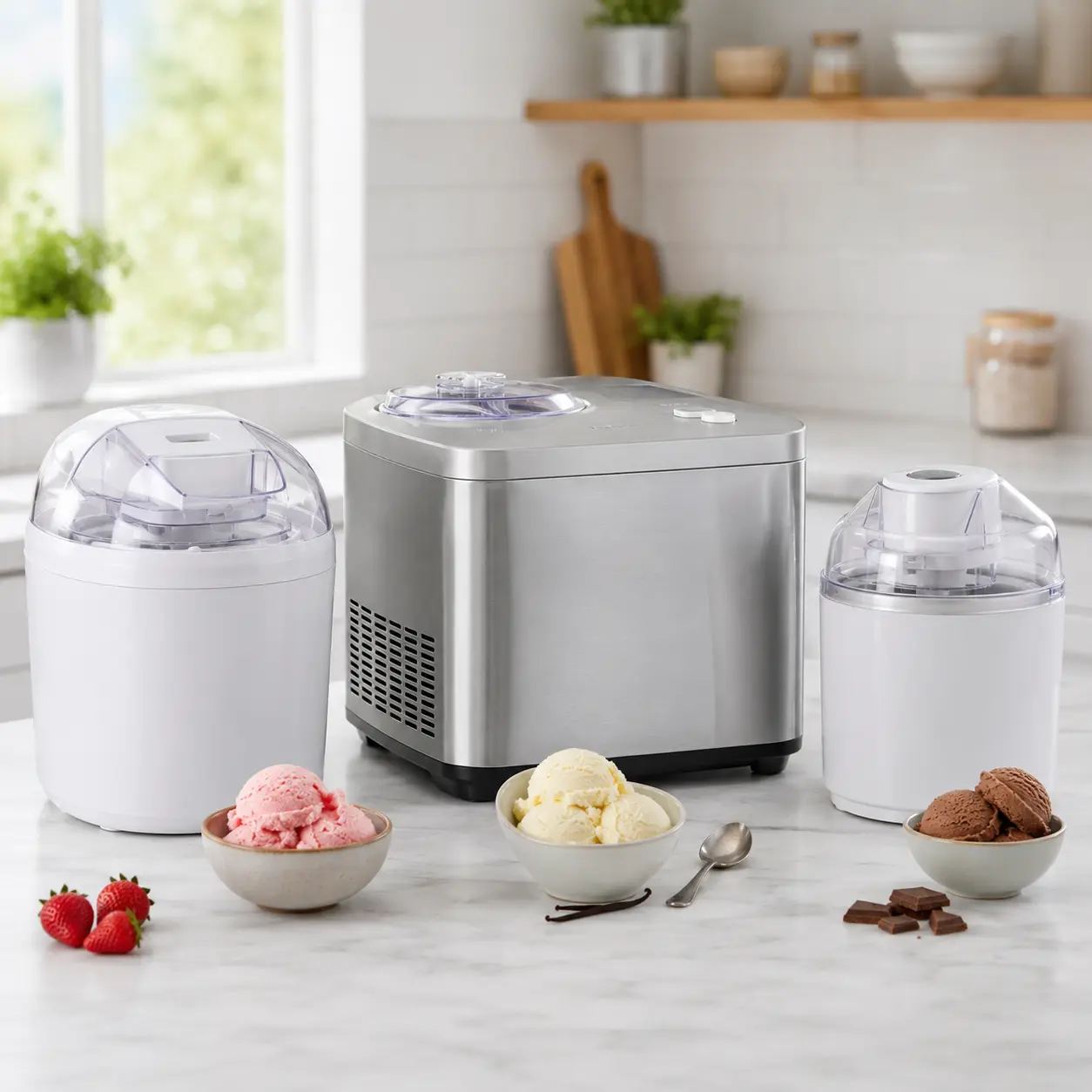
Freezer Bowl Ice Cream Makers
Freezer bowl ice cream makers use a removable bowl that must usually be frozen before use. They may suit occasional users, families making treats and buyers with enough freezer space.
The limitation is planning. If the bowl is not frozen properly, results may be poor.
Compressor Ice Cream Makers
Compressor ice cream makers include built in freezing where stated. They may suit buyers who make ice cream more often or want more flexibility between batches.
The limitation is size, weight and cost. They may be less practical for small kitchens.
Soft Serve Style Ice Cream Makers
Soft serve style machines are designed to create softer dessert textures where supported by the product page and recipes.
The limitation is that they may not suit buyers wanting firm scoopable ice cream straight from the machine. Further freezing may still be needed depending on the recipe.
Frozen Yoghurt And Sorbet Makers
Some ice cream makers are suitable for frozen yoghurt, sorbet or fruit based desserts where stated. These can appeal to buyers who want dairy free or fruit based options.
The limitation is that different recipes behave differently. Sorbet may freeze and churn differently from dairy ice cream.
Ice Cream Maker Attachments
Some ice cream makers are attachments for stand mixers or other appliances where compatible. These may suit buyers who already own the matching appliance.
The limitation is compatibility. Do not assume an attachment fits every mixer or kitchen machine.
Compact Ice Cream Makers
Compact ice cream makers may suit smaller kitchens, occasional use and smaller portions.
The limitation is batch size. They may not suit families or entertaining unless you are happy to make smaller batches.
Specifications vary by model, so always check the individual product page before buying.
Suitability By Buyer Type Or Need
| Buyer Type Or Need | What To Prioritise | What To Be Careful About |
|---|---|---|
| Occasional user | Simple controls and compact storage | Freezer bowl preparation may still be needed |
| Family buyer | Larger capacity and easy cleaning | Small bowls may not make enough portions |
| Regular dessert maker | Compressor model where suitable and practical controls | Larger machines can be heavy |
| Small kitchen | Compact footprint and nesting parts | Check freezer bowl or cupboard space |
| Gift buyer | Simple instructions and clear included accessories | Avoid specialist models unless wanted |
| Dairy free recipe user | Recipe suitability and paddle design | Results vary by ingredients |
| Sorbet maker | Suitable programme or recipe support | Texture may differ from dairy ice cream |
| Entertainer | Batch size and ability to make repeat batches | Freezer bowl models may limit multiple batches |
| Low maintenance buyer | Easy removable parts and simple cleaning | Sticky mixtures need careful washing |
| Buyer with limited freezer space | Compressor model or compact bowl size | Pre freeze bowls can be bulky |
Common Mistakes And Misunderstandings
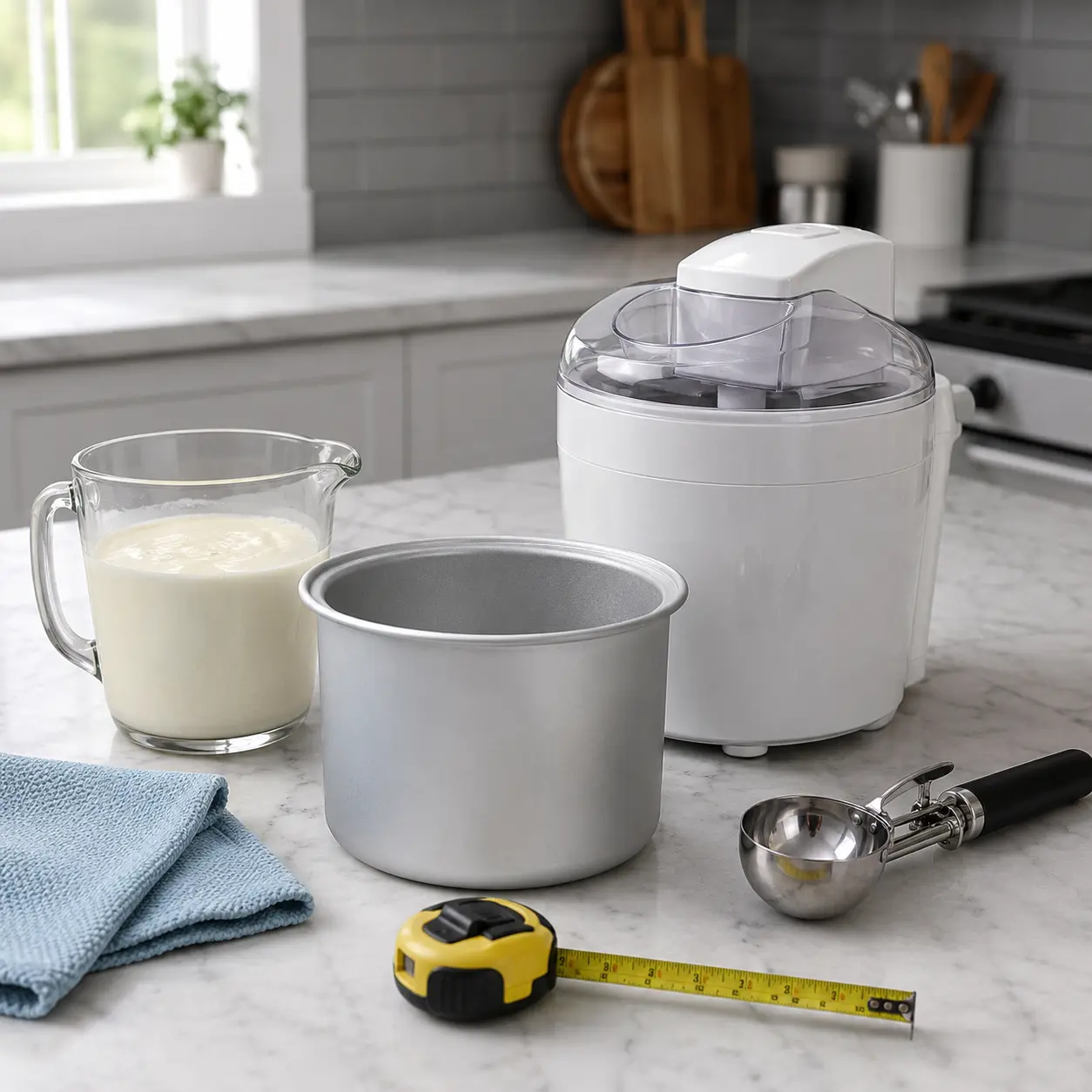
Expecting Instant Ice Cream
Many ice cream makers need preparation. Ingredients may need chilling, and freezer bowl models may need the bowl frozen well in advance.
Check the process before buying.
Forgetting Freezer Bowl Space
A freezer bowl can take up more room than expected. If your freezer is already full, this may become inconvenient.
Measure freezer space before choosing a freezer bowl model.
Overfilling The Bowl
Ice cream mixture expands and thickens as it churns. Overfilling can cause mess or poor results.
Follow the fill guidance in the product instructions.
Assuming All Recipes Work The Same
Dairy ice cream, sorbet, frozen yoghurt and dairy free recipes can behave differently. Ingredients affect texture and freezing.
Use recipes suitable for the machine and adjust expectations.
Buying Too Small For Family Desserts
A compact machine may be easy to store, but it may not make enough for several people.
Check usable batch size before buying.
Buying Too Large For Occasional Use
A large compressor machine may be unnecessary if you only make ice cream once or twice a year.
Choose based on realistic use.
Ignoring Cleaning
Dairy, sugar and fruit mixtures can become sticky. Cleaning bowls, paddles and lids matters after every use.
Check cleaning guidance before buying.
Assuming Homemade Ice Cream Stays Soft In The Freezer
Homemade ice cream may firm up more than shop bought ice cream, depending on recipe and storage. It may need time to soften before serving.
Set realistic expectations around texture.
Safety And Suitability Caveats
Ice Cream Makers should be used only as intended and in line with the manufacturer’s instructions. They involve electricity, moving paddles, cold bowls, chilled ingredients and food hygiene considerations.
Do not put hands, utensils or loose items into the machine while the paddle is moving unless the product guidance clearly allows a specific action. Do not overfill the bowl or use ingredients that the product guidance says are unsuitable.
Handle frozen bowls carefully, as they can be very cold and may cause discomfort if touched for too long. If using recipes with eggs, dairy or other perishable ingredients, follow food safety guidance carefully and store finished desserts appropriately.
Do not modify, dismantle or attempt to repair an ice cream maker. If the appliance appears damaged, leaks, smells unusual, overheats or seems unsafe, stop using it and follow the product information.
Always check the individual product page for capacity, freezing method, preparation requirements, cleaning guidance, electrical information, food suitability and intended use before buying.
Maintenance, Storage And Lifespan Considerations
Ice cream makers need cleaning after every use. Wash removable bowls, paddles, lids and accessories according to the product guidance. Do not immerse electrical bases or compressor units unless the instructions clearly say a part is washable.
Dry parts fully before storage. Freezer bowls should be stored as advised by the manufacturer, and some may need to be completely dry before going back into the freezer.
If the machine has vents, keep them clear. Compressor models may need suitable clearance during use.
The lifespan of an ice cream maker depends on model, frequency of use, cleaning, storage, ingredient handling and how carefully it is used.
How To Compare Models Efficiently
- Decide whether you want freezer bowl or compressor style convenience.
- Check how much freezer space you have.
- Compare capacity against your usual serving needs.
- Check preparation and churning time.
- Review controls, timer and programmes where included.
- Check whether add ins can be added easily.
- Review cleaning guidance for bowl, lid and paddle.
- Measure worktop and storage space.
- Consider noise and where the machine will run.
- Read the individual product page before buying.
Summary Buyer Decision Checklist
Before buying Ice Cream Makers, check the following:
| Buying Check | Why It Matters |
|---|---|
| Machine type | Freezer bowl and compressor models suit different routines |
| Freezing method | Affects planning and convenience |
| Bowl capacity | Determines batch size |
| Usable fill level | Prevents overfilling and mess |
| Churning time | Affects how long desserts take |
| Preparation needs | Ingredients or bowls may need chilling |
| Controls | Timers and programmes vary by model |
| Add in opening | Useful for chocolate, fruit or nuts where included |
| Cleaning guidance | Sticky mixtures need careful cleaning |
| Storage space | Bowls and machines can be bulky |
| Noise level | Motors and compressors can be noticeable |
| Product page details | Specifications vary by model |
Frequently Asked Questions
The best type depends on how often you plan to make ice cream. Freezer bowl models may suit occasional use if you have freezer space. Compressor models may suit regular use because they freeze as they churn where stated.
Some do, especially freezer bowl models. Compressor models usually have built in freezing where stated. Always check the product page before buying because preparation requirements vary.
Batch size depends on bowl capacity and usable fill guidance. The finished amount may differ from the liquid mixture amount because the mixture changes as it churns. Check capacity carefully.
Many models can make sorbet where the product page and recipes support it. Sorbet texture depends on ingredients, sugar level and freezing process, so results may vary.
Some machines can be used for dairy free recipes where suitable recipes are followed. Dairy free mixtures may behave differently from dairy based ice cream, so check recipe guidance and product suitability.
They can be worth considering if you make frozen desserts often or want more flexibility. They are usually larger and may cost more, so they may not be necessary for occasional use.
They can be practical for occasional use, provided the bowl is frozen properly before churning. They may be less convenient if you want to make multiple batches or spontaneous desserts.
Homemade ice cream can freeze firmer than shop bought ice cream depending on recipe, sugar, fat content and storage. It may need time to soften before serving.
Check appliance size, bowl storage, freezer space, cable storage and cleaning requirements. A compact model may suit a small kitchen better than a large compressor machine.
Cleaning ease varies by model. Removable bowls, paddles and lids can help, but sticky mixtures still need careful washing. Check whether parts are dishwasher safe only where stated by the product page or instructions.