BUYERS GUIDE
Dishwashers Buyers Guide
Dishwashers are kitchen appliances designed to wash plates, bowls, cutlery, glasses, pans and other dishwasher safe items using water, detergent and programmed wash cycles. They are often bought by families, couples, busy households, open plan kitchens, home cooks, renters, homeowners and anyone who wants to reduce the time spent washing up by hand.
This guide helps you choose the right dishwasher by explaining the practical details that matter before buying. The right choice depends on kitchen space, household size, installation type, number of place settings, wash programmes, noise level, energy and water use, internal layout, drying method, cleaning needs and how often the machine will be used.
A dishwasher is not just about fitting under a worktop. A full size freestanding model may suit a family kitchen, while a slimline dishwasher may be better for smaller spaces. An integrated dishwasher may suit a fitted kitchen, but it needs more planning around cabinet doors and installation. The best choice is the one that fits your kitchen, your dishes and your daily routine.
Specifications vary by model, so always check the individual product page before buying.
Quick Answer
The right Dishwasher is the one that suits your kitchen space, household size and washing habits. For families or larger households, a full size dishwasher with suitable place settings, flexible racks and practical programmes may be more convenient. For smaller kitchens, a slimline or compact dishwasher may be easier to fit. If you want the appliance hidden behind a cabinet door, check integrated dishwasher requirements carefully. Always compare dimensions, place settings, installation type, noise level, energy and water information, internal layout, cleaning guidance and product page details before buying.
Quick Product Comparison Framework
| Feature | What It Means | Why It Matters | What To Check |
|---|---|---|---|
| Dishwasher type | Freestanding, integrated, slimline, full size or compact design | Different types suit different kitchens | Match the type to your kitchen layout |
| Width and dimensions | The physical size of the appliance | It must fit the available space | Check width, height and depth before buying |
| Place settings | A guide to dishwasher capacity | Helps match the machine to household size | Check listed place settings |
| Internal layout | Basket design, rack adjustment and cutlery storage | Affects how easily dishes fit | Check basket and rack details |
| Cutlery storage | Cutlery basket or cutlery tray where included | Changes usable space and loading style | Check which design is supplied |
| Wash programmes | Eco, quick, intensive, glass or auto programmes where included | Different loads may need different cycles | Check the programme list |
| Drying method | How the dishwasher helps dry items | Affects convenience after washing | Check drying features where stated |
| Noise level | How loud the dishwasher is in use | Important for open plan kitchens and night use | Check noise information where listed |
| Energy use | Electricity use under rated conditions | Affects running costs | Check energy information before buying |
| Water use | Water used per cycle where supplied | Affects running costs and efficiency | Check cycle information |
| Delay timer | Lets a wash start later where included | Useful for planning around routines | Check timer options |
| Installation needs | Plumbing, waste outlet, power supply and cabinet fitting | Important before purchase | Check fitting requirements carefully |
Key Decision Criteria Explained
Dishwasher Type
The first decision is the type of dishwasher you need. A freestanding dishwasher is usually the simplest option if you have a suitable gap, water connection, waste outlet and plug. It has a visible front and can often be easier to replace than an integrated model.
An integrated dishwasher is designed to sit behind a kitchen cabinet door. This can give a cleaner fitted kitchen look, but it usually needs more careful installation and the correct door panel setup.
A slimline dishwasher is narrower than a full size model and may suit smaller kitchens, flats or households with fewer dishes. A compact or tabletop style dishwasher may suit very limited spaces, but capacity is more restricted.
Choose the type around your kitchen layout first, then compare features.
Kitchen Space And Dimensions
Dishwashers need to fit the available space properly. Width, height and depth all matter. You also need clearance for the door to open, room to load and unload, and access to plumbing and electrical points.
A full size dishwasher may offer more capacity, but it will not be useful if it does not fit the kitchen. A slimline model may save space, but you should check whether the reduced capacity suits your household.
Measure the available gap carefully before buying and compare it with the individual product page.
Freestanding Versus Integrated
Freestanding dishwashers are visible appliances. They may suit kitchens where appearance is less of a concern or where flexibility matters. They can also be useful if you are replacing an existing freestanding machine.
Integrated dishwashers are built into cabinetry and usually hidden behind a kitchen door. They can look neater, but installation is more involved. Door panel size, hinge system and kitchen unit compatibility matter.
If you are unsure, check the existing kitchen setup before choosing an integrated model.
Full Size Versus Slimline
Full size dishwashers usually suit families, frequent cooking and homes that create lots of plates, mugs, pans and lunch boxes. They can reduce the need for multiple cycles.
Slimline dishwashers may suit smaller households, narrow kitchens or buyers who do not generate enough dishes to fill a larger machine regularly.
The trade off is capacity. A slimline dishwasher can save space, but it may fill quickly if you cook often or have a family.
Place Settings And Real Capacity
Place settings are a useful comparison guide, but they do not tell the whole story. Real life loads often include large mugs, awkward bowls, baking trays, pans, lunch boxes and tall glasses.
A dishwasher with more place settings may suit a larger household, but the internal layout matters too. Adjustable racks, fold down tines and cutlery storage can affect how practical the space feels.
Think about what you actually wash, not just the number on the specification.
Internal Layout And Loading
The inside of the dishwasher affects daily use more than many buyers expect. A flexible layout can make it easier to load mixed items, while a fixed layout may be more limiting.
Cutlery baskets are simple and familiar, but they take up space in the lower rack. Cutlery trays can free up lower basket space, but they may reduce height in the upper area depending on the design.
If you wash larger plates, tall glasses or bulky pans, check internal layout carefully before buying.
Wash Programmes
Wash programmes let you choose the cycle that suits the load. Eco programmes may be designed for efficient everyday washing. Quick programmes may suit lightly soiled items when supported by the product page. Intensive programmes may be useful for heavier soiling, and glass programmes may suit more delicate glassware where included.
More programmes are not automatically better. The useful programmes are the ones you will actually use.
Check the programme list and avoid paying extra for settings that do not fit your routine.
Noise Level
Noise level matters in open plan kitchens, flats and homes where the dishwasher may run in the evening. A louder machine may be fine in a separate utility room but more noticeable in a kitchen diner.
If quiet use matters, check the noise information where supplied. Also consider when the dishwasher will run. A delay timer can be useful if you prefer running it at certain times, where included.
Energy And Water Use
Dishwashers use both electricity and water. Energy and water use vary by model, programme and load. The lowest running cost choice is not always the one with the lowest purchase price.
Check energy information, water use information and the programmes you are likely to use most often. A larger machine used half empty may not be as practical as a smaller one used efficiently, but a machine that is too small may lead to repeated cycles.
Look at the full ownership picture, not only the upfront price.
Drying Performance And Convenience
Dishwashers vary in how they dry dishes. Some use residual heat, some may include automatic door opening, fan assisted drying or other drying features where stated.
Drying can also depend on the item type. Plastics often dry differently from glass, ceramic and metal. Buyers should avoid expecting every item to come out perfectly dry every time.
Check drying features and understand that results can vary by load, programme and material.
Cleaning And Maintenance
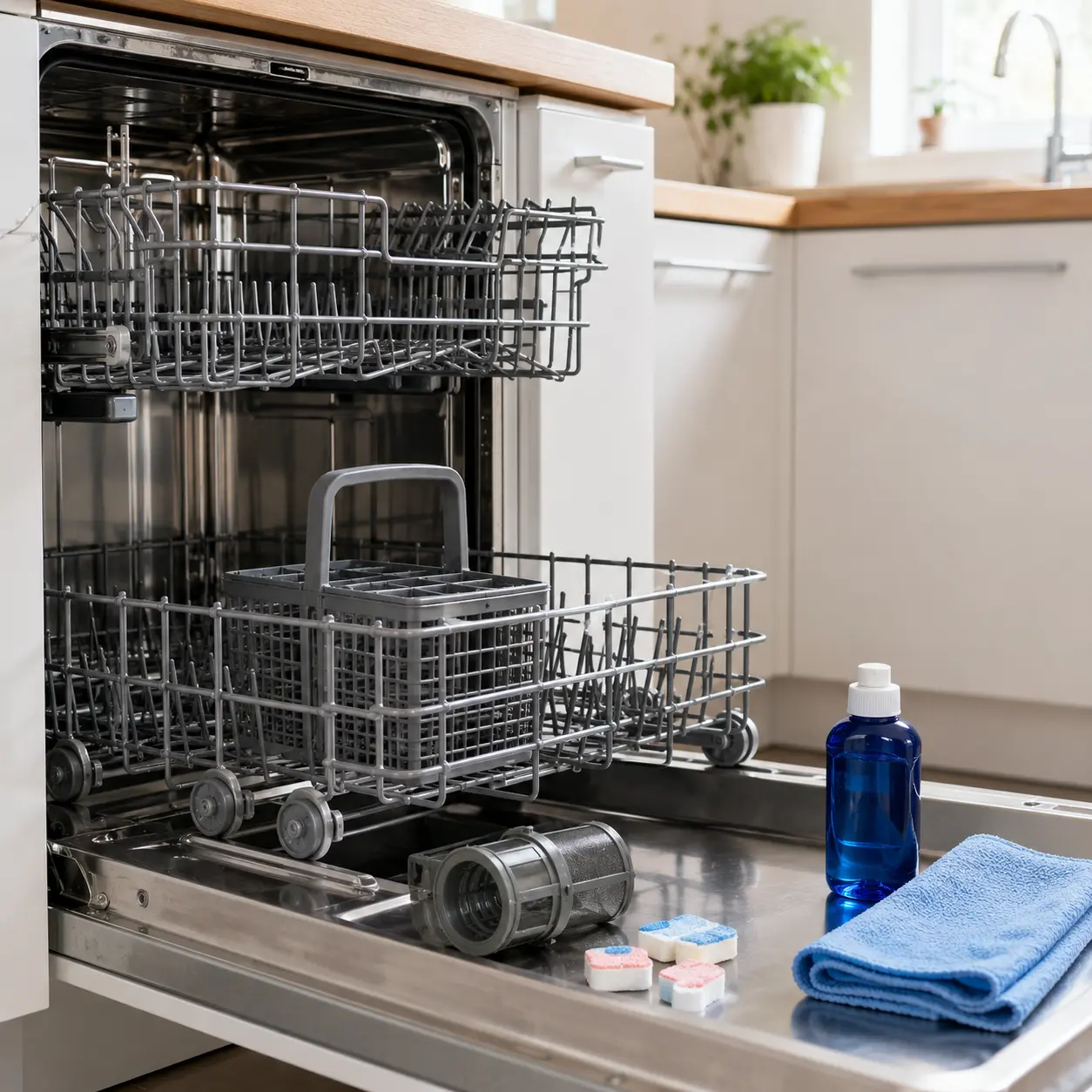
A dishwasher still needs cleaning. Filters may need rinsing, spray arms may need checking, seals may need wiping and dishwasher salt or rinse aid may be required depending on the model and water hardness.
A machine with easy access to filters and clear maintenance guidance is more practical over time. If maintenance is ignored, wash results and odour control may suffer.
Check product care guidance before buying.
Product Type Differentiation And Variants
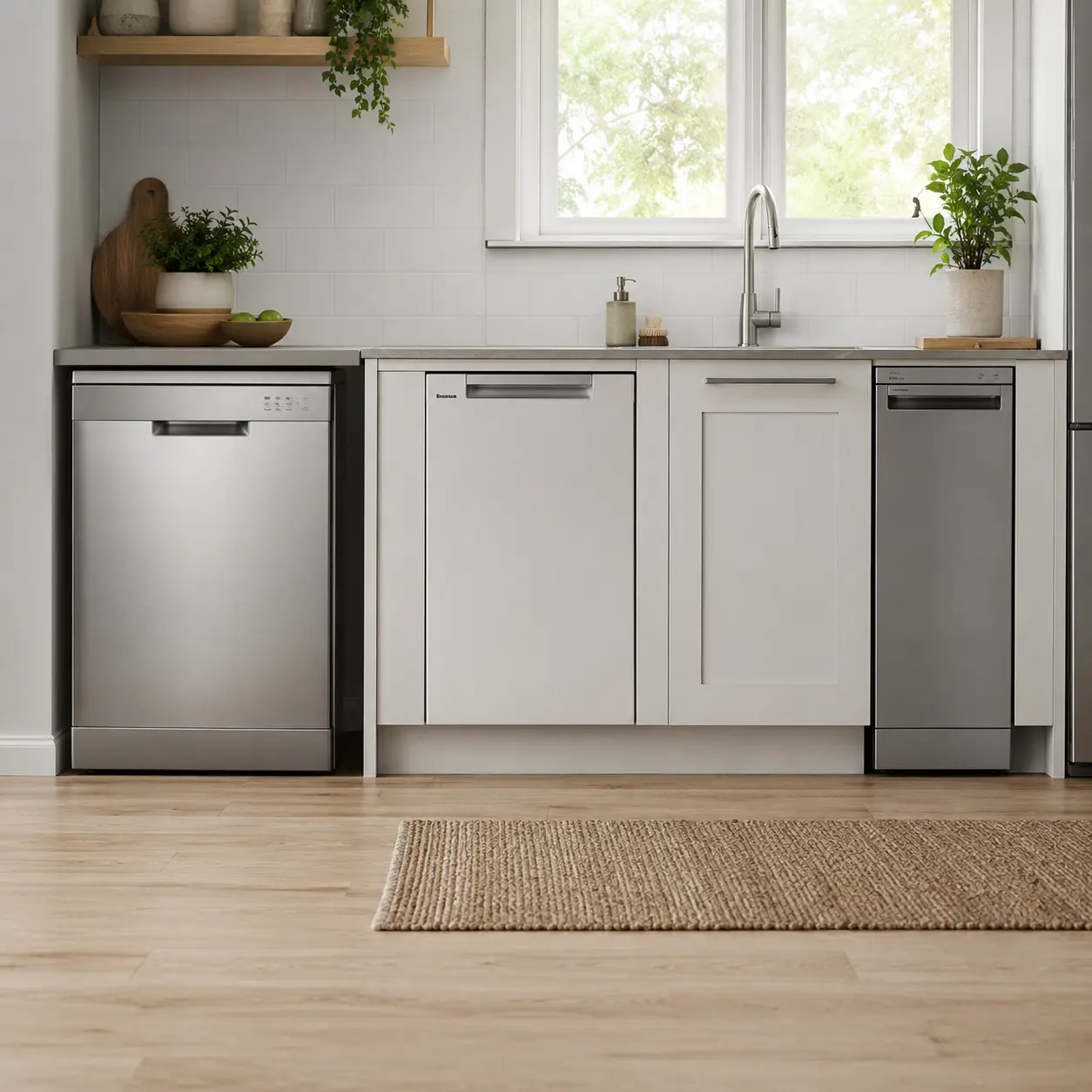
Freestanding Dishwashers
Freestanding dishwashers have a visible front and are designed to stand in a suitable kitchen space. They may suit buyers replacing an existing appliance or kitchens where integrated installation is not needed.
The limitation is appearance. They do not blend into cabinetry in the same way as integrated models.
Integrated Dishwashers
Integrated dishwashers are designed to sit behind a kitchen cabinet door. They may suit fitted kitchens where a clean built in appearance matters.
The limitation is installation. Cabinet door fitting, measurements and access must be checked carefully.
Slimline Dishwashers
Slimline dishwashers are narrower models that may suit smaller kitchens, flats, couples or smaller households.
The limitation is capacity. They may fill quickly in family homes or kitchens where lots of cooking is done.
Full Size Dishwashers
Full size dishwashers usually offer more capacity and may suit larger households, family kitchens and frequent cooking.
The limitation is space. They need a suitable full width gap and may be more than needed for small households.
Compact Or Tabletop Dishwashers
Compact dishwashers may suit very small kitchens, temporary setups or buyers who cannot fit a standard appliance where the product page supports that use.
The limitation is capacity and setup. They may not suit larger households or full daily loads.
Dishwashers With Flexible Racking
Some dishwashers include adjustable racks, fold down supports or cutlery trays where stated. These features can help with mixed loads.
The limitation is that flexibility varies by model. Check the internal layout rather than assuming all machines load the same way.
Specifications vary by model, so always check the individual product page before buying.
Suitability By Buyer Type Or Need
| Buyer Type Or Need | What To Prioritise | What To Be Careful About |
|---|---|---|
| Family household | Full size capacity, flexible racks and practical programmes | Slimline models may fill too quickly |
| Couple | Slimline or full size depending on cooking habits | Do not choose capacity by household size alone |
| Small kitchen | Slimline or compact design | Check dimensions and installation needs |
| Open plan kitchen | Low noise and delay timer where included | Loud machines may disturb evenings |
| Integrated kitchen | Correct integrated type and door panel compatibility | Installation must be checked carefully |
| Renter | Freestanding design and easy replacement | Check landlord and plumbing suitability |
| Frequent home cook | Capacity, pan space and intensive programmes where included | Internal layout matters |
| Low maintenance buyer | Easy filter access and simple controls | Dishwashers still need cleaning |
| Energy conscious buyer | Energy and water information | Running costs vary by cycle |
| Buyer replacing old dishwasher | Matching dimensions and connection type | Do not assume all models fit the same gap |
Common Mistakes And Misunderstandings
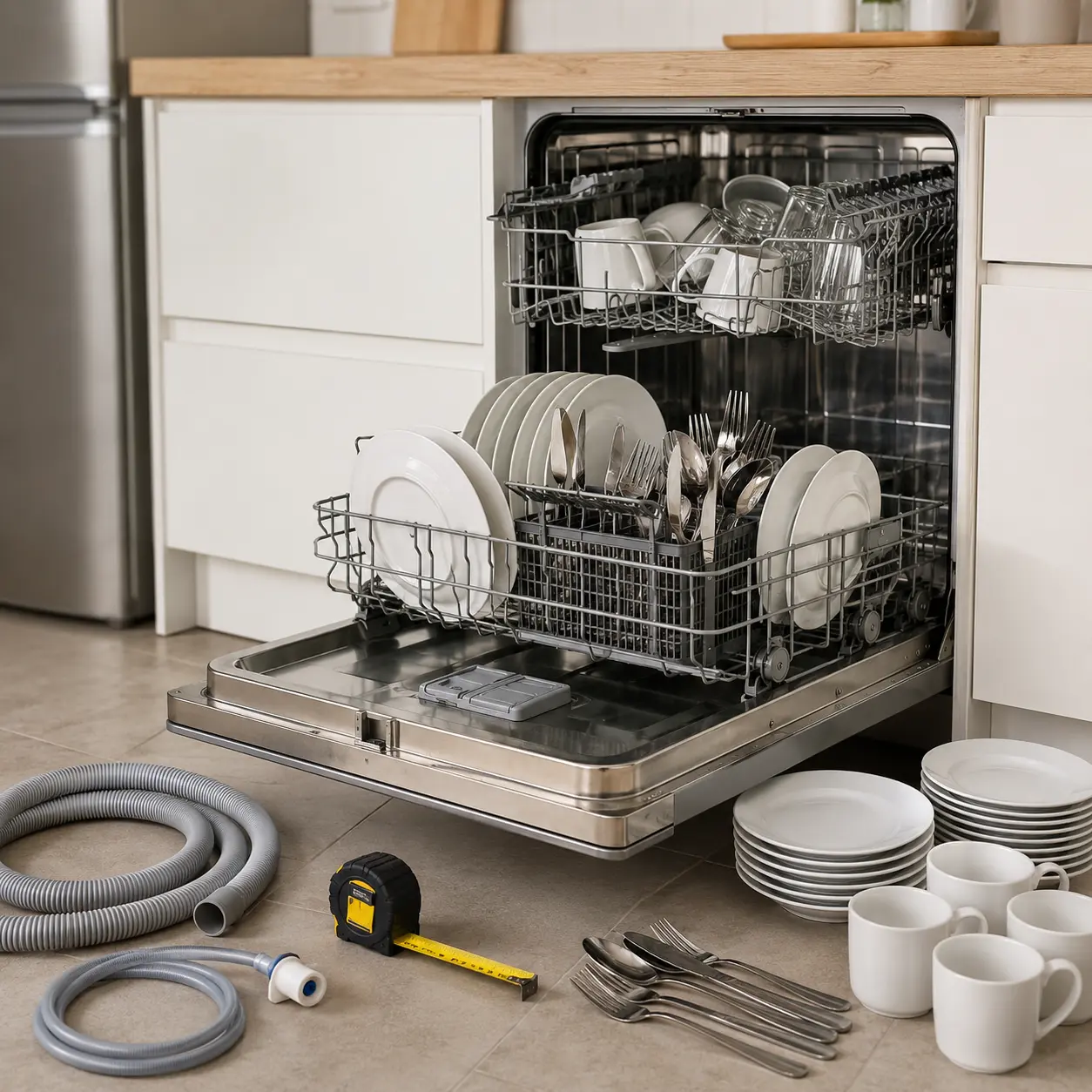
Buying Before Measuring The Space
Dishwashers need to fit properly. A few centimetres can make the difference between a good fit and a difficult installation.
Measure width, height and depth before buying.
Confusing Freestanding And Integrated Models
Freestanding and integrated dishwashers are not interchangeable. Integrated models are designed for cabinet door fitting, while freestanding models have a finished visible front.
Check the kitchen setup before choosing.
Choosing Too Small For Daily Use
A slimline or compact dishwasher may save space, but it may fill too quickly if you cook often or have a family.
Choose capacity around real washing up habits.
Choosing Too Large For Occasional Loads
A full size dishwasher may be unnecessary if you live alone, cook rarely or do not generate many dishes.
Bigger is not always more practical.
Ignoring Internal Layout
Place settings are useful, but racks, baskets and cutlery storage affect everyday loading. Some layouts suit plates better, while others handle mugs, bowls and pans more easily.
Check the inside, not just the capacity figure.
Overlooking Noise
Noise can matter a lot in open plan homes. A dishwasher that is fine in a utility room may be too noticeable in a kitchen diner.
Check noise information where listed.
Assuming Everything Is Dishwasher Safe
Not all cookware, knives, plastics, wood, crystal or delicate items are suitable for dishwashers. Always check item care guidance.
A dishwasher is useful, but it is not suitable for every kitchen item.
Forgetting Maintenance
Dishwashers need filter cleaning, salt, rinse aid and general care depending on the model. Ignoring maintenance can affect results.
Choose a machine you are willing to look after.
Safety And Suitability Caveats
Dishwashers should be used only as intended and in line with the manufacturer’s instructions. They involve electricity, water, detergent, heat and moving internal parts, so correct installation and use matter.
Use suitable dishwasher detergent only, and do not use washing up liquid unless the product information specifically supports it. Load sharp knives and utensils carefully, and keep dishwasher tablets or detergents away from children and pets.
Do not overload the racks or block spray arms. Do not place items in the dishwasher unless the item care guidance supports dishwasher use. If a dishwasher leaks, smells unusual, fails to drain or appears unsafe, stop using it and follow the product information.
Always check the individual product page for dimensions, place settings, installation type, programmes, electrical information, water connection requirements, detergent guidance and care instructions before buying.
Maintenance, Storage And Lifespan Considerations
Dishwashers need routine care to stay practical. Filters should be cleaned according to the product guidance, and spray arms may need checking for blockages. Door seals can collect residue and may need wiping.
Dishwasher salt and rinse aid may be needed depending on the model and local water conditions. Some dishwashers may include indicators or settings for water hardness where stated.
Run cleaning or maintenance cycles only as advised by the product instructions. Keep the inside free from large food debris and avoid overloading the machine.
The lifespan of a dishwasher depends on model, installation, water quality, frequency of use, maintenance and how carefully it is loaded.
How To Compare Models Efficiently
- Decide whether you need freestanding or integrated.
- Measure the available space carefully.
- Choose full size, slimline or compact based on kitchen space and household needs.
- Compare place settings and internal layout.
- Check rack flexibility and cutlery storage.
- Review the wash programmes you will actually use.
- Check noise level for open plan or night use.
- Compare energy and water information.
- Review installation and maintenance guidance.
- Read the individual product page before buying.
Summary Buyer Decision Checklist
Before buying Dishwashers, check the following:
| Buying Check | Why It Matters |
|---|---|
| Dishwasher type | Freestanding and integrated models suit different kitchens |
| Dimensions | The appliance must fit the available space |
| Full size or slimline | Capacity and kitchen space need balancing |
| Place settings | Helps compare capacity |
| Internal layout | Affects everyday loading |
| Cutlery storage | Basket and tray designs use space differently |
| Programmes | Choose cycles you will actually use |
| Noise level | Important for open plan kitchens |
| Energy information | Affects running costs |
| Water use | Varies by model and programme |
| Installation needs | Plumbing and cabinet fitting must be suitable |
| Product page details | Specifications vary by model |
Frequently Asked Questions
The right size depends on kitchen space, household size and how many dishes you use each day. A full size dishwasher may suit families and frequent cooking, while a slimline model may suit smaller kitchens or smaller households.
A freestanding dishwasher has a visible front and stands in a suitable gap. An integrated dishwasher is designed to be hidden behind a cabinet door. They have different installation needs, so check your kitchen layout before buying.
Slimline dishwashers can be a good choice for smaller kitchens or households with fewer dishes. They save width but have less capacity than full size models. They may not suit larger families or heavy daily use.
Place settings give a rough guide to capacity, but real loads vary. Families and frequent home cooks usually need more space, while couples or smaller households may need less. Also check internal layout, not just the number.
They can be more involved because they need cabinet door fitting as well as water, waste and power connections. Check measurements, door panel compatibility and installation requirements carefully.
Water use varies by model and programme. Many dishwashers are designed to use controlled amounts of water, but actual use depends on the cycle and loading. Check water use information where supplied.
Noise levels vary by model. If the dishwasher will be used in an open plan kitchen, flat or at night, check the noise rating where listed before buying.
Many models use dishwasher salt and rinse aid, especially in hard water areas, but requirements vary. Check the product guidance and local water conditions before use.
No. Some pans, knives, plastics, wooden items, delicate glassware or coated cookware may not be dishwasher safe. Always check the item care guidance before washing.
Measure the existing space, check whether the old machine is freestanding or integrated, and review water, waste and electrical connections. Do not assume every new dishwasher will fit the same gap.