BUYERS GUIDE
Vacuum Cleaner Buyers Guide
A vacuum cleaner is one of the most used appliances in many homes, so choosing the right one matters more than it first appears. The right vacuum should suit your floors, storage space, cleaning routine, household size and the type of mess you deal with most often.
Some buyers need a lightweight cordless vacuum for quick daily cleans. Others may prefer an upright, cylinder, robot, handheld or wet and dry model depending on their home and cleaning needs.
This guide helps you compare vacuum cleaners in a practical way. It explains the main types, the features that matter, the trade offs to consider and the checks to make before buying.
Quick Answer
Choose a vacuum cleaner by matching the type of vacuum to your floors, home size, storage space and cleaning habits. Upright and cylinder vacuums may suit larger regular cleaning, while cordless stick vacuums can be convenient for quick everyday use. Handheld models are useful for small messes, and robot vacuums may help with routine maintenance rather than full deep cleaning. Specifications vary by model, so always check the individual product page before buying.
Quick Product Comparison Framework
| Feature | What It Means | Why It Matters | What To Check |
|---|---|---|---|
| Vacuum type | The main design of the cleaner | Affects cleaning style, storage and ease of use | Upright, cylinder, stick, cordless, handheld, robot or wet and dry |
| Floor suitability | The surfaces the vacuum is intended for | Helps match it to carpets, rugs, hard floors or mixed homes | Product page floor guidance and brush head details |
| Suction and cleaning performance | How well the vacuum lifts dust and debris | Important for daily cleaning and heavier mess | Stated cleaning features, modes and user guidance |
| Bagged or bagless | How dust is collected | Affects emptying, ongoing costs and dust handling | Bag type, bin size and emptying method |
| Filtration | How dust is trapped inside the vacuum | Useful for buyers sensitive to dust | Filter type, washable filters and replacement guidance |
| Capacity | Size of dust bin or bag | Affects how often it needs emptying | Bin or bag capacity where listed |
| Corded or cordless | Whether it plugs in or uses a battery | Affects runtime, power access and convenience | Cable length, battery runtime and charging time where listed |
| Weight and handling | How easy it is to carry and steer | Matters for stairs, small homes and frequent cleaning | Product weight, handle design and manoeuvrability |
| Attachments | Extra tools for different tasks | Helps with stairs, upholstery, cars and corners | Crevice tool, brush tool, motorised head or pet tool where listed |
| Storage | How the vacuum is kept between uses | Important in small homes | Foldable design, wall mount, docking station or compact storage |
Key Decision Criteria Explained
Vacuum Type
The type of vacuum cleaner shapes almost every part of the buying decision. Upright vacuums can suit full floor cleaning, while cylinder vacuums may offer flexible hose reach and easier movement around furniture.
Cordless stick vacuums are often chosen for convenience and quick use. Robot vacuums can help maintain floors between deeper cleans, while handheld models are mainly for small jobs. Wet and dry vacuums suit more specific cleaning tasks where the product page confirms that use.
Floor Type And Brush Head Design
Your flooring should guide the choice. A home with mostly carpets may need a different cleaner from a home with hard floors, rugs or mixed surfaces.
Brush head design matters because some heads are better suited to certain surfaces. Check whether the product page mentions hard floors, carpets, rugs, pet hair or multi surface cleaning before buying.
Corded Or Cordless
Corded vacuum cleaners can be practical for longer cleaning sessions because they do not rely on battery runtime. However, they need socket access and the cable can feel restrictive.
Cordless vacuums can be very convenient for quick daily cleaning, stairs and smaller homes. The trade off is battery runtime, charging and dust bin capacity. Always check battery details where they are listed.
Bagged Or Bagless Collection
Bagged vacuum cleaners collect dust in disposable or replaceable bags, depending on the model. They can make emptying more contained, but you need to consider ongoing bag availability and cost.
Bagless vacuums use a dust bin that is emptied after use. This can reduce the need for bags, but emptying may release dust if not done carefully. Check the emptying design and capacity before buying.
Filtration And Dust Control
Filtration is important if dust control matters to you. Some models include washable filters, sealed systems or specific filter types where stated.
However, do not assume every vacuum offers the same filtration. Check the product page for filter details, cleaning guidance and replacement requirements. If you have health concerns, seek appropriate professional advice rather than relying on appliance claims alone.
Capacity And Emptying Frequency
Dust capacity affects how often you need to empty the vacuum. A small bin may be fine for quick cleans, but it can be frustrating in larger homes or with heavy debris.
Large capacity can be useful, but it may increase appliance size and weight. Choose a capacity that suits your cleaning routine rather than assuming bigger is always better.
Weight, Balance And Manoeuvrability
A vacuum can have useful features but still be awkward to use if it is too heavy or poorly balanced. This matters on stairs, around furniture and when carrying it between rooms.
Check the product weight and handle design where listed. For cordless models, also consider whether the weight sits mainly in the hand or closer to the floor.
Attachments And Specialist Tools
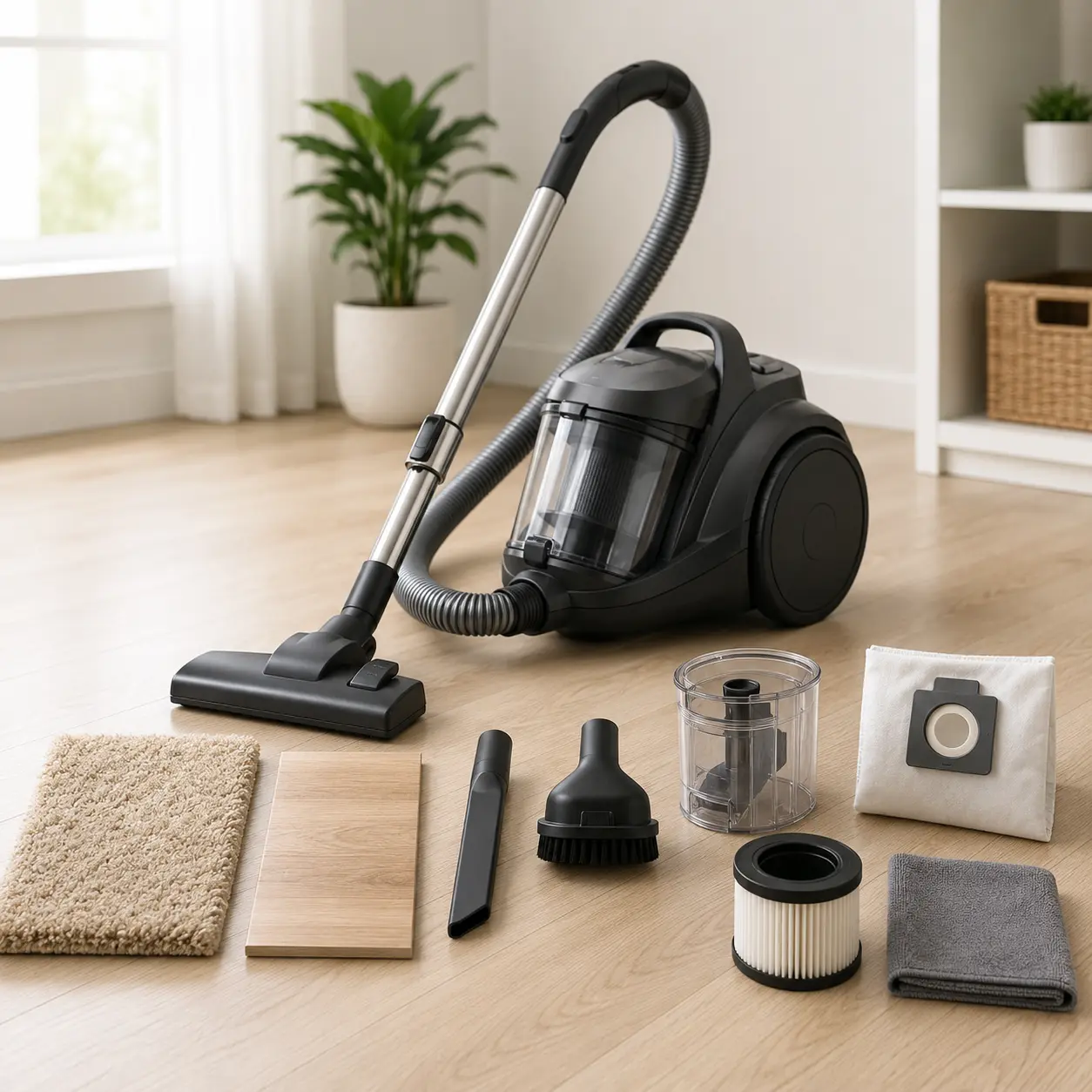
Attachments can make a vacuum more versatile. Crevice tools help with edges, brush tools can suit dusting, and upholstery tools can help with sofas and car interiors.
Pet tools or motorised heads may be useful where listed, but they are not all the same. Check what is included in the box and what is sold separately.
Product Type Differentiation And Variants
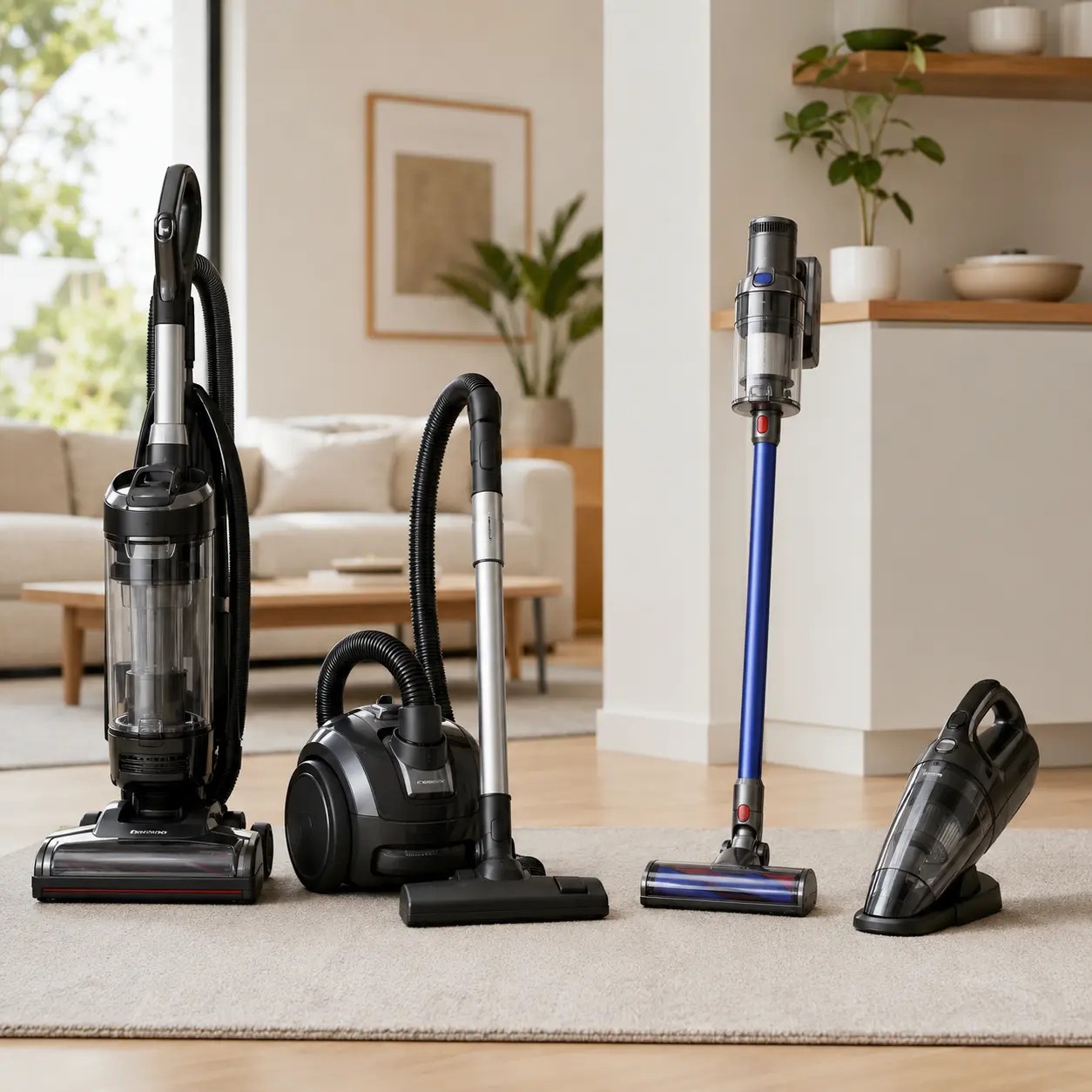
Upright Vacuum Cleaners
Upright vacuum cleaners are often used for regular floor cleaning in homes with carpets or larger floor areas. They can feel familiar and may offer a wide cleaning path.
The limitation is that they may be heavier or less convenient on stairs and tight spaces. Check weight, hose reach and attachment options before buying.
Cylinder Vacuum Cleaners
Cylinder vacuums have a separate body with a hose and cleaning head. They can be useful for reaching under furniture, cleaning stairs and moving between different surfaces.
The trade off is that the cylinder follows behind you, which some buyers find less convenient. Storage can also vary depending on hose and tool design.
Cordless Stick Vacuum Cleaners
Cordless stick vacuums are popular for quick cleaning and everyday convenience. They may suit flats, smaller homes, stairs and regular touch ups.
The limitation is battery runtime and bin capacity. Specifications vary by model, so always check the individual product page before buying.
Handheld Vacuum Cleaners
Handheld vacuums are designed for small messes, upholstery, stairs, cars and quick spot cleaning. They are usually compact and easy to grab.
However, they are not usually a replacement for a full size vacuum. Check runtime, attachments and bin size if you plan to use one regularly.
Robot Vacuum Cleaners
Robot vacuums can help with routine floor maintenance and light daily debris. They may suit busy households that want floors kept tidier between manual cleans.
However, they still need emptying, maintenance and suitable room layouts. They may struggle with clutter, certain rugs, thresholds or heavier mess depending on the model.
Wet And Dry Vacuum Cleaners
Wet and dry vacuums are designed for more specific cleaning tasks where the product page confirms that use. They may suit garages, workshops, utility spaces or certain spill related jobs.
The limitation is that they can be larger, noisier or less convenient for ordinary household cleaning. Always check intended use, capacity and safety guidance.
Pet Vacuum Cleaners
Some vacuum cleaners are marketed towards homes with pets. They may include specific tools, brush heads or filtration features where listed.
However, pet wording varies by model. Check the actual attachments, floor suitability and maintenance needs rather than relying on the label alone.
Suitability By Buyer Type Or Need
| Buyer Type Or Need | What To Prioritise | What To Be Careful About |
|---|---|---|
| Small flat | Compact size, cordless convenience and easy storage | Check battery runtime and bin capacity |
| Family home | Capacity, floor suitability and useful attachments | Avoid choosing only by appearance |
| Mostly carpets | Suitable floor head and carpet guidance | Check weight and manoeuvrability |
| Mostly hard floors | Hard floor suitability and gentle brush design where listed | Avoid heads that may not suit delicate surfaces |
| Mixed flooring | Multi surface head and adjustable settings | Check product page surface guidance |
| Pet owners | Suitable tools, filtration and easy brush cleaning | Do not assume every pet model performs the same |
| Stairs | Lightweight handling, hose reach or handheld conversion | Check balance and tool access |
| Car cleaning | Handheld mode, crevice tool and battery or cable reach | Check included accessories |
| Dust sensitive buyers | Filtration details and contained emptying | Avoid relying on vague claims |
| Busy households | Cordless or robot support for quick maintenance | Robot models still need manual checks and maintenance |
Common Mistakes And Misunderstandings
Choosing By Suction Claims Alone
Suction matters, but it is not the only factor. Brush head design, filtration, floor suitability, bin design and maintenance can all affect real use.
Look at the whole vacuum. A model that suits your flooring and cleaning style may be more useful than one chosen only for a power claim.
Ignoring Floor Type
A vacuum that works well on one surface may not be ideal for another. Carpets, rugs, hard floors and delicate surfaces can need different tools or settings.
Check product page guidance before buying. Choose based on the floors you actually clean every week.
Assuming Cordless Is Always Better
Cordless vacuums are convenient, but they are not automatically the best choice for every home. Runtime, charging time and bin size can limit longer cleaning sessions.
If you clean large areas in one go, compare cordless details carefully. A corded model may still make sense for some buyers.
Forgetting About Emptying And Cleaning
Vacuum cleaners need maintenance. Bins, bags, filters, brush rolls and tools can all collect dust, hair and debris.
Check how the vacuum is emptied and cleaned. A model that is easy to maintain is more likely to be used properly.
Buying A Heavy Vacuum For Stairs
A powerful vacuum can still be frustrating if it is awkward to carry. Stairs need careful handling, reach and balance.
Check weight and attachment options. For some homes, a lighter vacuum or a handheld tool may be useful.
Not Checking What Tools Are Included
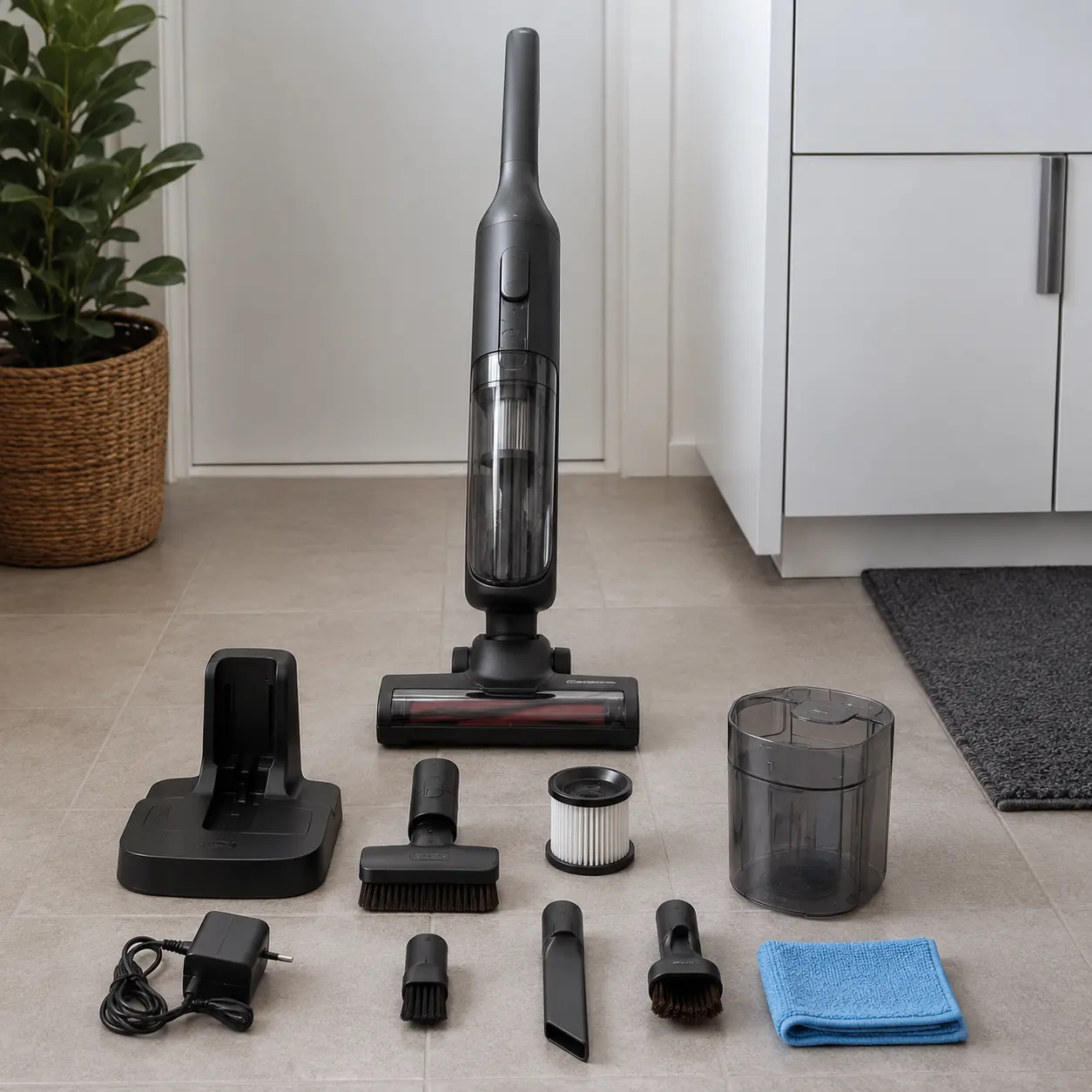
Product images can show different tools, but not every accessory may be included. This can matter if you need a crevice tool, upholstery tool or pet tool.
Read the included accessories list carefully. Do not assume a tool is supplied unless the product page states it.
Expecting A Robot Vacuum To Replace All Cleaning
Robot vacuums can help keep floors tidy, but they do not suit every mess or room layout. They may still need manual support for stairs, corners, furniture gaps and heavier debris.
Think of a robot vacuum as a maintenance helper. Check room suitability, bin emptying and obstacle handling before buying.
Safety And Suitability Caveats
Use a vacuum cleaner only as intended and follow the manufacturer instructions. Check the individual product page for floor suitability, power details, battery guidance, filter cleaning, attachments and maintenance requirements.
Do not use a damaged vacuum, damaged plug, damaged cable, faulty battery or loose parts. Do not modify or repair the appliance yourself.
Be careful around electricity, moving brush rolls, suction openings, stairs, cables, batteries, water and sharp debris. Only use wet cleaning or liquid pickup functions if the model is specifically designed for that purpose.
Keep filters, vents and dust containers maintained according to the instructions. Do not use the vacuum on unsuitable materials or surfaces unless the manufacturer guidance confirms it is appropriate.
Maintenance, Storage And Lifespan Considerations
Vacuum cleaners need regular care to keep working as intended. Dust bins, bags, filters, brush rolls, hoses and attachments may all need cleaning or replacement depending on the model.
Hair and fibres can build up around brush heads, especially in homes with pets or long hair. Check whether the brush roll is easy to access and clean.
Storage depends on vacuum type. Uprights need floor space, cylinders need room for the body and hose, and cordless stick vacuums may need a wall mount or charging dock. Lifespan depends on model, use, care, storage and how well maintenance instructions are followed.
How To Compare Models Efficiently
- Decide which vacuum type suits your home best.
- Check the flooring you clean most often.
- Choose corded or cordless based on cleaning routine.
- Compare bagged and bagless dust collection.
- Check capacity and emptying design.
- Review filtration details and filter care.
- Check weight, balance and manoeuvrability.
- Look at included attachments and specialist tools.
- Consider storage space and charging needs if cordless.
- Read the individual product page before buying.
Summary Buyer Decision Checklist
| Buying Check | Why It Matters |
|---|---|
| Vacuum type | Matches the cleaner to your home and cleaning style |
| Floor suitability | Helps avoid choosing a model that struggles on your surfaces |
| Corded or cordless | Affects convenience, runtime and cleaning reach |
| Bagged or bagless | Changes emptying, dust handling and ongoing costs |
| Capacity | Determines how often it needs emptying |
| Filtration | Matters for dust control and maintenance |
| Weight | Affects carrying, stairs and everyday comfort |
| Attachments | Helps with edges, upholstery, cars and pet areas |
| Brush head design | Influences cleaning on different floor types |
| Storage needs | Confirms it fits your home between uses |
| Maintenance access | Makes filters, bins and brush rolls easier to manage |
| Product page details | Confirms model specific features before buying |
Frequently Asked Questions
The best type depends on your home. Upright and cylinder vacuums can suit regular full cleaning, while cordless stick vacuums are useful for quick everyday jobs. Handheld and robot vacuums can help with specific tasks, but they may not replace a main vacuum for every buyer.
A cordless vacuum can be worth it if convenience matters and you clean little and often. It is useful for stairs, quick spills and smaller spaces. However, check runtime, charging time and bin capacity before buying.
Neither is automatically better. Bagged vacuums may make dust disposal more contained, but need replacement bags. Bagless vacuums avoid bags, but the bin needs emptying and cleaning.
Pet owners should check floor suitability, included pet tools, brush head design, filtration and how easy it is to remove hair from the vacuum. Do not rely only on the word pet in the product title. Check the product page for actual included features.
A robot vacuum can help with routine light cleaning, especially in tidy rooms with suitable floor layouts. It is less useful for stairs, heavy mess or cluttered spaces. Many buyers still need a standard vacuum for deeper cleaning.
For stairs, weight, balance, hose reach and handheld use matter. A lightweight cordless vacuum, cylinder vacuum with hose, or handheld model may be useful depending on the home. Check the included attachments before buying.
Filtration refers to how the vacuum traps dust and fine particles inside the machine. Filter types and maintenance needs vary by model. Check whether filters are washable, replaceable or described in detail on the product page.
Capacity affects how often you empty the vacuum. Smaller bins may suit quick cleaning, while larger homes may benefit from more capacity. However, larger capacity can also mean a bigger or heavier appliance.
No, not every vacuum or brush head suits every surface. Some floors may need a gentler head or specific setting. Check the product page and floor manufacturer guidance where relevant.
Check vacuum type, floor suitability, corded or cordless design, capacity, filtration, weight, attachments, storage and maintenance requirements. In short, choose the vacuum that fits your floors and routine, not just the one with the strongest headline claim.