BUYERS GUIDE
Fridge Buyers Guide
Fridges are kitchen appliances designed to keep fresh food and drinks chilled at safe, practical storage temperatures. They are often bought for family kitchens, flats, utility rooms, offices, student accommodation, drinks storage, fresh food storage and replacing an older appliance.
This guide helps you choose the right fridge by explaining the practical details that matter before buying. The right choice depends on available space, capacity, household size, installation type, internal layout, energy use, noise level, door style, shelving, temperature control and how the fridge will be used day to day.
A fridge is not just about fitting into a gap. A full height larder fridge may suit fresh food storage, while an under counter fridge may suit smaller kitchens. An integrated fridge may suit a fitted kitchen, but it needs more planning around cabinet dimensions and door fitting. The best choice is the one that fits your kitchen, your food habits and your available space.
Specifications vary by model, so always check the individual product page before buying.
Quick Answer
The right Fridge is the one that suits your kitchen space, household size and fresh food storage needs. For families or regular fresh food shopping, a taller larder fridge with good shelf space, door storage and salad drawers may be more practical. For smaller kitchens, flats or secondary storage, an under counter or compact fridge may be enough. Always check dimensions, usable capacity, freestanding or integrated design, noise level, energy information, internal layout, door opening direction, cleaning guidance and product page details before buying.
Quick Product Comparison Framework
| Feature | What It Means | Why It Matters | What To Check |
|---|---|---|---|
| Fridge type | Freestanding, integrated, under counter, larder, compact or drinks fridge | Different types suit different kitchens and storage needs | Match the fridge type to your space and use |
| Dimensions | Width, height and depth of the appliance | The fridge must physically fit the gap | Measure available space before buying |
| Capacity | Internal storage space, usually listed in litres | Affects how much fresh food and drink you can store | Check total and usable capacity |
| Internal layout | Shelves, drawers, door racks and compartments | Affects daily organisation | Check shelf positions and storage design |
| Door storage | Space for bottles, cartons, jars and smaller items | Useful for everyday access | Check bottle shelf and door rack layout |
| Salad drawer | Drawer for fruit and vegetables | Helps organise fresh produce | Check drawer size and number |
| Freezer box | Small ice box where included | Useful for ice or small frozen items if supplied | Check whether it is included and its rating |
| Integrated or freestanding | Whether the fridge is visible or built into cabinetry | Affects installation and appearance | Check fitting requirements |
| Door hinge direction | Which way the door opens | Important for kitchen layout | Check reversible door information where listed |
| Noise level | How loud the fridge is during normal operation | Important in open plan kitchens and flats | Check noise information where supplied |
| Energy use | Electricity consumption under rated conditions | Affects running costs | Check energy information before buying |
| Temperature controls | Manual or digital temperature settings where included | Helps manage storage conditions | Check control style and location |
Key Decision Criteria Explained
Fridge Type
The first decision is the type of fridge you need. A freestanding fridge is usually simpler to place if you have a suitable space and plug socket. It has a finished exterior and can be moved or replaced more easily than an integrated model.
An integrated fridge is designed to sit behind a kitchen cabinet door. This can give a neater fitted kitchen look, but it needs more careful measurement and installation.
An under counter fridge may suit smaller kitchens, flats, offices or secondary storage. A tall larder fridge may suit households that need more fresh food space. A compact or mini fridge may suit drinks, bedrooms, home offices or student spaces where suitable.
Choose the type around your kitchen layout first, then compare features.
Kitchen Space And Measurements
Accurate measurement is essential. Check the height, width and depth of the available space, but also allow for door opening, ventilation and access. A fridge that fits tightly into a gap may still be unsuitable if the door cannot open fully or air cannot circulate as required.
Depth is easy to overlook. Some fridges may sit proud of surrounding cupboards, while others may need clearance behind them. Integrated models need even more careful checking because the cabinet and door fitting must be suitable.
Measure before buying and compare with the individual product page.
Capacity And Household Size
Capacity affects how much food the fridge can hold. A single person or couple may not need the same internal space as a family household, but shopping habits also matter.
If you buy fresh food in larger weekly shops, you may need more shelf space and bigger drawers. If you shop little and often, a smaller fridge may be enough. If you cook from scratch or store packed lunches, leftovers and meal prep containers, internal layout becomes especially important.
Do not choose capacity by litres alone. Think about how the space is arranged.
Internal Layout
The inside of a fridge affects daily use more than many buyers expect. Adjustable shelves can help with taller items, large containers and changing storage needs. Door racks can be useful for milk, juice, jars and condiments. Drawers help separate fruit and vegetables from other items.
Some fridges may look spacious but have awkward shelf positions. Others may offer better organisation even with a smaller overall capacity.
Check product images carefully and think about the foods you store most often.
Freestanding Versus Integrated Fridges
Freestanding fridges are usually more flexible. They can suit kitchens where the appliance is visible and where a finished exterior is preferred. They may also be easier to replace if you are swapping an older freestanding model.
Integrated fridges are designed to be hidden behind a kitchen unit door. They can look tidier in a fitted kitchen but must match the cabinet space and fitting system.
Do not assume a freestanding and integrated fridge can be swapped directly. They are different product types.
Tall Fridge Versus Under Counter Fridge
A tall fridge can be useful if fresh food storage is the priority. It may suit families, keen cooks and households that already have a separate freezer.
An under counter fridge may suit smaller kitchens, flats, offices or secondary use. It is easier to fit beneath a worktop, but it has less capacity.
The trade off is storage space versus floor and kitchen layout. Choose the format that fits your room and shopping habits.
Larder Fridges And Ice Box Fridges
A larder fridge is usually designed mainly for chilled fresh food, without a freezer compartment. This gives more usable fridge space and may suit buyers who already own a separate freezer.
Some fridges include a small ice box or freezer compartment. This can be useful for ice, small frozen items or emergency storage where the model supports that use. However, it reduces fresh food space and may not replace a proper freezer.
Check whether a freezer box is included and what it is suitable for.
Door Opening And Reversible Doors
Door opening direction matters. A fridge door that opens the wrong way can make the appliance awkward to use, especially in tight kitchens or narrow utility rooms.
Some models have reversible doors where stated. This can be useful if the kitchen layout changes or if you need the door to open from the opposite side.
Check whether the door is reversible and whether changing it requires tools, fitting work or professional help.
Noise Level
Fridges run regularly, so noise can matter. This is especially important in open plan kitchens, studio flats, small homes, home offices or bedrooms where a compact fridge may be used.
Fridge noise can include humming, clicking, compressor sounds and occasional movement of cooling components. Noise information varies by model, so check product details where supplied.
If the fridge will sit near a living or sleeping area, treat noise as an important buying factor.
Energy Use And Running Costs
A fridge is usually plugged in all the time, so energy use matters. The purchase price is only part of the decision. A more efficient model may cost less to run over time, depending on use and energy information.
Size also matters. A larger fridge may use more energy than a smaller one, but buying too small can be inconvenient. Choose a fridge that is suitable for your household rather than simply the biggest option.
Check energy information on the individual product page before buying.
Cleaning And Maintenance
Fridges need regular cleaning. Shelves, drawers, door seals and door racks can collect spills, crumbs and food residue. Removable shelves and drawers can make cleaning easier.
Some models may include auto defrost or low frost style features where stated, but exact maintenance needs vary. Door seals should stay clean and intact because they help the fridge close properly.
If you want low fuss ownership, check how easily the shelves and drawers can be removed.
Product Type Differentiation And Variants
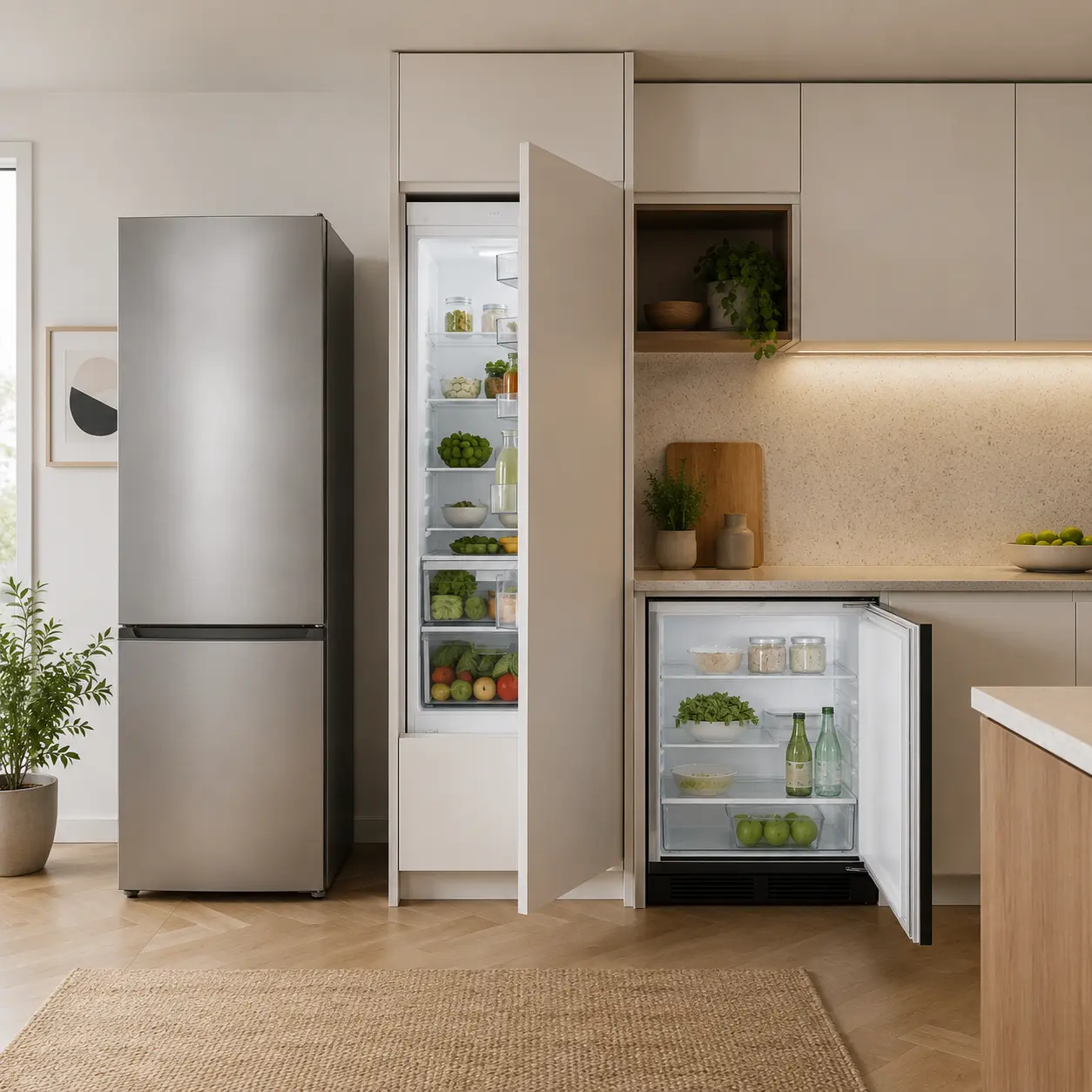
Freestanding Fridges
Freestanding fridges have finished outer sides and fronts, making them suitable for visible placement in a kitchen, utility room or office.
The limitation is that they do not blend into cabinetry like integrated models. They still need suitable ventilation and space around them according to the product guidance.
Integrated Fridges
Integrated fridges are designed to sit inside kitchen cabinetry behind a matching door panel. They may suit fitted kitchens where a hidden appliance look is preferred.
The limitation is installation. Cabinet size, hinge type, door fitting and ventilation must be checked carefully.
Under Counter Fridges
Under counter fridges are designed to fit below a worktop where suitable. They may suit smaller kitchens, flats, offices, utility rooms or extra drinks storage.
The limitation is capacity. They may not suit larger households as the main fridge.
Tall Larder Fridges
Tall larder fridges provide more chilled storage and usually suit households that need plenty of fresh food space.
The limitation is height and floor space. They need a suitable kitchen area and may be more than needed for smaller households.
Compact And Mini Fridges
Compact and mini fridges may suit drinks, snacks, bedrooms, home offices, student rooms or secondary storage where the product page supports that use.
The limitation is storage capacity, noise and temperature consistency expectations. They are not usually a full replacement for a main kitchen fridge.
Fridges With Ice Boxes
Some fridges include a small ice box or freezer section where stated. This can help with ice cubes or small frozen items.
The limitation is reduced fresh food space and limited frozen storage. Check the rating and intended use carefully.
Specifications vary by model, so always check the individual product page before buying.
Suitability By Buyer Type Or Need
| Buyer Type Or Need | What To Prioritise | What To Be Careful About |
|---|---|---|
| Family household | Larger capacity, adjustable shelves and good door storage | Under counter models may be too small |
| Single person household | Compact size and sensible running costs | Avoid buying more space than needed |
| Couple | Medium capacity and flexible shelves | Check shopping habits, not just household size |
| Small kitchen | Under counter or slim design | Measure carefully before buying |
| Fitted kitchen | Integrated design and correct cabinet fit | Installation requirements matter |
| Fresh food buyer | Tall larder fridge and salad drawers | Check drawer and shelf layout |
| Drinks storage | Door racks, bottle space or compact drinks fridge | Check bottle height and capacity |
| Office or bedroom use | Compact design and low noise | Noise may be more noticeable in quiet rooms |
| Buyer replacing old fridge | Matching dimensions and door swing | Do not assume all fridges fit the same gap |
| Budget conscious buyer | Suitable capacity and energy information | Cheapest may not be best long term value |
Common Mistakes And Misunderstandings
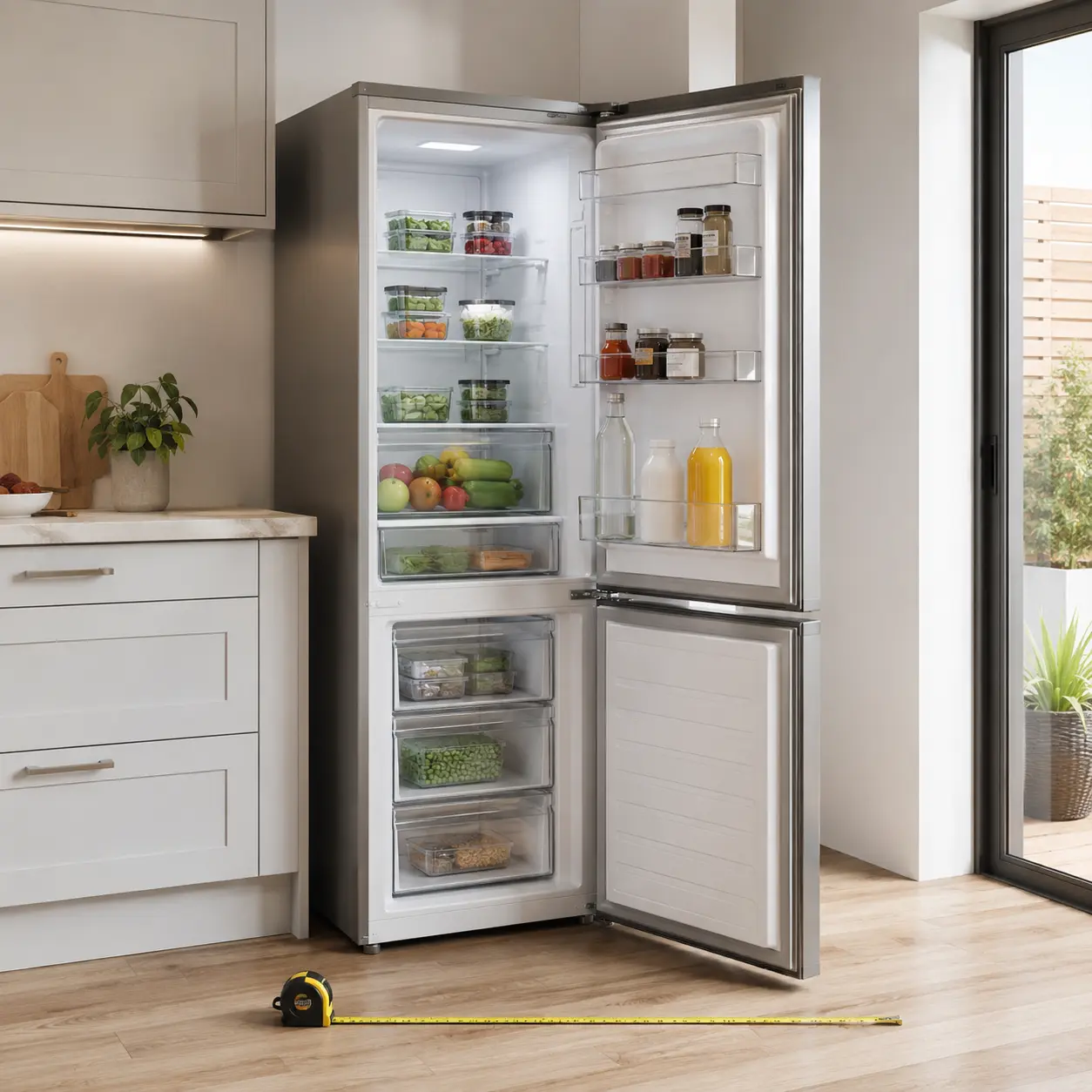
Buying Before Measuring Properly
A fridge needs to fit the gap, but it also needs space for the door to open, air to circulate and the plug to be reached.
Measure height, width, depth and surrounding clearance before buying.
Choosing Capacity By Household Size Alone
A couple who cooks from scratch may need more fridge space than a family that shops little and often. Capacity should match food habits, not just number of people.
Think about your real shopping and storage routine.
Confusing Freestanding And Integrated Models
Freestanding and integrated fridges are different. Integrated models are designed for cabinet fitting, while freestanding models are visible appliances.
Check your kitchen setup before choosing.
Ignoring Door Opening Direction
A door that opens the wrong way can make everyday use frustrating. It may block cupboards, walls or worktops.
Check hinge side and reversible door information where listed.
Overlooking Internal Layout
Capacity in litres is useful, but shelf layout matters. Tall bottles, meal prep boxes, fresh produce and leftovers all need practical space.
Look at the inside, not just the outside.
Buying Too Small For Fresh Food Storage
A compact fridge may be convenient, but it may fill quickly if you cook often or buy fresh food regularly.
Choose a size that matches normal weekly use.
Buying Too Large For Occasional Use
A large fridge may be unnecessary for a small household or light use. It can take up more room and may use more energy.
Match size to realistic needs.
Forgetting About Noise
Fridges run regularly. In a quiet flat, office or open plan kitchen, noise may matter more than expected.
Check noise information where supplied.
Safety And Suitability Caveats
Fridges should be used only as intended and in line with the manufacturer’s instructions. They involve electricity, cooling components, ventilation needs and food storage, so correct placement and use matter.
Place the fridge on a suitable level surface and allow ventilation clearance according to the product guidance. Do not block vents, overload shelves beyond guidance or place the appliance where the product information says it is unsuitable.
Keep the inside clean and store food according to appropriate food safety guidance. Do not use a fridge that appears damaged, leaks, smells unusual or fails to maintain suitable cooling.
Do not modify, dismantle or attempt to repair a fridge. Integrated models should be fitted according to installation guidance, and professional installation may be needed depending on the kitchen setup.
Always check the individual product page for dimensions, capacity, installation type, energy information, noise level, temperature controls, ventilation requirements and intended use before buying.
Maintenance, Storage And Lifespan Considerations
Fridges need regular care to remain practical. Wipe spills quickly, clean shelves and drawers as needed and keep door seals free from food residue. A clean seal helps the door close properly.
Check any drainage channels, vents or removable parts according to the product guidance. If the fridge includes a freezer box, defrosting or ice management may be needed depending on the model.
Do not overfill the fridge so much that airflow is restricted. Good organisation can make food easier to find and may reduce waste.
The lifespan of a fridge depends on model, installation, ventilation, cleaning, usage, door seal condition and how carefully it is handled.
How To Compare Models Efficiently
- Decide whether you need freestanding or integrated.
- Measure the available space carefully.
- Choose tall, under counter, compact or larder style based on your kitchen.
- Check capacity against your shopping habits.
- Review internal layout, shelves and drawers.
- Check door storage for bottles and jars.
- Review door hinge direction and reversible door options.
- Compare noise level for open plan or quiet spaces.
- Check energy information and running considerations.
- Read the individual product page before buying.
Summary Buyer Decision Checklist
Before buying Fridges, check the following:
| Buying Check | Why It Matters |
|---|---|
| Fridge type | Freestanding, integrated and compact designs suit different spaces |
| Dimensions | The fridge must fit the available gap |
| Capacity | Should match household food storage |
| Internal layout | Shelves and drawers affect daily use |
| Door storage | Useful for bottles, jars and cartons |
| Salad drawer | Helps organise fruit and vegetables |
| Ice box | Useful only where needed and supported |
| Door opening | Affects kitchen usability |
| Noise level | Important in open plan or quiet rooms |
| Energy information | Affects running costs |
| Cleaning access | Shelves and drawers need regular cleaning |
| Product page details | Specifications vary by model |
Frequently Asked Questions
The right size depends on household size, shopping habits and kitchen space. A single person or couple may suit a smaller fridge, while families or fresh food buyers may need a taller larder fridge. Check capacity and layout before buying.
A larder fridge is mainly designed for chilled fresh food storage and usually does not include a freezer compartment. It can suit buyers who already have a separate freezer and want more fridge space.
Neither is automatically better. Integrated fridges suit fitted kitchens where a hidden appliance look is preferred. Freestanding fridges are more flexible and easier to replace in many kitchens. Choose based on your kitchen layout.
Not usually as a direct swap. Integrated and freestanding fridges have different designs, ventilation needs and fitting requirements. Check the kitchen space carefully before replacing.
Under counter fridges can be very useful for small kitchens, flats, offices or secondary storage. They have less capacity than tall fridges, so they may not suit larger households as the main fridge.
Check width, height, depth, door opening direction, ventilation clearance and internal capacity. A compact or under counter fridge may suit a small kitchen better than a tall model.
Yes, fridges can make normal operating sounds such as humming, clicking or cooling noises. Noise level varies by model. If the fridge will be used in an open plan room, flat or bedroom area, check noise information before buying.
It can be useful for small frozen items or ice where the model supports that use. However, it reduces fresh food storage and is not the same as a full freezer. Check the ice box rating and capacity before buying.
Energy use matters because a fridge is normally switched on all the time. Compare energy information, capacity and running needs before buying. The cheapest fridge upfront may not always be the best long term choice.
Measure the existing space, check freestanding or integrated type, door hinge direction, ventilation requirements, plug access and capacity. Do not assume every new fridge will fit the same space.