BUYERS GUIDE
Washing Machine Buyers Guide
A washing machine is one of the most important appliances in the home, so it is worth choosing carefully. The right model should suit your household size, laundry routine, available space, water connection, noise needs and the fabrics you wash most often.
Some buyers need a simple freestanding washing machine for everyday family laundry. Others may need an integrated model for a fitted kitchen, a compact appliance for a smaller space, or a larger drum for bedding and frequent washes.
This guide helps you compare washing machines in a practical way. It explains the key features, common mistakes, safety points and checks to make before buying.
Quick Answer
Choose a washing machine by starting with the installation type, drum capacity and the space available in your kitchen, utility room or laundry area. Then compare programmes, spin performance, energy information, noise level, controls, water connection needs and access for loading and cleaning. A larger drum can be useful for families and bulky laundry, but it may not be the most practical choice for smaller households or tight spaces. Specifications vary by model, so always check the individual product page before buying.
Quick Product Comparison Framework
| Feature | What It Means | Why It Matters | What To Check |
|---|---|---|---|
| Installation type | How the machine is fitted in the home | Prevents buying the wrong style for your space | Freestanding, integrated or compact design |
| Drum capacity | The amount of laundry the machine is designed to handle | Helps match the machine to household size | Stated capacity and load guidance |
| Dimensions | The appliance size | Confirms whether it fits the available space | Width, depth, height and clearance |
| Spin speed | How fast the drum spins during final spin | Can affect how wet laundry feels after washing | Stated spin speed and programme guidance |
| Programmes | Wash settings for different fabric types | Helps match washing to everyday laundry | Cotton, synthetics, delicate, quick wash and other listed programmes |
| Energy and water information | Efficiency details for use | Helps compare running costs and resource use | Energy rating, water use and product page information |
| Noise level | Sound during washing and spinning | Important in open plan homes or near bedrooms | Stated noise information where provided |
| Controls | How the appliance is operated | Affects everyday ease of use | Dial, buttons, display, app or smart control where listed |
| Load detection | Adjusts wash behaviour where included | May help with convenience and efficiency | Whether load sensing or similar features are listed |
| Cleaning access | How easy it is to maintain the machine | Helps with long term use | Detergent drawer, filter access and drum cleaning guidance |
Key Decision Criteria Explained
Installation Type
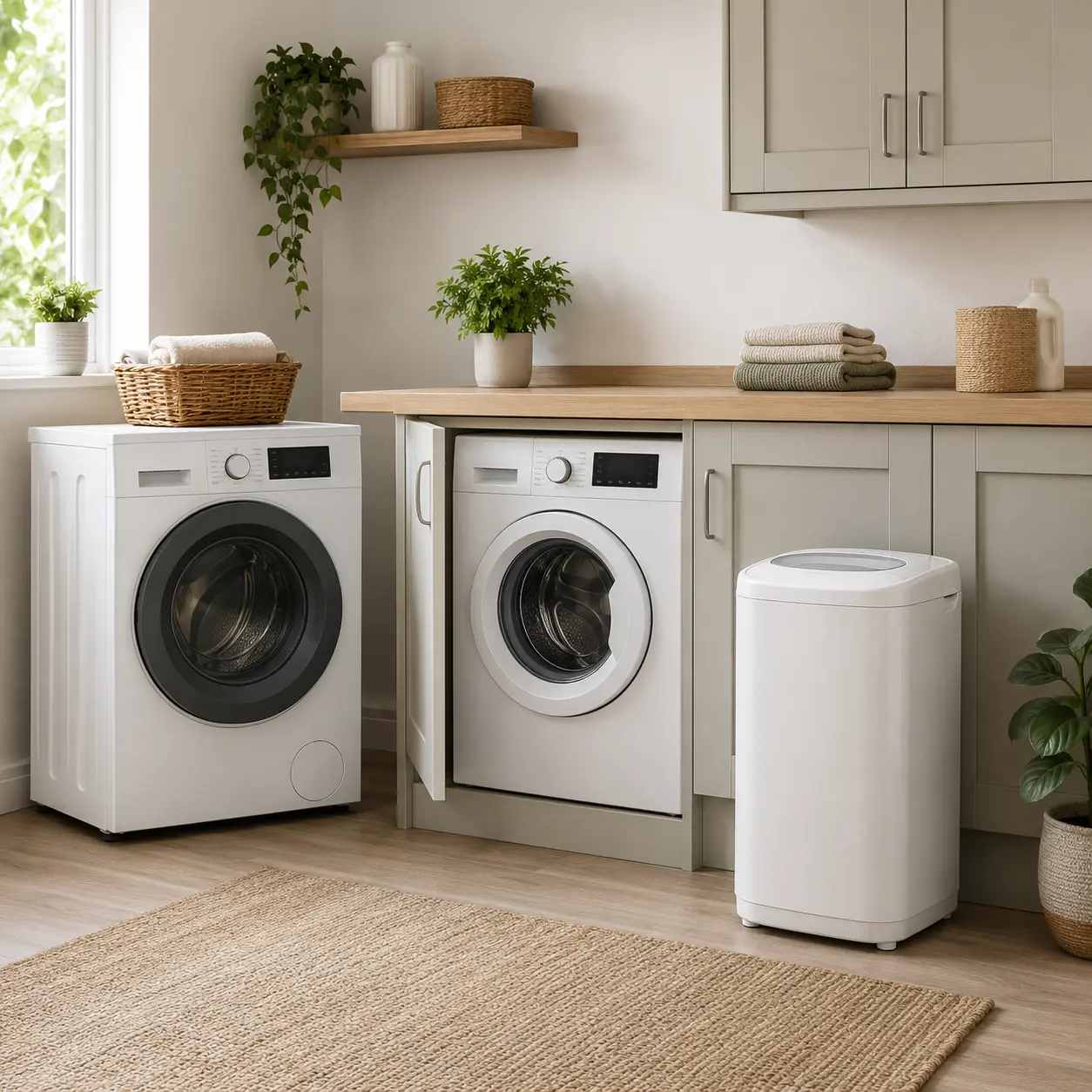
The first decision is whether you need a freestanding or integrated washing machine. A freestanding model is usually placed under a worktop or in a utility space where the sides may be visible.
An integrated washing machine is designed to sit behind a cupboard door in a fitted kitchen. It needs the right cabinet space and fitting arrangement. Do not assume a freestanding and integrated model can be swapped without checking dimensions and installation requirements.
Capacity And Household Size
Capacity should match your normal laundry load. A small household may not need a large drum, while a family may benefit from more capacity for clothes, towels and bedding.
However, bigger is not always better. A very large drum can take up more space and may be less practical if you usually wash small loads. Check the stated capacity and think about your real weekly laundry routine.
Dimensions And Clearance
Washing machines can vary in depth, even when width and height look similar. This matters because hoses, sockets, doors, skirting boards and cupboard fronts can affect fit.
Measure the full space before buying. Allow room for the door to open, for hoses at the back and for access to the detergent drawer and filter where needed.
Spin Speed And Drying Time
Spin speed affects how much water is removed at the end of a wash, depending on the programme and fabric type. A stronger spin may help laundry come out less wet, which can reduce drying time.
The trade off is that some fabrics need gentler handling. Also, higher spin settings may be noisier or unsuitable for certain items. Check programme guidance and clothing care labels before relying on a particular spin setting.
Programmes And Fabric Care
Washing programmes help match the wash to the laundry type. Common examples may include cottons, synthetics, delicates, wool, mixed loads or quick wash settings, depending on the model.
More programmes are not always better. What matters is whether the machine covers the laundry you actually wash. Check the product page for programme details rather than assuming every model includes the same settings.
Quick Wash Options
A quick wash can be useful for lightly soiled clothes or small loads where the manufacturer says it is suitable. It can help when you need something washed in less time.
However, quick programmes may not suit full loads or heavily soiled laundry. Check the model guidance before treating quick wash as a full replacement for standard programmes.
Energy And Water Use
Energy and water information helps buyers compare long term use, especially in homes where the machine runs frequently. This is worth checking alongside purchase price.
Running costs depend on programme choice, load size, temperature, frequency of use and the individual model. Always check the product page for the stated energy and water details.
Noise And Placement
Noise can matter if the washing machine is in an open plan kitchen, near a living space or close to bedrooms. Spinning is usually more noticeable than the wash part of the cycle.
If noise matters, check the stated noise information where provided. Also think about floor stability and whether the appliance will be placed in a space where vibration could be annoying.
Controls And Smart Features
Some washing machines use simple dials and buttons, while others include displays, touch controls or app connected features where listed. Simple controls may suit buyers who want everyday ease.
Smart features can be useful for some users, but they should not distract from the basics. Capacity, fit, programmes, noise, energy information and maintenance access still matter most.
Product Type Differentiation And Variants
Freestanding Washing Machines
Freestanding washing machines are a common choice for kitchens, utility rooms and laundry areas. They are usually easier to place than built in models, provided the plumbing, power and space are suitable.
The limitation is appearance and fit. They may not blend into fitted cabinetry in the same way as an integrated model.
Integrated Washing Machines
Integrated washing machines are designed to sit behind a cabinet door. They may suit fitted kitchens where a concealed appliance is preferred.
The trade off is installation complexity. Door fitting, cabinet space and dimensions need careful checking before buying.
Compact Washing Machines
Compact washing machines may suit small homes, flats, utility cupboards or spaces where a full size appliance is not practical. They can be useful where space is the main concern.
The limitation is usually capacity. Smaller machines may not suit large households or bulky laundry.
Large Capacity Washing Machines
Large capacity models can suit families, shared households or buyers who regularly wash towels and bedding. They can reduce the number of loads needed for some routines.
However, they need enough physical space and may not be ideal if you usually wash small loads. Specifications vary by model, so always check the individual product page before buying.
Smart Washing Machines
Smart washing machines may include app control, notifications or extra setting options where listed. They may suit buyers who like connected appliances and more control.
However, smart features should be treated as a convenience, not the main reason to buy. Check whether the core washing features suit your home first.
Washer Dryers
A washer dryer combines washing and drying in one appliance. It may be relevant if space is limited, but it is not the same category as a standard washing machine.
If you are considering one, check the washing and drying capacities separately and read the individual product page carefully.
Suitability By Buyer Type Or Need
| Buyer Type Or Need | What To Prioritise | What To Be Careful About |
|---|---|---|
| Single person or couple | Suitable capacity, compact size and simple programmes | Avoid oversized drums if loads are usually small |
| Family household | Larger capacity, useful programmes and good access | Check dimensions, noise and maintenance access |
| Small flat | Compact footprint and noise information | Confirm plumbing, drainage and door clearance |
| Fitted kitchen | Integrated design and cabinet compatibility | Do not assume freestanding models will fit behind a door |
| Utility room | Capacity, access and drainage suitability | Leave space for hoses, doors and cleaning access |
| Frequent washing | Energy information, capacity and programme range | Compare long term use, not just purchase price |
| Delicate fabrics | Gentle programmes and spin options | Always check garment care labels |
| Bedding and towels | Drum capacity and suitable programmes | Do not overload the machine |
| Open plan home | Noise level and stable placement | Spinning noise may be more noticeable |
| Buyers replacing an old machine | Dimensions, installation type and connections | New models may not fit exactly the same space |
Common Mistakes And Misunderstandings
Buying By Capacity Alone
A large drum can be useful, but it is not the only thing that matters. Fit, programmes, noise, controls and maintenance access are just as important.
Choose capacity based on your real laundry routine. Then check whether the machine fits your home and washing habits.
Not Measuring The Depth Properly
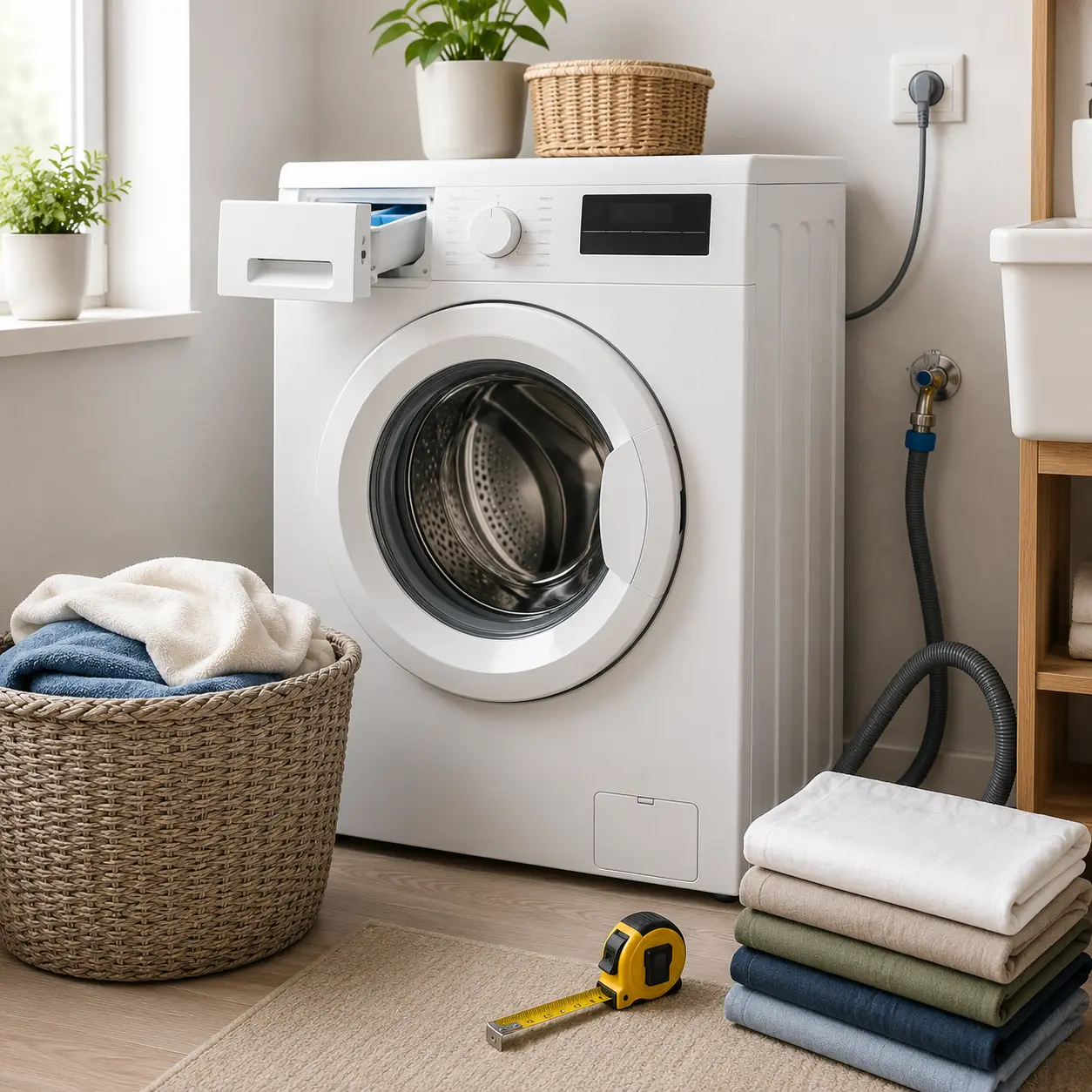
Many buyers check width but forget depth. Hoses, sockets and rear clearance can make a machine stick out further than expected.
Measure the available space carefully before buying. Also check door clearance and nearby cupboards.
Confusing Freestanding And Integrated Models
Freestanding and integrated washing machines are not the same. An integrated model is designed for cabinet fitting, while a freestanding model is not usually intended to sit behind a cupboard door.
Check the installation type before buying. This is especially important when replacing a machine in a fitted kitchen.
Assuming Every Quick Wash Does The Same Job
A quick wash can be useful, but it may not suit large loads or heavily soiled clothing. Different models handle quick programmes differently.
Check the product page and manufacturer guidance. Use the programme that suits the laundry, not just the fastest option.
Ignoring Noise Level
Noise may not seem important until the machine is spinning in an open plan kitchen or near a bedroom. Placement can make a big difference.
Check stated noise information where available. Also think about whether the floor and appliance position are suitable.
Overlooking Filter And Drawer Cleaning
Washing machines need ongoing care. Detergent drawers, seals, filters and drums can need cleaning depending on the model and use.
Check maintenance access before buying. A machine that is easier to clean is easier to live with.
Assuming All Clothes Can Use Any Programme
Different fabrics need different treatment. A programme name does not override the clothing care label.
Check garment labels and the washing machine guidance. This helps reduce avoidable damage and poor results.
Safety And Suitability Caveats
Use a washing machine only as intended and follow the manufacturer instructions. Check the individual product page for installation type, dimensions, water connection, drainage, power requirements, programme guidance and maintenance information.
Do not use a damaged appliance, damaged plug, damaged cable, leaking hose, unstable installation or machine with loose parts. Do not modify or repair the appliance yourself.
Be careful around electricity, water, moving parts, heavy lifting, detergent, drainage, door glass, hot water and wet floors. Make sure the machine is positioned on a suitable stable surface and installed according to the manufacturer guidance.
Do not overload the machine or wash items that the garment care label says are unsuitable. Keep detergent and cleaning products away from children and pets.
Maintenance, Storage And Lifespan Considerations
Washing machines need regular care. Detergent drawers, door seals, filters and drum areas may need cleaning depending on the model and use.
Leave the appliance clean and dry according to the manufacturer guidance. This can help reduce residue and everyday odours.
Check hoses, filters and visible parts periodically as advised by the manufacturer. Lifespan depends on model, installation, use, load size, detergent habits, care and maintenance.
How To Compare Models Efficiently
- Decide whether you need a freestanding, integrated or compact washing machine.
- Measure the available space, including depth and door clearance.
- Check water connection, drainage and socket location.
- Choose a capacity that suits your normal laundry loads.
- Compare programmes for everyday clothing, delicates, bedding and quick washes.
- Check spin information and programme flexibility.
- Review energy and water information.
- Check noise level if the appliance is near living spaces.
- Look at controls, display and smart features only after the basics.
- Check filter access, drawer access and cleaning guidance.
- Read the individual product page before buying.
Summary Buyer Decision Checklist
| Buying Check | Why It Matters |
|---|---|
| Installation type | Confirms whether it suits your kitchen, utility room or cabinet space |
| Capacity | Matches the machine to household laundry volume |
| Dimensions | Helps avoid fit problems |
| Door clearance | Supports easy loading and unloading |
| Water and drainage needs | Prevents installation issues |
| Programmes | Helps match wash settings to fabrics and routines |
| Spin information | Affects how wet laundry feels after washing |
| Energy and water details | Supports long term running cost comparisons |
| Noise level | Important in open plan or shared living spaces |
| Controls | Affects everyday ease of use |
| Maintenance access | Helps with cleaning filters, drawers and seals |
| Product page details | Confirms model specific features before buying |
Frequently Asked Questions
Choose capacity based on household size and how much laundry you wash each week. Smaller households may not need a large drum, while families may benefit from more capacity. Always check the product page for stated capacity and load guidance.
Choose freestanding if the appliance will be visible and placed in a suitable open space. Choose integrated if it needs to sit behind a cabinet door in a fitted kitchen. Check dimensions and fitting requirements carefully before buying.
No, a larger drum is not always better. It can help with family laundry and bulky items, but it may take up more space and may be less practical for small loads. Match the drum size to your normal washing routine.
Spin speed affects how much water is removed at the end of a wash, depending on the fabric and programme. Higher spin settings may help laundry feel less wet, but they may not suit every fabric. Check garment care labels and machine guidance.
Quick wash programmes can be useful for lightly soiled clothing or smaller loads where the manufacturer says they are suitable. They are not always intended for full loads or heavily soiled items. Check the programme guidance before relying on them.
Noise matters most if the machine is in an open plan kitchen, near a bedroom or used at times when the household is quiet. Spin noise can be more noticeable than wash noise. Check stated noise details where provided.
Installation depends on the model, your plumbing, drainage, power access and confidence level. Always follow the manufacturer instructions. If you are unsure, use a qualified installer.
Check the old machine’s installation type, dimensions, door clearance, hose position, drainage and socket location. Do not assume the new machine will fit just because it has the same stated capacity. Measure the space carefully.
Yes, washing machines need general care and maintenance. Detergent drawers, seals, filters and drums may need cleaning depending on the model and use. Follow the manufacturer guidance for cleaning and care.
Check installation type, capacity, dimensions, programmes, spin information, energy and water details, noise level, controls, maintenance access and safety guidance. In short, choose the machine that suits your space and laundry routine, not just the largest or most feature heavy option.