BUYERS GUIDE
Dehumidifiers Buyers Guide
Dehumidifiers are home appliances designed to reduce excess moisture in the air. They are often bought for damp rooms, condensation on windows, laundry drying, bathrooms, bedrooms, utility rooms, garages, flats, older homes and spaces that feel cold, musty or humid.
This guide helps you choose the right dehumidifier by explaining the practical details that matter before buying. The right choice depends on the size of the space, how much moisture you need to manage, whether the room is heated or cooler, how often you will use the machine, how much water it can collect, how noisy it is and where it will be placed.
A dehumidifier is not just a box that collects water. Extraction rate, tank size, drainage options, laundry mode, humidistat control, filters, portability and energy use can all affect how useful it feels in daily life.
Specifications vary by model, so always check the individual product page before buying.
Quick Answer
The right Dehumidifier is the one that suits the room size, moisture level and way you plan to use it. For everyday condensation and laundry drying, check extraction rate, tank capacity, noise level, laundry mode and running cost information. For cooler spaces such as garages or unheated rooms, check whether the model is suitable for lower temperatures. Always compare room suitability, drainage options, controls, filter care, dimensions and product page details before buying.
Quick Product Comparison Framework
| Feature | What It Means | Why It Matters | What To Check |
|---|---|---|---|
| Dehumidifier type | Compressor, desiccant or compact moisture control design | Different types suit different spaces and temperatures | Check the product page for intended use |
| Extraction rate | How much moisture the unit can remove under stated conditions | Helps match the machine to moisture level and room size | Check extraction details and test conditions where listed |
| Room size suitability | The type or size of space the unit is intended for | A small unit may struggle in a larger room | Match the unit to the actual room |
| Tank capacity | How much water the tank can hold | Larger tanks may need emptying less often | Check tank size and ease of removal |
| Continuous drainage | Option to drain water through a hose where included | Useful for regular use or utility spaces | Check whether hose drainage is supported |
| Humidistat | A control that helps maintain a target humidity level | Can make everyday use easier | Check control type and settings |
| Laundry mode | A setting intended to help dry laundry indoors where included | Useful for households drying clothes inside | Check whether laundry mode is included |
| Noise level | How loud the unit is during operation | Important for bedrooms, offices and living rooms | Check noise information where supplied |
| Energy use | Electricity consumption during use | Affects running costs | Check energy information before buying |
| Portability | Handles, castors, weight and size | Useful if moving between rooms | Check dimensions and weight |
| Filter access | How air filters are cleaned or replaced | Affects maintenance | Check care guidance |
| Frost or low temperature suitability | Whether the model suits cooler spaces | Some units may be less effective in cold rooms | Check product suitability carefully |
Key Decision Criteria Explained
Room Size And Moisture Level
Room size is one of the most important buying checks. A small dehumidifier may be suitable for a bedroom, office or compact room, but it may struggle in a large open plan space, cellar style area or whole flat.
Moisture level matters too. A room with light condensation may not need the same capacity as a room used for drying laundry or a space that regularly feels damp.
Think about the actual problem you are trying to solve. Is it steamed windows in the morning, clothes taking too long to dry, a musty spare room or general dampness in a larger space? The better you understand the need, the easier it is to choose the right unit.
Extraction Rate
Extraction rate tells you how much moisture the dehumidifier can remove under stated conditions. This is useful, but it needs careful reading because performance can vary depending on room temperature and humidity.
A higher extraction rate may suit larger or damper rooms, but it may also mean a larger unit, more noise or higher energy use. A lower extraction rate may be enough for small rooms or occasional use.
Do not compare extraction figures without checking the room suitability and product conditions. Specifications vary by model, so always check the individual product page before buying.
Compressor Versus Desiccant Dehumidifiers
Compressor dehumidifiers are common in heated homes and everyday living spaces. They are often chosen for bedrooms, lounges, utility rooms and general household use.
Desiccant dehumidifiers use a different moisture removal method and may be more suitable for cooler spaces where stated by the product page. They can be useful in garages, conservatories or unheated areas, depending on the model.
Neither type is automatically better for every buyer. The right choice depends on room temperature, moisture level, noise expectations and running cost information.
Tank Capacity
Tank capacity affects how often you need to empty the unit. A larger tank can be useful for regular use or damp rooms, while a smaller tank may be fine for occasional moisture control.
The trade off is size and weight. A larger tank can be heavier when full and may make the appliance bulkier.
Check how the tank is removed, carried and emptied. A simple tank design can make everyday use much less frustrating.
Continuous Drainage
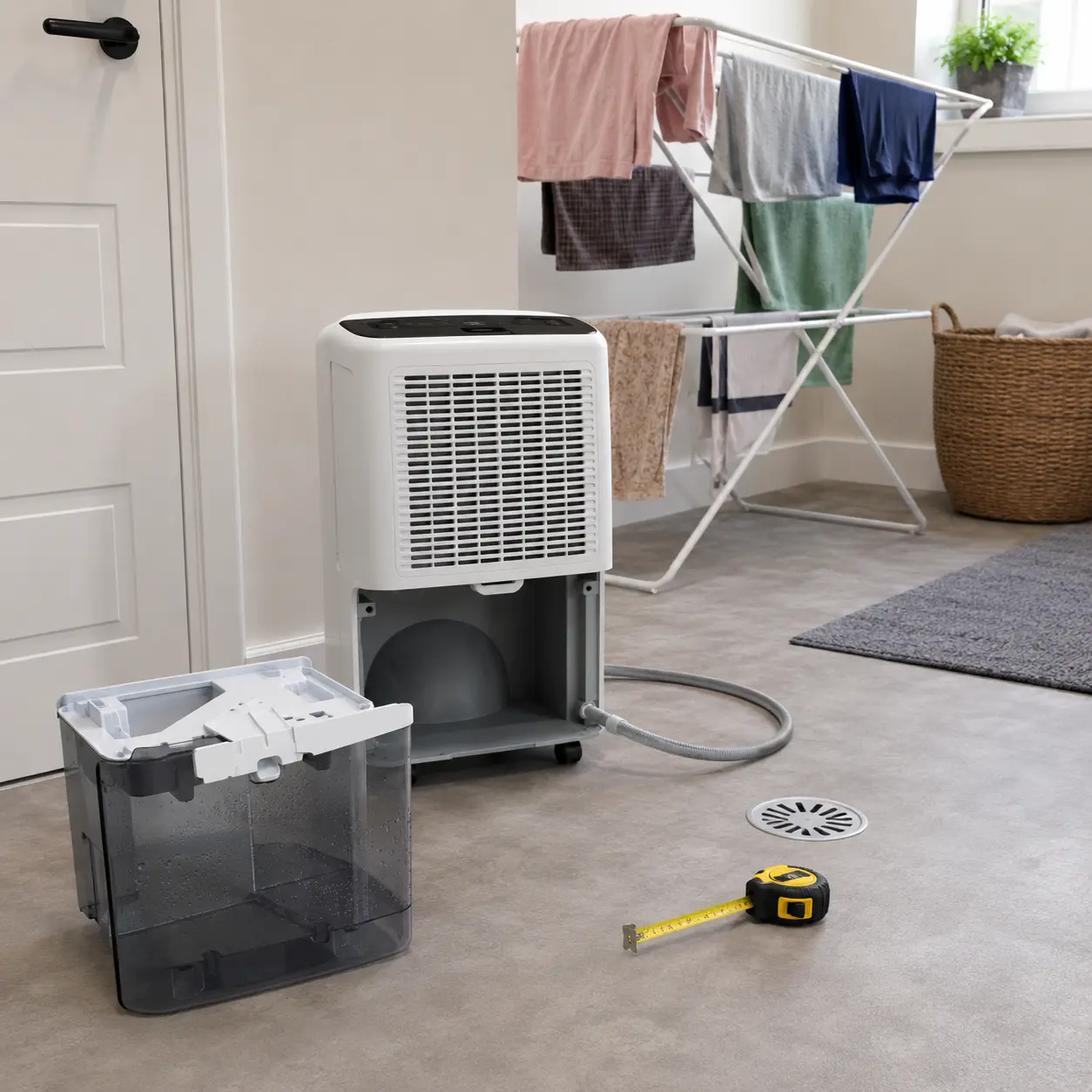
Continuous drainage allows water to flow out through a hose where the model supports it. This can be useful in utility rooms, garages, basements or spaces where the dehumidifier will run for longer periods.
The limitation is setup. You need a suitable drain point, hose route and safe positioning. Not every buyer needs continuous drainage, and not every model includes it.
Check whether a hose is included or whether one needs to be bought separately.
Laundry Drying Mode
Many buyers choose a dehumidifier to help with indoor laundry drying. A laundry mode can be useful where included because it may run the unit in a way intended for higher moisture from drying clothes.
However, a laundry mode is not magic. Airflow, room size, amount of laundry, ventilation and how clothes are spaced all matter.
If laundry drying is a main reason for buying, check extraction rate, tank size, noise level and energy information carefully.
Noise Level
Noise matters if the dehumidifier will be used in a bedroom, home office, lounge or overnight. Some people are not bothered by a low hum, while others find it distracting.
If quiet use matters, check noise information where supplied. Also think about placement. A unit in a hallway or utility room may be less noticeable than one beside a bed or desk.
Noise tolerance is personal, so choose according to the room and time of use.
Energy Use And Running Costs
Dehumidifiers use electricity, and running costs vary by model, setting, room conditions and how long the unit runs. A powerful unit used constantly may cost more to run than a smaller unit used occasionally, but a unit that is too small may run longer without solving the problem well.
A humidistat, timer, auto mode or laundry mode may help manage use where included. These features vary by model, so check the product page.
Running cost should be considered alongside effectiveness, not separately.
Controls And Humidistat
Controls affect how easy the dehumidifier is to live with. Basic models may have simple on and off operation, while others may include digital displays, target humidity settings, timers, auto shut off, sleep modes or app control where stated.
A humidistat can be helpful because it allows the machine to respond to humidity levels rather than running without control. This may make everyday use easier.
Choose the control style that suits the person using it most often.
Portability And Placement
If you plan to move the dehumidifier between rooms, portability matters. Handles, castors, weight and size all affect how practical the unit feels.
Placement also matters. A dehumidifier needs airflow around it and should be positioned according to the product guidance. If it is hidden behind furniture or squeezed into a tight corner, performance may be affected.
Before buying, think about where it will actually sit.
Product Type Differentiation And Variants
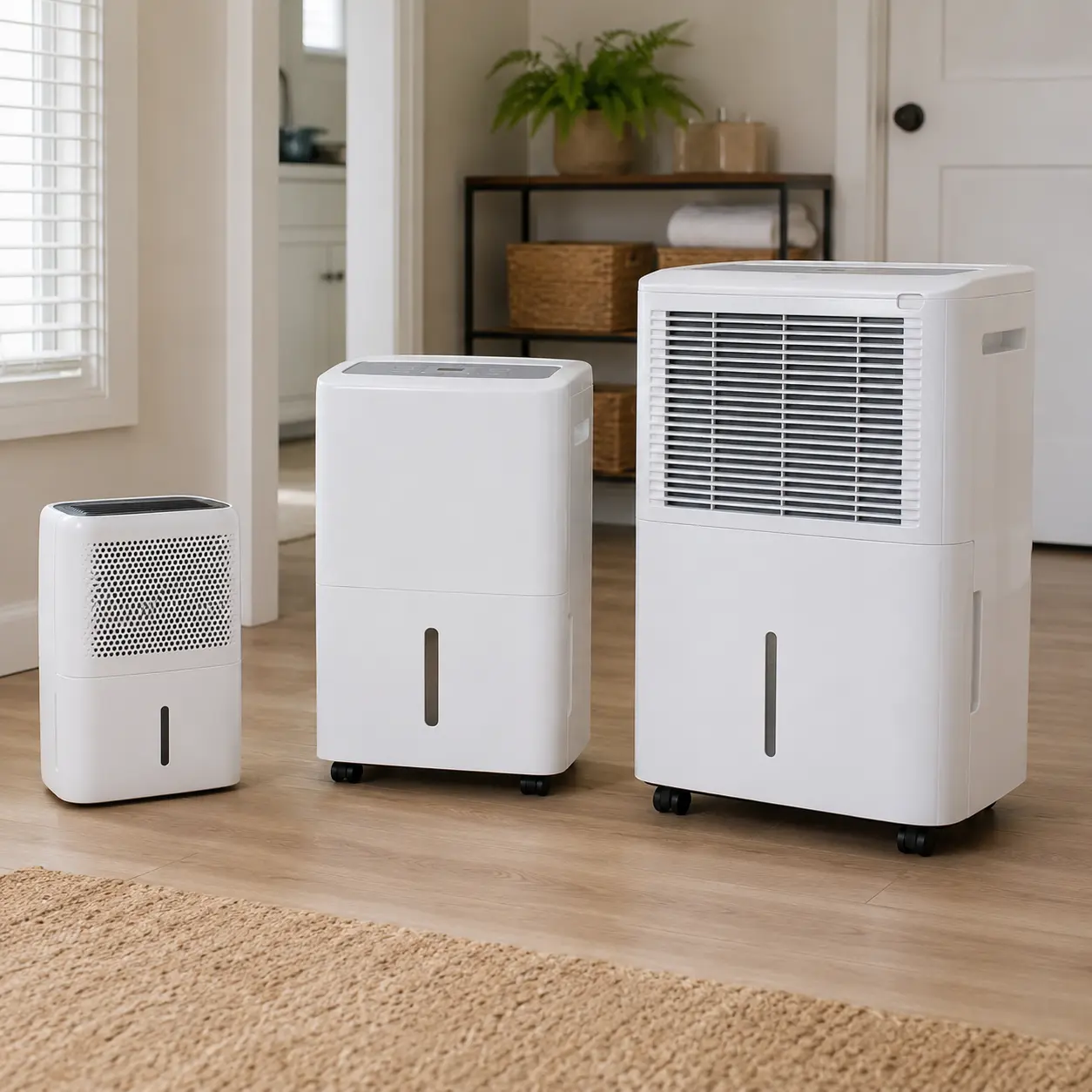
Compressor Dehumidifiers
Compressor dehumidifiers are commonly used in heated homes and general living spaces. They may suit bedrooms, living rooms, utility rooms and everyday condensation management where the model supports that use.
The limitation is that performance may vary in cooler rooms. Check temperature suitability carefully.
Desiccant Dehumidifiers
Desiccant dehumidifiers may suit cooler spaces where stated on the product page. They can be useful for garages, conservatories, unheated rooms or lower temperature areas depending on the model.
The limitation is that they may have different energy use, noise and heat output characteristics. Check product details before buying.
Compact Dehumidifiers
Compact dehumidifiers may suit small rooms, wardrobes, cupboards, caravans or occasional moisture control where supported by the product page.
The limitation is capacity. A compact unit may not be suitable for larger rooms or heavy moisture problems.
Large Capacity Dehumidifiers
Large capacity dehumidifiers may suit bigger rooms, regular laundry drying or homes with more noticeable moisture problems.
The limitation is size, noise, energy use and storage space. Larger is not always better if the room does not need it.
Dehumidifiers With Laundry Mode
Models with laundry mode may suit buyers who regularly dry clothes indoors. This feature can be useful in utility rooms, spare rooms or laundry areas.
The limitation is that room airflow and laundry spacing still matter. The feature alone does not guarantee fast drying.
Dehumidifiers With Continuous Drainage
Continuous drainage models can be useful where regular emptying is inconvenient. They may suit utility rooms, garages or spaces with a suitable drain point.
The limitation is that setup must be practical and safe. Check hose requirements and placement.
Specifications vary by model, so always check the individual product page before buying.
Suitability By Buyer Type Or Need
| Buyer Type Or Need | What To Prioritise | What To Be Careful About |
|---|---|---|
| Bedroom user | Noise level, tank size and auto shut off | A louder unit may disturb sleep |
| Laundry drying | Extraction rate, laundry mode and tank capacity | Check energy use and room size |
| Small flat | Compact footprint and portability | Small units may not suit the whole home |
| Family home | Larger capacity and easy tank emptying | Check running costs and noise |
| Garage or cooler space | Low temperature suitability | Not every model suits cold rooms |
| Bathroom moisture | Room suitability and safe placement | Follow electrical and placement guidance |
| Home office | Low noise and compact size | Check whether it will distract during calls |
| Renter | Portable design and no permanent installation | Check drainage setup if needed |
| Frequent user | Humidistat, timer and easy maintenance | Filter care matters over time |
| Budget conscious buyer | Right size and energy information | Cheapest is not value if too small |
Common Mistakes And Misunderstandings
Buying Too Small For The Space
A compact dehumidifier can be useful, but it may not cope with a larger or very damp room. This can lead to disappointment and long running times.
Choose based on room size and moisture level, not just price.
Assuming One Unit Will Dry The Whole House
One dehumidifier may help in a defined area, but it may not manage moisture equally across several rooms, floors or closed spaces.
Think about where the moisture problem is strongest and how the air moves through the home.
Ignoring Room Temperature
Some dehumidifiers work better in warm spaces, while others may suit cooler areas where stated. Temperature can affect performance.
Check whether the model is suitable for the room you plan to use it in.
Choosing Only By Extraction Rate
A high extraction rate can be useful, but tank size, noise, energy use, drainage, controls and room suitability matter too.
Use extraction rate as one comparison point, not the whole decision.
Forgetting About Tank Emptying
A dehumidifier that collects water needs emptying unless continuous drainage is used. A small tank may fill more often in damp conditions.
Check tank capacity and how easy it is to remove and empty.
Overlooking Noise
A unit that seems fine in a utility room may be too noticeable in a bedroom or office.
Check noise information if the unit will be used in quiet spaces.
Assuming Laundry Mode Replaces Airflow
Laundry mode can help where included, but clothes still need space and airflow. A crowded airer in a closed room may dry slowly.
Use the machine sensibly and follow product guidance.
Neglecting Filter Care
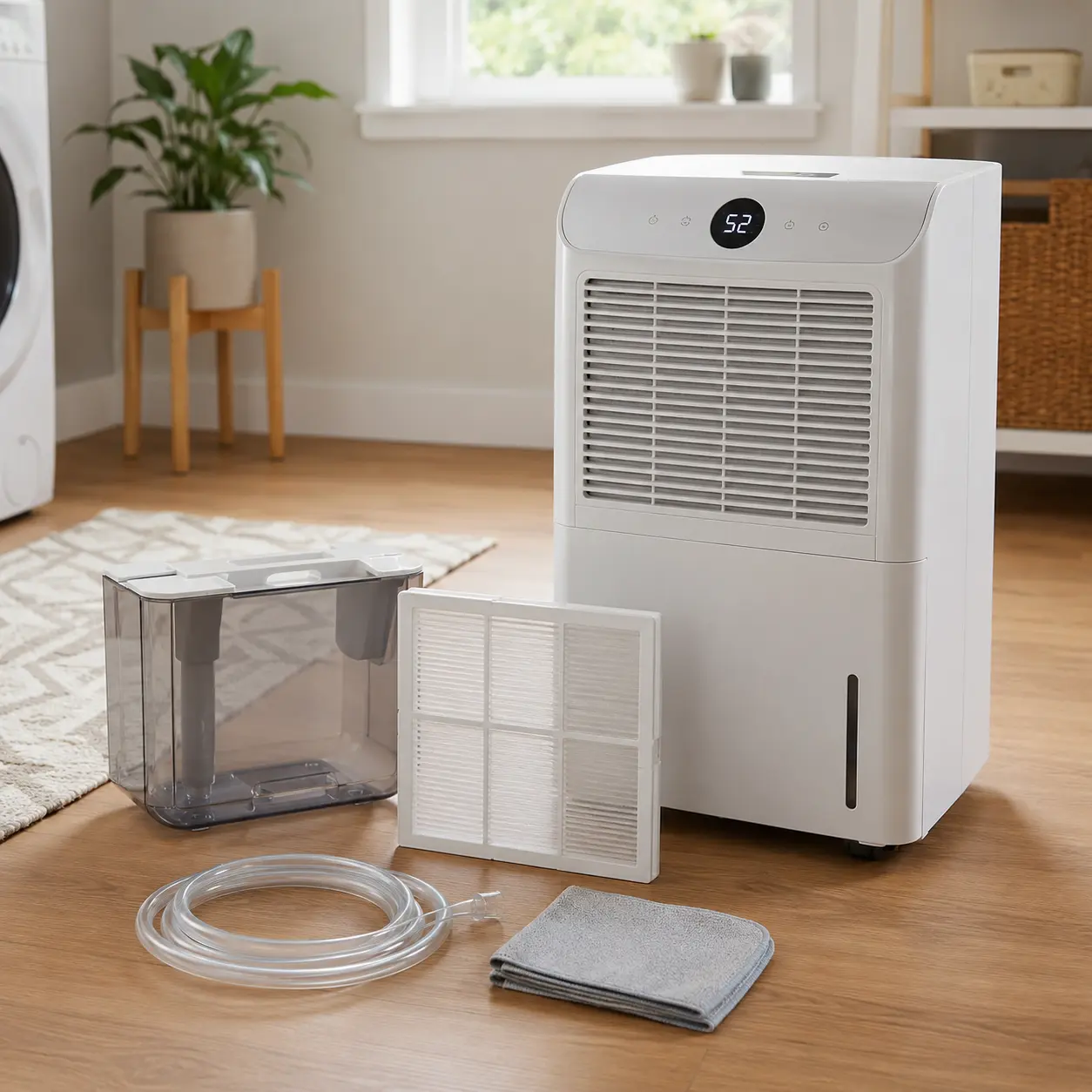
Filters can collect dust and need cleaning or replacement depending on the model. Poor filter care may reduce practicality over time.
Check maintenance requirements before buying.
Safety And Suitability Caveats
Dehumidifiers should be used only as intended and in line with the manufacturer’s instructions. They involve electricity, water collection and airflow, so correct placement and care are important.
Place the unit on a stable surface and keep air vents clear. Do not use it where the product guidance says it is unsuitable. Take care when emptying the water tank, and avoid spilling water near electrical parts.
If using continuous drainage, make sure the hose is positioned securely and drains safely. Do not modify, dismantle or attempt to repair the appliance. If the dehumidifier appears damaged, leaks, smells unusual or seems unsafe, stop using it and follow the product information.
Always check the individual product page for room suitability, temperature range, tank capacity, drainage options, electrical information, filter care and intended use before buying.
Maintenance, Storage And Lifespan Considerations
Dehumidifiers need regular care to remain practical. Empty the water tank as needed, clean or replace filters according to the product guidance and keep vents free from dust or obstruction.
If the unit is stored when not in use, make sure the tank is empty and the appliance is dry. Keep any drainage hose or accessories together so they are not lost.
A dehumidifier used daily for laundry or condensation may need more frequent maintenance than one used occasionally in a spare room.
The lifespan of a dehumidifier depends on model, frequency of use, room conditions, cleaning, storage and how carefully it is handled.
How To Compare Models Efficiently
- Decide which room or problem you need the dehumidifier for.
- Check the size of the room and how damp it feels.
- Choose the right dehumidifier type for the room temperature.
- Compare extraction rate and room suitability.
- Check tank capacity and emptying method.
- Decide whether continuous drainage is needed.
- Check laundry mode if drying clothes indoors.
- Compare noise level for bedrooms or offices.
- Review energy information and controls.
- Read the individual product page before buying.
Summary Buyer Decision Checklist
Before buying Dehumidifiers, check the following:
| Buying Check | Why It Matters |
|---|---|
| Room size | The unit should suit the space |
| Moisture level | Heavier damp may need more capacity |
| Dehumidifier type | Compressor and desiccant models suit different conditions |
| Extraction rate | Helps compare moisture removal ability |
| Tank capacity | Affects emptying frequency |
| Continuous drainage | Useful for longer use where supported |
| Laundry mode | Helpful if drying clothes indoors |
| Noise level | Important for bedrooms and offices |
| Energy information | Affects running costs |
| Portability | Useful for moving between rooms |
| Filter care | Maintenance affects long term use |
| Product page details | Specifications vary by model |
Frequently Asked Questions
The right size depends on the room size, moisture level and how often the unit will run. A small room with light condensation may need less capacity than a utility room used for drying laundry. Always check the product page for room suitability.
Many buyers use dehumidifiers to help with indoor laundry drying. A laundry mode can be useful where included, but airflow, room size and how clothes are spaced still matter. Check tank size, extraction rate and energy information before buying.
Compressor dehumidifiers are common in heated home spaces, while desiccant models may suit cooler areas where stated. The best choice depends on room temperature and intended use. Check the product page carefully before buying.
Energy use varies by model, setting, room conditions and running time. A humidistat, timer or auto mode may help manage use where included. Check energy information before buying.
It depends on the size and layout of the home, air movement and where the moisture problem is strongest. One unit may help a defined area but may not manage every room equally. Choose around the main problem space first.
It depends on tank size, humidity level and how long the unit runs. Damp rooms and laundry drying may fill a tank faster. A continuous drainage option can reduce emptying where supported and set up correctly.
Yes, if the model is suitable for the room and placed according to the instructions. Noise level, display lights, tank size and auto shut off may matter in a bedroom. Check product details before buying.
Many dehumidifiers have filters that need cleaning or replacement depending on the model. Filter care helps keep the unit practical. Check the product guidance for maintenance details.
Only if the model is suitable for the temperature and conditions in the garage. Some dehumidifiers may be less effective in cooler spaces. Check low temperature suitability before buying.
Check room size suitability, tank capacity, noise, dimensions and where the unit will be placed. A compact unit may be easier to store, but it still needs enough capacity for the moisture problem.