BUYERS GUIDE
Fan Buyers Guide
Fans are home appliances designed to move air around a room, helping the space feel cooler and more comfortable. They are often bought for bedrooms, lounges, home offices, conservatories, kitchens, gyms, garages, workshops and rooms that become stuffy during warmer weather.
This guide helps you choose the right fan by explaining the practical details that matter before buying. The right choice depends on room size, fan type, airflow, noise level, speed settings, oscillation, control options, safety features, portability, cleaning and where the fan will be used.
A fan does not cool air in the same way as an air conditioning unit. Instead, it creates airflow that can make people feel cooler by moving air across the skin and helping reduce still, stuffy conditions. The best fan is the one that suits the room, the user and the way it will actually be used.
Specifications vary by model, so always check the individual product page before buying.
Quick Answer
The right Fan is the one that suits your room size, noise tolerance and airflow needs. For a desk or bedside table, a compact fan may be enough. For larger rooms, a pedestal fan, tower fan or larger floor fan may be more practical. If you want quiet night time use, check noise level, sleep mode and speed settings carefully. Always compare fan type, airflow, oscillation, controls, cable length, safety features, cleaning access, dimensions and product page details before buying.
Quick Product Comparison Framework
| Feature | What It Means | Why It Matters | What To Check |
|---|---|---|---|
| Fan type | Desk, pedestal, tower, floor, bladeless style or ceiling fan | Different types suit different spaces | Match the type to your room and use |
| Room size suitability | The size of room the fan is intended for | A small fan may struggle in a larger space | Check product guidance where listed |
| Airflow | How strongly the fan moves air | Affects comfort and coverage | Check speed and airflow details where supplied |
| Speed settings | Low, medium, high or variable speeds where included | Helps control comfort and noise | Check available settings |
| Oscillation | Side to side movement where included | Helps spread airflow around the room | Check oscillation angle where listed |
| Tilt or height adjustment | Lets you direct airflow more accurately | Useful for beds, desks and sofas | Check adjustment options |
| Noise level | How loud the fan is during use | Important for bedrooms and offices | Check noise information where supplied |
| Timer | Turns the fan off after a set period where included | Useful for night time use | Check timer details |
| Remote control | Allows control from across the room where supplied | Useful for bedrooms and lounges | Check whether it is included |
| Portability | Weight, handle, size and base design | Useful if moving between rooms | Check dimensions and weight |
| Safety guard | Protective grille or covered blade design | Important around children and pets | Check safety design and placement guidance |
| Cleaning access | How easy the grille, blades or filters are to clean | Dust build up affects use | Check care guidance |
Key Decision Criteria Explained
Fan Type
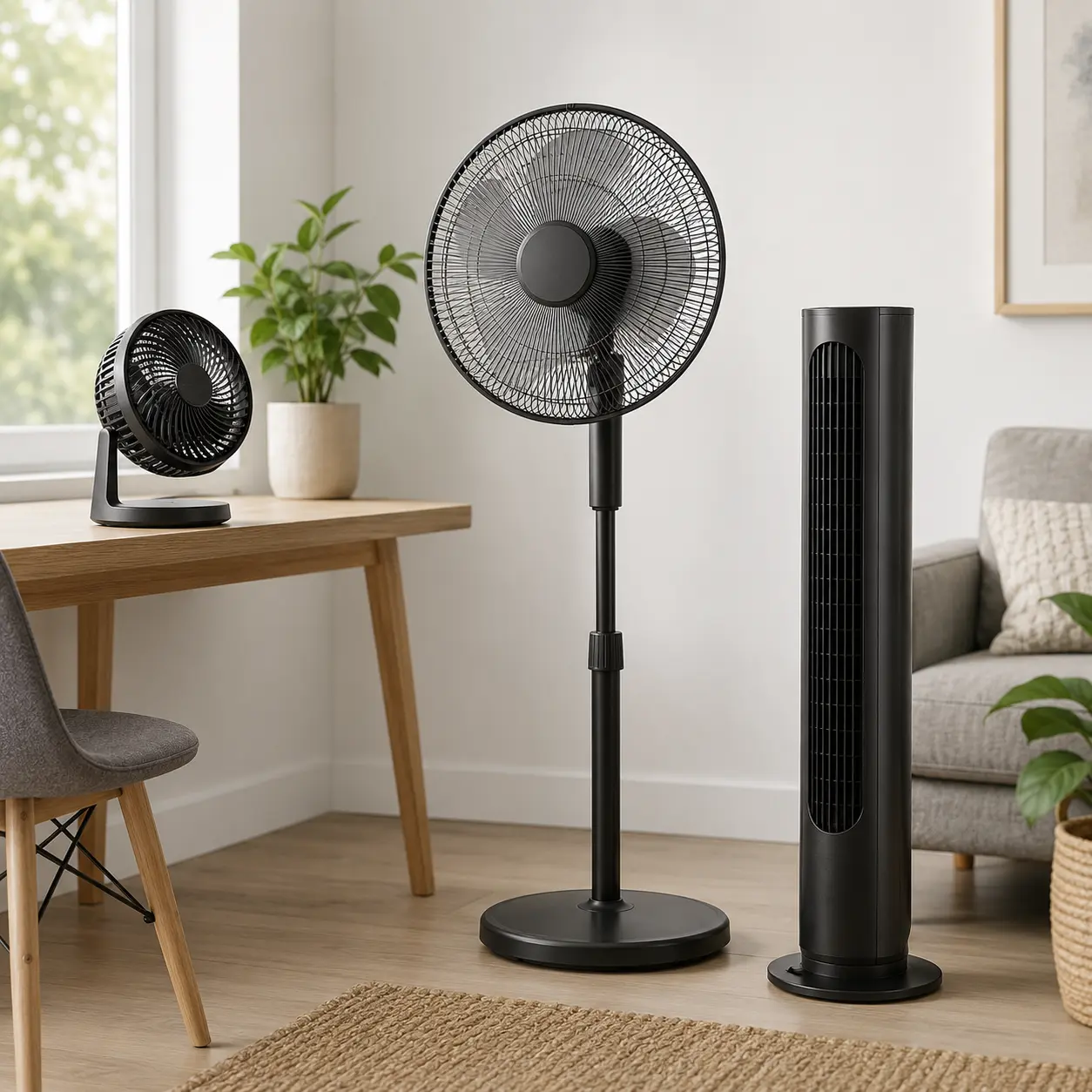
The first decision is the type of fan you need. A desk fan is usually compact and suitable for close range airflow on a desk, bedside table or small work surface.
A pedestal fan is taller and can usually be adjusted in height, making it useful for bedrooms, lounges and larger rooms where airflow needs to reach across furniture.
A tower fan is slim and often suits modern rooms, smaller floor spaces and buyers who want a neater design. A floor fan may provide stronger direct airflow for larger spaces, garages, gyms or workshops where the model supports that use.
Some fans are designed with hidden blades or bladeless style airflow. These may appeal to buyers who want a different look or easier exterior cleaning, but design and airflow still vary by model.
Room Size And Placement
Room size matters because fans move air rather than reducing room temperature directly. A compact fan may feel effective when placed close to one person, but it may not move enough air for a larger lounge or open plan space.
Placement also matters. A fan placed in a corner may not feel as effective as one positioned to move air across the area where people sit or sleep. In bedrooms, airflow direction, noise and distance from the bed all matter.
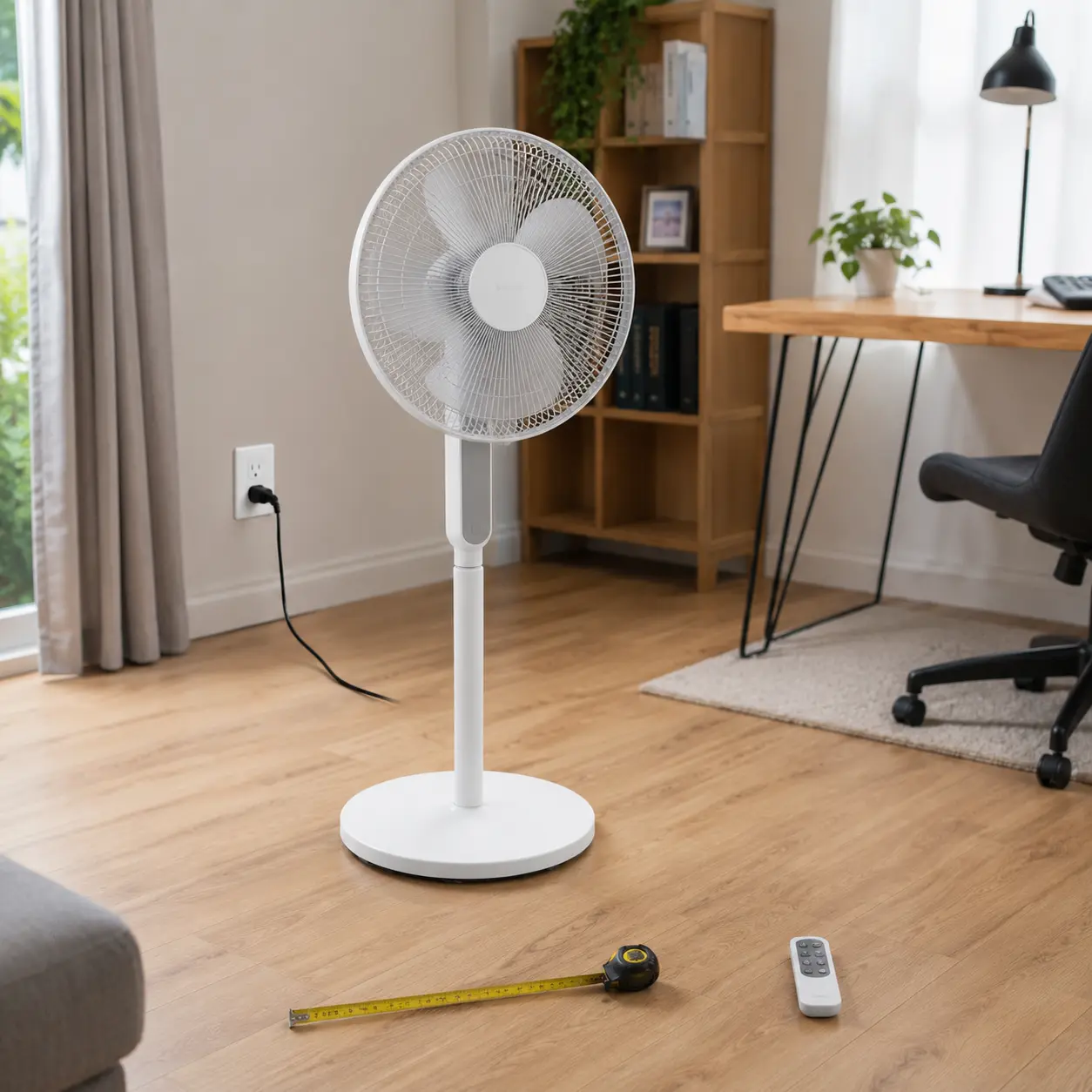
Before buying, think about where the fan will stand and whether the cable can reach a socket safely.
Airflow And Speed Settings
Airflow affects how strong the fan feels. Some buyers want a gentle breeze for sleeping, while others want stronger airflow for hot rooms, workouts or busy workspaces.
Multiple speed settings can make a fan more flexible. A low speed may suit night use or background airflow, while a higher speed may be better during the hottest part of the day.
Do not choose only by the highest speed. A useful fan should give you enough control to match different situations.
Oscillation And Direction Control
Oscillation helps spread airflow across a wider area. This can be useful in lounges, offices and shared rooms where more than one person wants airflow.
Tilt adjustment, height adjustment and directional control can be just as important. A pedestal fan that can be raised, lowered and tilted may be more practical than a fixed fan if you need airflow across a bed or sofa.
Check how the fan moves and whether the settings suit the room.
Noise Level
Noise is one of the biggest buying factors. A fan that feels fine in a kitchen during the day may be too noticeable in a bedroom at night or during work calls.
If you plan to use a fan while sleeping, working or watching TV, check noise information where supplied. Also look for lower speed settings, sleep mode or quiet mode where included.
Noise tolerance is personal. Some people like a steady fan sound, while others find it distracting.
Controls And Timer Features
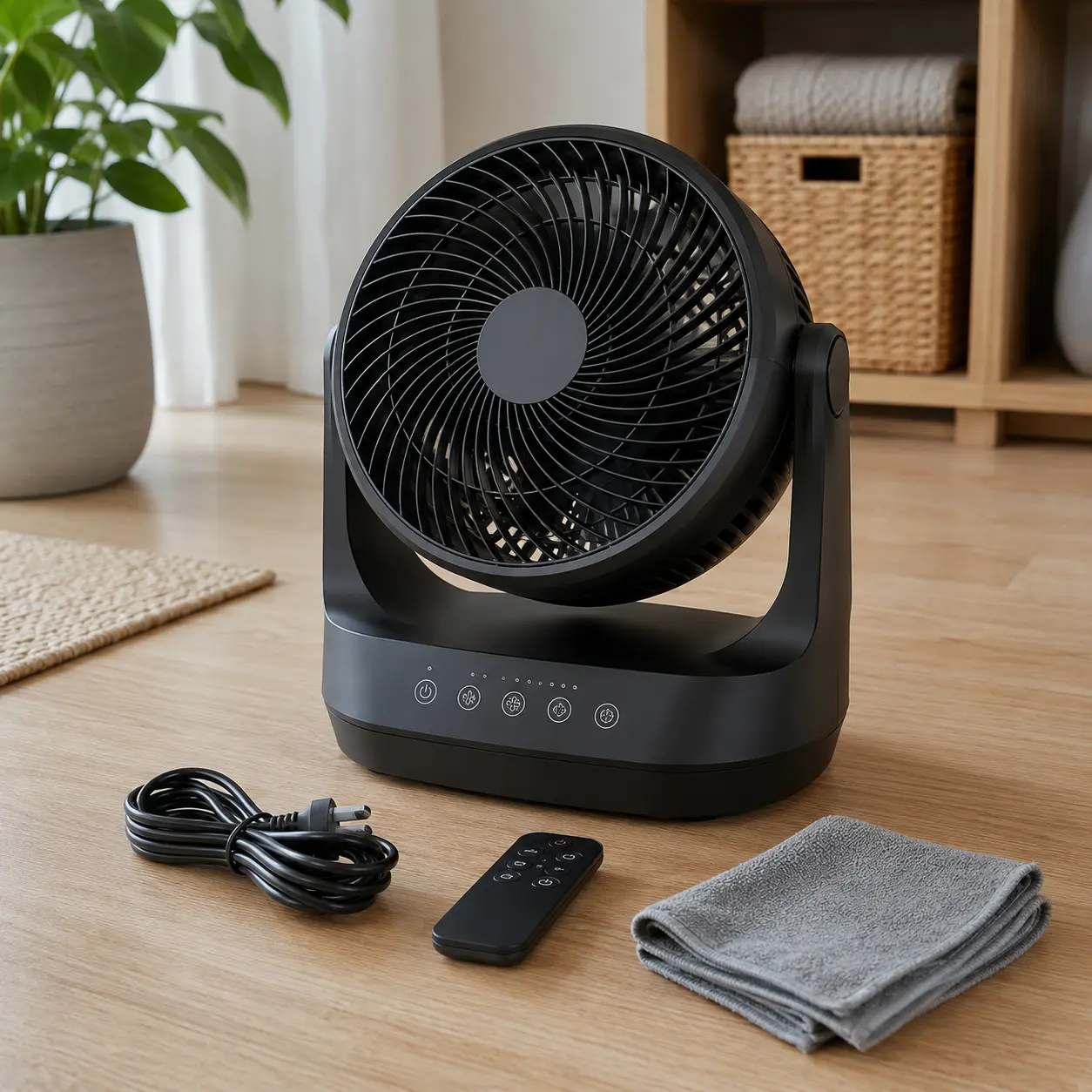
Controls should match how the fan will be used. Simple buttons or dials may be enough for a desk fan. A remote control can be useful for a bedroom or living room where the fan is across the room.
A timer can be helpful if you want the fan to switch off after you fall asleep or after a set period. Some models may include display lights or digital panels, which can matter in dark bedrooms.
Choose controls that feel practical rather than complicated.
Portability And Storage
Many buyers move fans between rooms during warmer weather. If that sounds like you, weight, handle design, base stability and overall size matter.
A tower fan may be easier to carry and store than a wide pedestal fan, while a compact desk fan may be simple to put away in a cupboard. Larger floor fans may be more awkward to store but may suit stronger airflow needs.
Think about where the fan will live outside summer too.
Safety Around Children And Pets
Fans should be positioned safely, especially around children and pets. Blade guards, stable bases, cable placement and tip over risk all matter.
A fan with exposed or easily reachable moving parts may not suit every household. Even with a guard, fans should be used according to the instructions and placed where they are less likely to be knocked over.
Safety features are useful, but they do not replace sensible placement.
Cleaning And Dust Build Up
Fans collect dust on grilles, blades and vents. This can affect appearance, hygiene and airflow over time.
Some fans are easier to clean than others. Removable grilles may help where supplied, while tower fans and bladeless style designs may have different cleaning needs.
If the fan will be used often, cleaning access should be a real buying factor.
Fan Versus Air Conditioner
A fan and an air conditioner are different appliances. A fan moves air around and helps people feel cooler. An air conditioner removes heat from the room and usually needs venting or installation.
If the room is extremely hot, poorly ventilated or sun exposed, a fan may help comfort but may not achieve the same effect as air conditioning.
Choose based on the result you expect.
Product Type Differentiation And Variants
Desk Fans
Desk fans are compact and designed for close range airflow. They may suit home offices, bedside tables, small rooms and personal cooling.
The limitation is coverage. A desk fan may not suit larger rooms or shared spaces unless positioned close to the user.
Pedestal Fans
Pedestal fans stand on a tall base and often include height adjustment, tilt and oscillation where stated. They may suit bedrooms, lounges and larger rooms.
The limitation is floor space. Pedestal fans can be wider and less discreet than tower fans.
Tower Fans
Tower fans are slim upright fans that can suit modern rooms, bedrooms and smaller floor spaces. They often include oscillation, timers or remote controls where stated.
The limitation is cleaning and airflow style. Some may be less direct than traditional bladed fans depending on design.
Floor Fans
Floor fans can provide strong direct airflow and may suit larger rooms, gyms, garages, workshops or conservatories where suitable.
The limitation is that they may be noisier, larger or less subtle in living spaces.
Bladeless Style Fans
Bladeless style fans or hidden blade designs may appeal to buyers who want a modern look or a different safety and cleaning design.
The limitation is cost and airflow expectation. Check product details rather than assuming the style is automatically better.
Ceiling Fans
Ceiling fans are fixed fans installed overhead. They may suit rooms where permanent air circulation is wanted.
The limitation is installation. Ceiling fans need suitable fitting, ceiling support and electrical work where required. Check installation requirements carefully.
Specifications vary by model, so always check the individual product page before buying.
Suitability By Buyer Type Or Need
| Buyer Type Or Need | What To Prioritise | What To Be Careful About |
|---|---|---|
| Bedroom user | Low noise, timer, sleep mode and gentle settings | Display lights and fan noise may disturb sleep |
| Home office | Quiet operation, desk size and adjustable angle | Strong airflow may disturb papers or calls |
| Larger room | Pedestal, tower or floor fan with good airflow | Compact fans may not give enough coverage |
| Small room | Compact fan or slim tower fan | Avoid buying a bulky fan if space is limited |
| Family household | Stable base, safety guard and simple controls | Keep cables and moving parts safely positioned |
| Pet owner | Stable design and safe placement | Pets may knock or chew cables |
| Conservatory user | Strong airflow and suitable fan size | Fans do not remove heat like air conditioning |
| Gym or workout room | Strong airflow and easy positioning | Noise may be less important than power |
| Traveller or occasional user | Compact size and easy storage | Small fans may only suit close range use |
| Style conscious buyer | Tower or bladeless style design | Do not choose appearance over airflow and noise |
Common Mistakes And Misunderstandings
Expecting A Fan To Cool The Air Like Air Conditioning
A fan moves air. It can help you feel cooler, but it does not lower room temperature in the same way as an air conditioning unit.
Choose a fan for airflow and comfort, not active cooling.
Buying Too Small For The Room
A small fan may be fine close up, but it may not move enough air for a larger room.
Match fan size and airflow to the space.
Ignoring Noise For Bedroom Use
A fan that seems fine during the day may feel loud at night. Bedrooms need careful attention to noise, speed settings and display lights.
Check quiet settings before buying.
Choosing Only By Looks
A slim tower fan or stylish design can look good, but airflow, noise, controls and cleaning still matter.
Practical comfort should come first.
Forgetting About Cleaning
Fans collect dust over time. If the grille or vents are awkward to clean, the fan may become less pleasant to use.
Check cleaning guidance before buying.
Overlooking Cable Length
A fan may need to stand in a specific position to be useful. If the cable is too short, placement can become awkward or unsafe.
Check cord length where listed.
Assuming Oscillation Is Always Included
Not every fan oscillates. Some provide fixed direct airflow only.
Check movement features before buying.
Using A Fan In An Unsafe Position
Fans should not be placed where they can be knocked over, blocked, covered or exposed to unsuitable conditions.
Always follow product placement guidance.
Safety And Suitability Caveats
Fans should be used only as intended and in line with the manufacturer’s instructions. They involve moving air, electricity and, in many models, rotating blades or internal moving parts.
Place the fan on a stable surface or floor area and keep vents or grilles clear. Keep cables positioned safely to reduce trip hazards. Do not cover the fan, use it near water unless the product information clearly supports that use, or place it where it may be knocked over easily.
Take extra care around children and pets. Do not allow fingers, objects or loose fabric near moving parts. If the fan appears damaged, smells unusual, makes abnormal sounds or seems unsafe, stop using it and follow the product information.
Always check the individual product page for fan type, dimensions, controls, cable length, safety features, cleaning guidance and intended use before buying.
Maintenance, Storage And Lifespan Considerations
Fans need basic care to stay practical. Dust can build up on blades, grilles and vents, so cleaning should be done according to the product guidance.
Allow the fan to be unplugged before cleaning. Do not dismantle parts unless the instructions clearly allow it. If the fan includes a filter or removable grille, follow the care instructions carefully.
Store seasonal fans in a clean, dry place when not in use. Keep remotes, screws, stands or accessories together so they are not lost.
The lifespan of a fan depends on model, frequency of use, cleaning, storage and how carefully it is handled.
How To Compare Models Efficiently
- Decide which room the fan is for.
- Choose the fan type that suits the space.
- Check airflow and speed settings.
- Review oscillation, tilt and height adjustment.
- Check noise level for bedrooms or offices.
- Compare controls, remote and timer features.
- Check dimensions, weight and portability.
- Review safety design and cable length.
- Check cleaning access and care guidance.
- Read the individual product page before buying.
Summary Buyer Decision Checklist
Before buying Fans, check the following:
| Buying Check | Why It Matters |
|---|---|
| Fan type | Desk, pedestal, tower and floor fans suit different spaces |
| Room size | The fan should suit the area you want to use |
| Airflow | Affects comfort and coverage |
| Speed settings | Useful for different times of day |
| Oscillation | Helps spread airflow |
| Tilt or height adjustment | Helps direct airflow properly |
| Noise level | Important for bedrooms and offices |
| Timer | Useful for night time use |
| Remote control | Convenient for lounges and bedrooms |
| Cable length | Affects safe placement |
| Cleaning access | Dust build up needs managing |
| Product page details | Specifications vary by model |
Frequently Asked Questions
A quiet fan with lower speed settings, a timer and gentle airflow is often best for bedrooms. Tower fans, pedestal fans and compact fans can all work depending on room size and placement. Check noise information before buying.
Fans move air and help people feel cooler, but they do not cool the air in the same way as an air conditioning unit. They are best for improving airflow and comfort.
Not always. Tower fans are slim and often look neater, while pedestal fans may offer stronger directional airflow and height adjustment. The better choice depends on the room and how you want the air to move.
For a home office, look for quiet operation, adjustable direction, suitable desk or floor size and stable placement. Avoid overly powerful airflow if it will disturb papers, microphones or calls.
Bladeless style or hidden blade designs may reduce access to moving blades, but buyers should still follow safety guidance. They still use electricity and moving airflow, so placement and care matter.
Oscillation is useful if you want airflow to cover more than one seating position or a wider area. If you only want direct airflow on one person, fixed airflow may be enough.
Running costs vary by power rating, speed setting and how long the fan is used. Fans generally use electricity while running, so check energy information where supplied and use timers or lower settings where useful.
Cleaning depends on the model. Some fans have removable grilles, while others need exterior cleaning only. Always unplug the fan and follow the manufacturer’s cleaning instructions.
Yes, with care. Keep the fan stable, place cables safely and make sure pets cannot knock it over or reach moving parts. Follow product safety guidance.
Check fan type, airflow, speed settings, oscillation and size. A compact desk fan may not provide enough coverage for a larger room, so a pedestal, tower or floor fan may be more suitable.