BUYERS GUIDE
Bread Makers Buyers Guide
Bread Makers are kitchen appliances designed to mix, knead, prove and bake bread with less hands on effort than traditional bread making. They are popular with people who want fresh bread at home, more control over ingredients, convenient weekday baking or a simple way to make loaves without needing to knead dough by hand.
This guide helps you choose the right bread maker by explaining the practical details that matter before buying. The right choice depends on loaf size, household needs, programme options, crust settings, timer functions, ingredient dispensers, cleaning, storage space and how often you plan to bake.
A bread maker is not just about making a loaf. Some buyers want basic white bread, while others want wholemeal loaves, dough programmes, gluten free settings where available, sweet breads, jams or pizza dough. The best choice is the model that fits your routine, not just the one with the longest programme list.
Specifications vary by model, so always check the individual product page before buying.
Quick Answer
The right Bread Maker is the one that suits your household size, baking habits and kitchen space. For everyday loaves, check loaf capacity, crust settings, timer options and how easy the pan and paddle are to clean. If you want more variety, compare the available programmes, dough settings and ingredient dispenser features where supplied. Always check loaf size, programme list, dimensions, cleaning guidance, accessories and product page details before buying.
Quick Product Comparison Framework
| Feature | What It Means | Why It Matters | What To Check |
|---|---|---|---|
| Loaf size | The size or weight of loaf the bread maker can produce | Too small may not suit a family, while too large may waste bread | Check loaf size options on the product page |
| Programme choice | Pre set baking modes such as basic, wholemeal, dough or gluten free where included | Programmes affect what you can make | Check the actual programme list |
| Crust settings | Light, medium or dark crust options where available | Helps match personal preference | Check whether crust control is included |
| Delay timer | Lets you set baking to finish later | Useful for waking up to fresh bread or planning around meals | Check timer length and use guidance |
| Keep warm function | Keeps bread warm after baking where included | Useful if you cannot remove the loaf straight away | Check feature details before relying on it |
| Ingredient dispenser | Adds ingredients such as seeds or dried fruit during the cycle where supplied | Useful for speciality loaves | Check whether it is included and what it is intended for |
| Bread pan type | The removable baking pan inside the machine | Affects cleaning and loaf shape | Check pan design and care guidance |
| Kneading paddle | The paddle that mixes and kneads the dough | Important for dough preparation and cleaning | Check whether it is removable |
| Viewing window | A window in the lid where included | Lets you see progress without opening the lid | Check product images and details |
| Size and storage | The appliance footprint and height | Bread makers can be bulky | Check dimensions before buying |
| Noise | Kneading can create motor and movement noise | Important in open plan kitchens or overnight use | Consider where it will be used |
| Cleaning | How easy the pan, lid and paddle are to clean | Everyday use depends on simple cleaning | Check removable parts and care guidance |
Key Decision Criteria Explained
Loaf Size And Household Needs
Loaf size is one of the first things to check. A small loaf may suit one person, a couple or occasional use, while a larger loaf may be better for families or anyone who eats bread daily.
Think about how much bread your household normally uses. If you only want the occasional weekend loaf, a compact model may be enough. If you want fresh bread for packed lunches, toast and family meals, a larger capacity model may be more practical.
Do not choose only by maximum loaf size. Some bread makers offer multiple loaf size settings where stated, which can be useful if your needs change from day to day.
Programme Options
Programme choice affects what the bread maker can do. Basic bread programmes may suit everyday white or simple loaves. Wholemeal programmes may be useful for denser flour types. Dough programmes may suit buyers who want the machine to knead and prove dough before shaping or baking separately.
Some models may include gluten free, rapid, sweet bread, cake, jam or yoghurt style programmes where stated on the product page. These can be useful, but only if you will use them.
A long programme list is not automatically better. A simple bread maker with the right everyday programmes may be better than a complicated model with features you never touch.
Crust Settings
Crust settings allow you to choose how light or dark the finished crust is, where the feature is included. This matters because bread preferences vary. Some people prefer a softer lighter crust, while others like a darker finish.
Crust control can be useful for family households where different people have different preferences. However, results can vary depending on ingredients, loaf size and programme choice.
Check whether crust settings are available before buying if this matters to you.
Delay Timer And Morning Bread
A delay timer is one of the most useful bread maker features for many buyers. It can let you prepare ingredients in advance and set the loaf to finish later, such as in the morning or around mealtimes.
This is useful for busy households, but it is still important to follow product guidance. Some ingredients may not be suitable for long delay periods, especially where freshness or food safety matters.
Check the timer details and use instructions before relying on delayed baking.
Ingredient Dispenser
An ingredient dispenser can add ingredients such as seeds, nuts or dried fruit during the baking cycle where supplied. This can be useful because some ingredients are better added after the first mixing stage rather than at the beginning.
Not every bread maker has a dispenser. Some models may require you to add ingredients manually when prompted. Others may not be designed for that type of baking.
If you want seeded loaves, fruit breads or more varied recipes, check whether a dispenser or add ingredient signal is included.
Bread Pan And Paddle Design
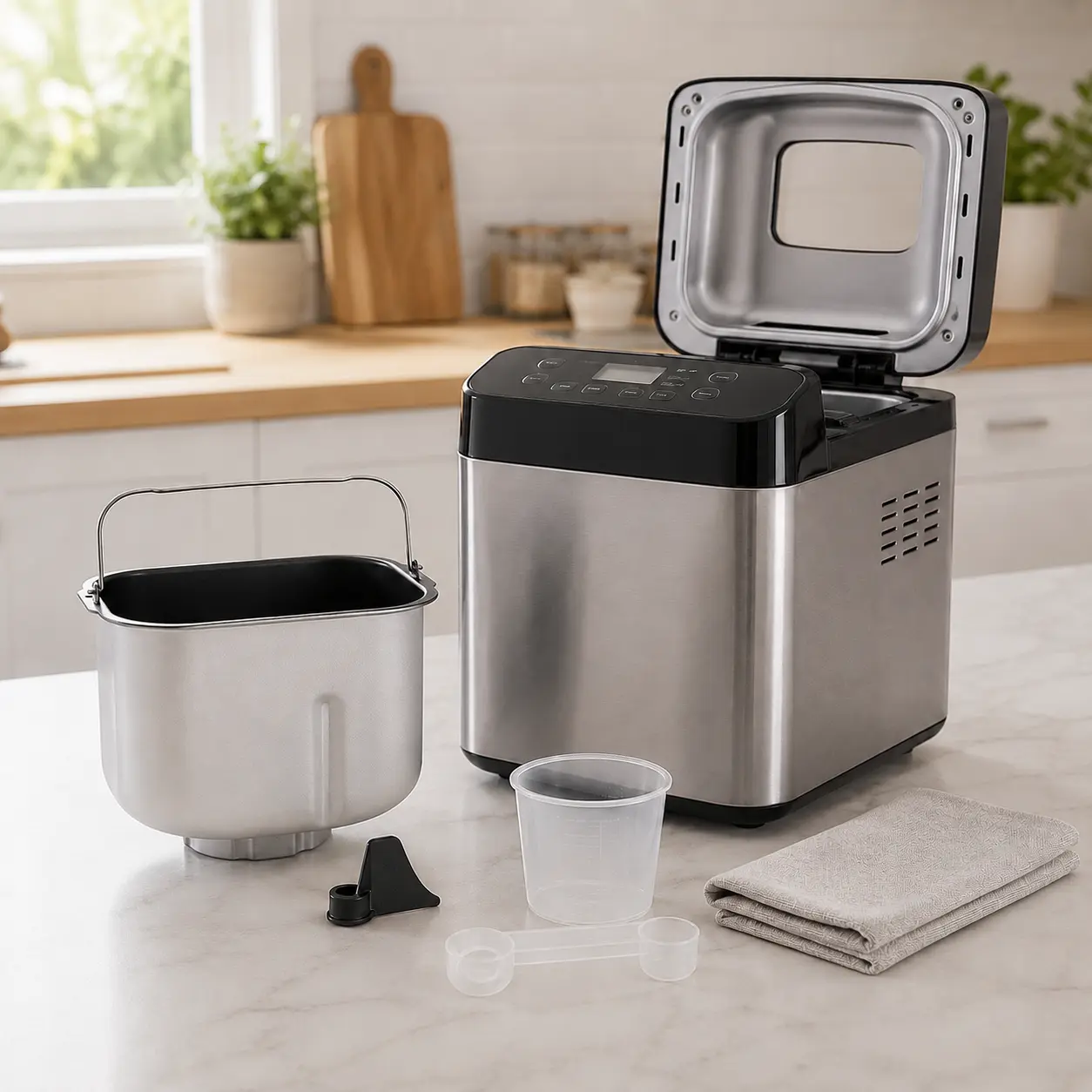
The bread pan and kneading paddle are central to how the machine works. The pan holds the ingredients and forms the loaf, while the paddle mixes and kneads the dough.
A removable pan makes it easier to take the loaf out and clean the appliance. A removable paddle can also help with cleaning, although designs vary by model.
Some bread may bake around the paddle, leaving a small mark in the base of the loaf. This is normal for many bread makers, but the exact result depends on the design and recipe.
Kitchen Space And Storage
Bread makers can be larger than buyers expect. They need worktop space during use and storage space when not in use. They also need enough clearance to open the lid and remove the pan safely.
Before buying, check where the machine will sit. A bread maker kept at the back of a cupboard may not be used often. A model that fits neatly on the worktop may be more convenient if you plan to bake regularly.
Check dimensions carefully, including height.
Cleaning And Everyday Convenience
Cleaning matters because bread dough can leave residue on the pan, paddle and lid area. A bread maker that is awkward to clean may become frustrating over time.
Check whether the bread pan and paddle are removable and how they should be cleaned. Some parts may have non stick style coatings, so care instructions matter.
If you want to use the bread maker several times a week, cleaning ease should be near the top of your list.
Noise During Kneading
Bread makers are not silent. The baking stage is usually less noticeable, but kneading can create motor noise and movement. This may matter if the machine will be used overnight, in an open plan kitchen or near bedrooms.
Noise levels vary by model and stage of the programme. If quiet operation is important, check product information and customer expectations carefully.
Recipe Flexibility
A bread maker works best when the recipe suits the machine. Some buyers want simple ready to follow recipes. Others want to experiment with flours, seeds, fruit, doughs and speciality breads.
If you want flexibility, check programme options, recipe guidance, loaf size settings and whether the machine supports the type of bread you want to make. Do not assume every bread maker suits every recipe.
Specifications vary by model, so always check the individual product page before buying.
Product Type Differentiation And Variants
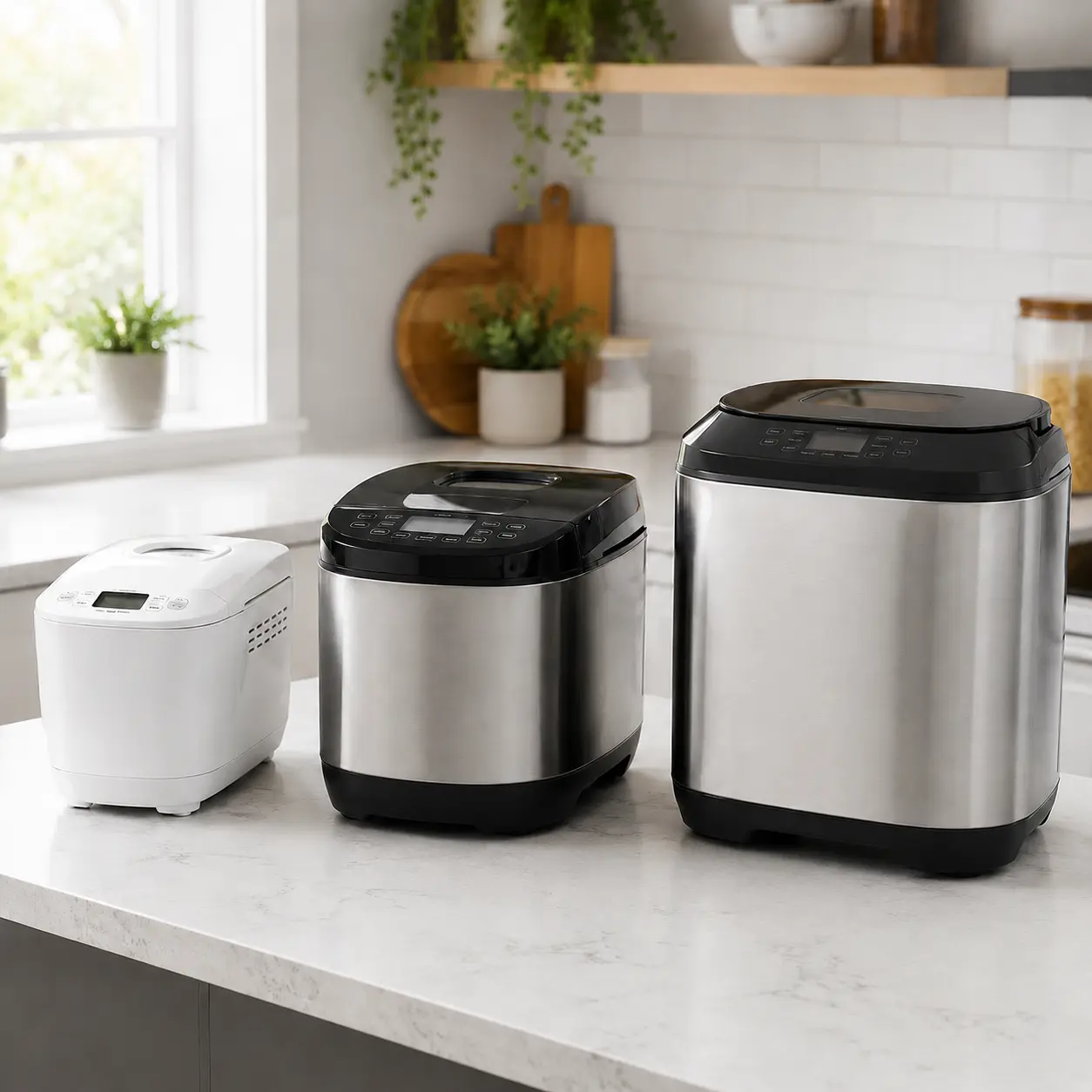
Basic Bread Makers
Basic bread makers are designed for simple everyday loaves. They may suit buyers who want a straightforward machine for white bread, basic brown bread or simple dough preparation where supported.
The limitation is variety. A basic model may have fewer programmes, fewer crust settings or less flexibility.
Bread Makers With Ingredient Dispensers
A bread maker with an ingredient dispenser may suit buyers who regularly make seeded, fruit or speciality loaves.
The limitation is that dispensers vary by model and may not suit every ingredient. Check the product page and instructions for intended use.
Bread Makers With Dough Settings
Dough settings can mix and knead dough without baking it in the machine. This may suit pizza dough, rolls, buns or loaves that you prefer to shape and bake separately, depending on the programme.
The limitation is that it still requires extra handling after the dough programme finishes.
Specifications vary by model, so always check the individual product page before buying.
Suitability By Buyer Type Or Need
| Buyer Type Or Need | What To Prioritise | What To Be Careful About |
|---|---|---|
| First time bread maker buyer | Simple controls, basic programmes and clear instructions | Avoid paying for features you may not use |
| Family household | Larger loaf size and reliable everyday capacity | Compact models may be too small |
| Single person household | Compact size and smaller loaf option | Large loaves may create waste |
| Small kitchen | Footprint, height and easy storage | Bread makers can be bulky |
| Buyer wanting fresh morning bread | Delay timer and practical overnight use | Check timer guidance and ingredient suitability |
| Wholemeal bread buyer | Suitable programme options | Do not assume every programme handles dense doughs well |
| Gluten free buyer | Gluten free programme where stated | Check product page and recipe guidance carefully |
| Seeded or fruit loaf buyer | Ingredient dispenser or add ingredient signal where included | Not all models include this feature |
| Dough maker | Dough programme and pan capacity | You may still need to shape and bake separately |
| Frequent baker | Cleaning ease, durable design and practical controls | Awkward cleaning may reduce use |
Common Mistakes And Misunderstandings
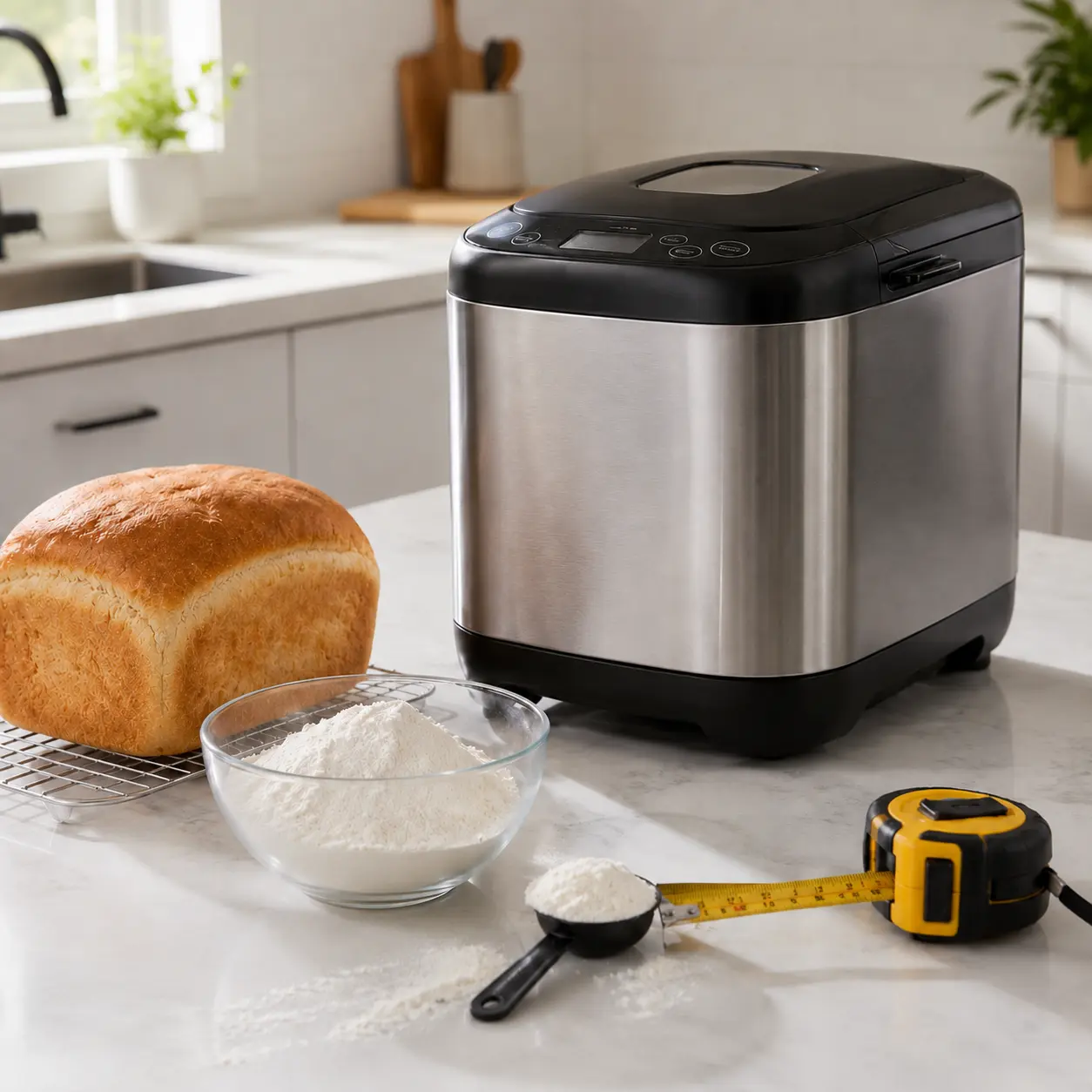
Buying The Biggest Model Automatically
A larger bread maker may be useful for families, but it is not always better. If you have limited kitchen space or only bake occasionally, a bulky machine may be inconvenient.
Choose loaf size around your real household use.
Ignoring The Appliance Footprint
Bread makers can take up more space than expected. You need room for the machine, clearance to open the lid and space to remove the hot pan safely.
Check dimensions before buying.
Assuming Every Model Makes Every Type Of Bread
Different bread makers have different programmes. Some may support wholemeal, gluten free, dough or sweet bread settings where stated, while others may be simpler.
Check the programme list before buying.
Expecting Handmade Bread Results Every Time
Bread makers are convenient, but they produce bread in their own style and shape. The texture, crust and appearance may differ from handmade or bakery loaves.
This does not make them worse. It just means expectations should be realistic.
Overlooking Cleaning
The pan, paddle and lid area need cleaning. If the paddle is awkward to remove or the pan needs careful handling, daily use may feel less convenient.
Check care guidance before buying.
Not Checking Delay Timer Suitability
A delay timer is useful, but not every recipe or ingredient is suitable for waiting hours before baking. This matters especially for ingredients that need careful storage.
Follow the product instructions and recipe guidance.
Assuming More Programmes Means Better Value
More programmes only add value if you use them. A simple model may be better for someone who only wants basic loaves.
Focus on the programmes that match your routine.
Forgetting About The Kneading Paddle Mark
Many bread makers use a paddle in the baking pan. This can leave a small hole or mark in the bottom of the loaf.
If presentation matters to you, understand that this is common with many designs.
Safety And Suitability Caveats
Bread Makers should be used only as intended and in line with the manufacturer’s instructions. The appliance, pan and freshly baked loaf can become hot, so take care when handling after baking.
Do not block vents or place the bread maker too close to items that could be affected by heat or steam. Use the correct pan, paddle and accessories supplied or listed as compatible with the model.
Do not overfill the bread pan or use recipes that exceed the product guidance. Do not modify, dismantle or attempt to repair the appliance. If it appears damaged, unsafe or faulty, stop using it and follow the product information.
Always check the individual product page for loaf size, programme options, dimensions, electrical information, accessories, cleaning guidance and intended use before buying.
Maintenance, Storage And Lifespan Considerations
Bread makers need regular cleaning to stay practical. Remove crumbs and residue from the pan, paddle and lid area once the appliance has cooled. Follow the care guidance for any non stick style surfaces.
Store the kneading paddle and measuring accessories together so they are not lost. A missing paddle can make the appliance unusable until replaced with a compatible part.
If the machine is stored in a cupboard, make sure it is clean and dry first. Keep the instruction booklet or recipe guide somewhere easy to find, especially if you use different programmes.
The lifespan of a bread maker depends on model, frequency of use, cleaning, storage and how carefully it is handled.
How To Compare Models Efficiently
- Decide how much bread your household uses.
- Choose a loaf size that suits your normal needs.
- Check the programme list for the bread types you want.
- Decide whether you need a delay timer.
- Check crust settings if crust preference matters.
- Look for an ingredient dispenser if you want seeded or fruit loaves.
- Check the bread pan and paddle design.
- Compare dimensions against your worktop and cupboard space.
- Review cleaning guidance and removable parts.
- Read the individual product page before buying.
Summary Buyer Decision Checklist
Before buying Break Makers, check the following:
| Buying Check | Why It Matters |
|---|---|
| Loaf size | Capacity should match household bread use |
| Programme options | Different programmes suit different bread types |
| Crust settings | Useful for personal taste |
| Delay timer | Helps plan fresh bread around your routine |
| Ingredient dispenser | Useful for seeds, fruit or speciality loaves where included |
| Bread pan design | Affects loaf shape and cleaning |
| Kneading paddle | Important for mixing and cleaning |
| Worktop space | Bread makers can be bulky |
| Storage space | Larger models may be awkward to move |
| Cleaning guidance | Regular use depends on easy cleaning |
| Recipe suitability | Not every model suits every bread style |
| Product page details | Specifications vary by model |
Frequently Asked Questions
The right size depends on how much bread your household eats. A smaller model may suit one person or a couple, while a family may need a larger loaf size. Check the loaf size options and dimensions before buying.
Many bread makers are designed to be straightforward, but ease of use varies by model. Basic loaves are usually the simplest starting point, while speciality programmes may need more attention to ingredients and instructions. Choose a model with controls that feel clear and practical.
Some bread makers include a gluten free programme where stated on the product page. Not all models do. If gluten free bread is important, check the programme list and recipe guidance carefully before buying.
Some bread makers include dough settings where the machine mixes and kneads without baking. This can be useful for pizza dough, rolls or shaped loaves. Check the product page to confirm whether a dough programme is included.
A delay timer may allow you to set the machine so bread finishes later, including in the morning. However, not every ingredient or recipe is suitable for long delay periods. Always follow the product instructions and recipe guidance.
Energy use varies by model, programme, loaf size and baking time. A bread maker is a cooking appliance, so running costs depend on how often you use it. Check product energy information where supplied.
Many bread makers use a kneading paddle inside the pan. The paddle can leave a small hole or mark in the base of the loaf. This is common with many bread maker designs.
Cleaning varies by model. Removable pans and paddles can make cleaning easier, but care instructions still matter. Check the product page and follow the cleaning guidance for the pan and paddle.
Some bread makers have an ingredient dispenser or an alert to add ingredients during the cycle. This can be useful for seeded or fruit loaves. Check whether the feature is included before buying.
Check the width, depth and height of the machine, including space to open the lid. Also consider storage, weight and whether you will keep it on the worktop. Compact models may be more practical for smaller kitchens.