BUYERS GUIDE
Rice Cooker Buyers Guide
Rice Cookers are kitchen appliances designed to cook rice with less manual checking than using a saucepan on the hob. They are often bought for everyday meals, batch cooking, student kitchens, family dinners, meal prep, small kitchens, Asian cooking routines and anyone who wants more consistent rice with less guesswork.
This guide helps you choose the right rice cooker by explaining the practical details that matter before buying. The right choice depends on capacity, portion size, rice types, cooking programmes, keep warm function, bowl material, cleaning, storage, power source, safety features and how often you plan to use it.
A rice cooker is not just about cooking white rice. Some simple models focus on basic rice cooking, while multi function models may include programmes for brown rice, porridge, steaming or slow cooking where stated. The best choice is the one that fits your household size, your usual meals and the amount of cleaning you are happy with.
Specifications vary by model, so always check the individual product page before buying.
Quick Answer
The right Rice Cooker is the one that suits your portion size, kitchen space and cooking routine. For one or two people, a compact rice cooker may be enough. For families or meal prep, a larger capacity model with a keep warm function and easy cleaning may be more practical. If you cook different rice types, check programme options carefully. Always compare capacity, usable rice volume, cooking functions, inner bowl design, steam vent, accessories, cleaning guidance, storage size, safety features and product page details before buying.
Quick Product Comparison Framework
| Feature | What It Means | Why It Matters | What To Check |
|---|---|---|---|
| Rice cooker type | Basic, compact, multi function, smart or pressure style rice cooker | Different types suit different routines | Match the type to your cooking needs |
| Capacity | How much uncooked or cooked rice the cooker can handle | Affects portion size and batch cooking | Check stated capacity carefully |
| Cup measurement | Rice cookers often use their own measuring cup | Helps avoid wrong rice to water ratios | Check included cup and instructions |
| Cooking programmes | White rice, brown rice, porridge, steam or other modes where included | Adds flexibility for different meals | Check the actual programme list |
| Keep warm function | Keeps rice warm after cooking where included | Useful for family meals and timing | Check how the feature works |
| Inner bowl | Removable cooking pot, often non stick or coated where stated | Affects cleaning and handling | Check bowl material and care guidance |
| Steam tray | Extra tray for vegetables or other foods where supplied | Adds meal flexibility | Check what is included |
| Lid design | Hinged lid or removable lid | Affects cleaning and storage | Check how the lid opens and cleans |
| Steam vent | Releases steam during cooking | Important for safe placement | Check vent position and care |
| Controls | Switch, buttons, digital display or app style controls where included | Affects ease of use | Choose controls that suit the household |
| Cleaning | Bowl, lid, vent and accessories need cleaning | Everyday use depends on easy care | Check removable parts |
| Storage size | Footprint, height and accessories | Important for small kitchens | Check dimensions before buying |
Key Decision Criteria Explained
Rice Cooker Type
The first decision is the type of rice cooker you need. A basic rice cooker may suit buyers who mainly cook white rice and want simple controls. These models are often chosen for straightforward everyday use.
A compact rice cooker may suit one person, couples, students or small kitchens. It can be easier to store, but it may not be large enough for family meals.
A multi function rice cooker may include extra programmes where stated. These can be useful if you cook brown rice, porridge, steamed vegetables or other dishes. However, extra features only matter if you will actually use them.
Capacity And Portion Size
Capacity is one of the most important checks. Rice expands as it cooks, so the amount of uncooked rice is not the same as the finished amount.
Some product pages describe capacity in litres, while others refer to cups of rice. That can be confusing. Always check whether the capacity refers to uncooked rice, cooked rice, bowl size or serving guidance.
For small households, a large cooker may be unnecessary. For families or batch cooking, a small cooker may mean repeated batches.
Rice Measuring Cups
Many rice cookers include their own measuring cup. This cup may not be the same size as a standard kitchen measuring cup.
This matters because rice cooker instructions often rely on the supplied cup and water level markings inside the bowl. Using the wrong measure can lead to rice that is too wet, too dry or unevenly cooked.
Before buying, check whether a measuring cup and rice paddle are included.
Rice Type Suitability
Not every rice cooker handles every rice type in the same way. White rice, basmati, jasmine, sushi rice, brown rice and wild rice style blends may all need different water levels and cooking times.
Some models include separate programmes for different rice types where stated. Others use one simple cook function.
If you regularly cook brown rice or mixed grains, check programme support carefully before buying.
Keep Warm Function
A keep warm function can be useful when rice finishes before the rest of the meal. It can also help family households where people eat at slightly different times.
However, keep warm guidance varies by model. Rice should not be left for too long without following food safety guidance.
Check how the keep warm feature works and what the instructions say about safe use.
Inner Bowl Design
The inner bowl affects cooking, cleaning and long term use. Many rice cookers have a removable bowl, often with a non stick or coated surface where stated.
A removable bowl makes serving and cleaning easier. However, coated bowls need careful handling. Metal utensils or abrasive cleaning may damage the surface.
Check whether the bowl is removable, how it should be washed and whether replacement parts are available where relevant.
Lid And Steam Vent
Steam management is important. Some rice cookers have a hinged lid, while others have a removable glass or metal lid. Hinged lids can feel neat, but removable lids may be easier to wash depending on the design.
The steam vent should be easy to keep clean. Starchy steam can leave residue, especially when cooking larger batches.
Also think about placement. A rice cooker should not sit directly under low cupboards if steam may affect surrounding surfaces.
Accessories Included
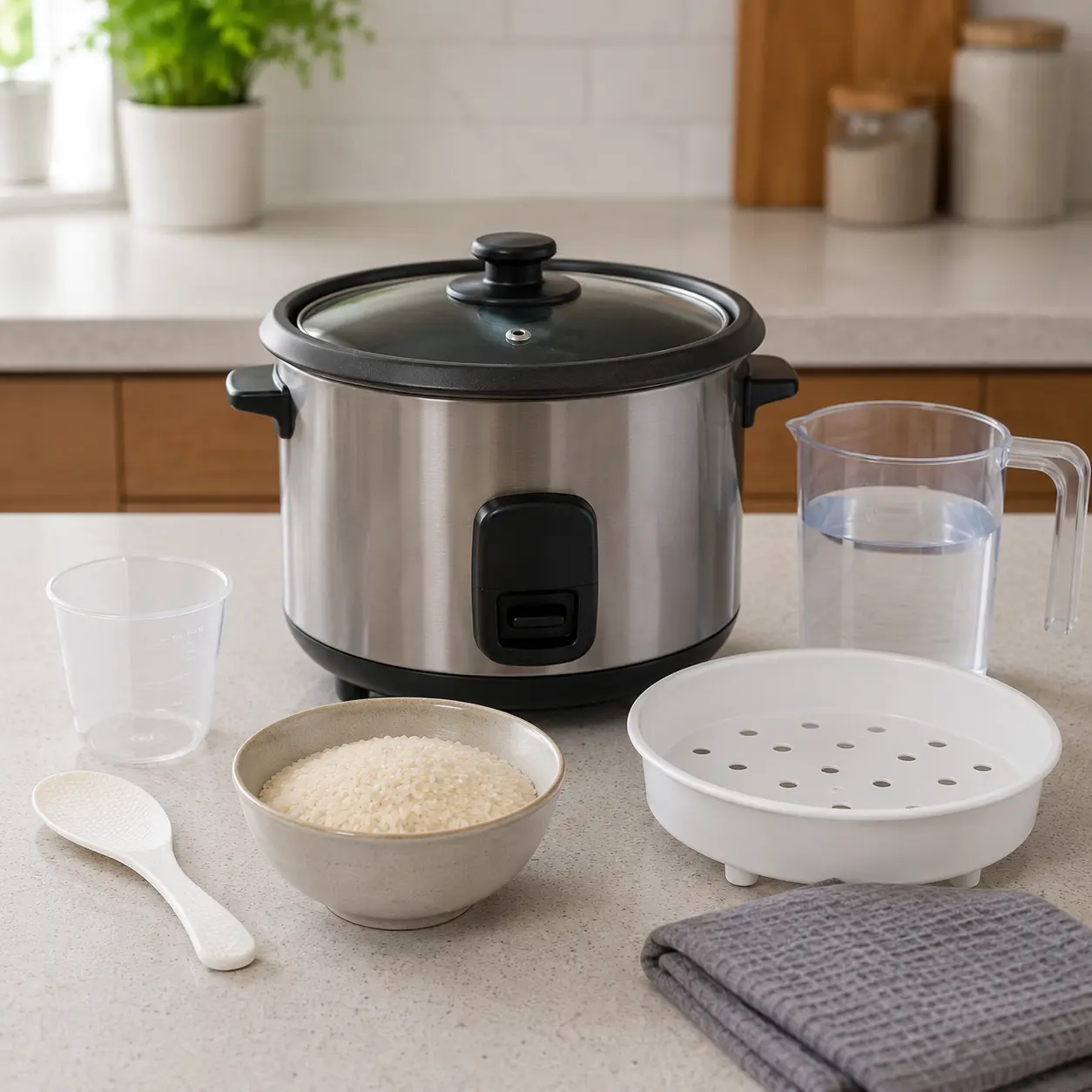
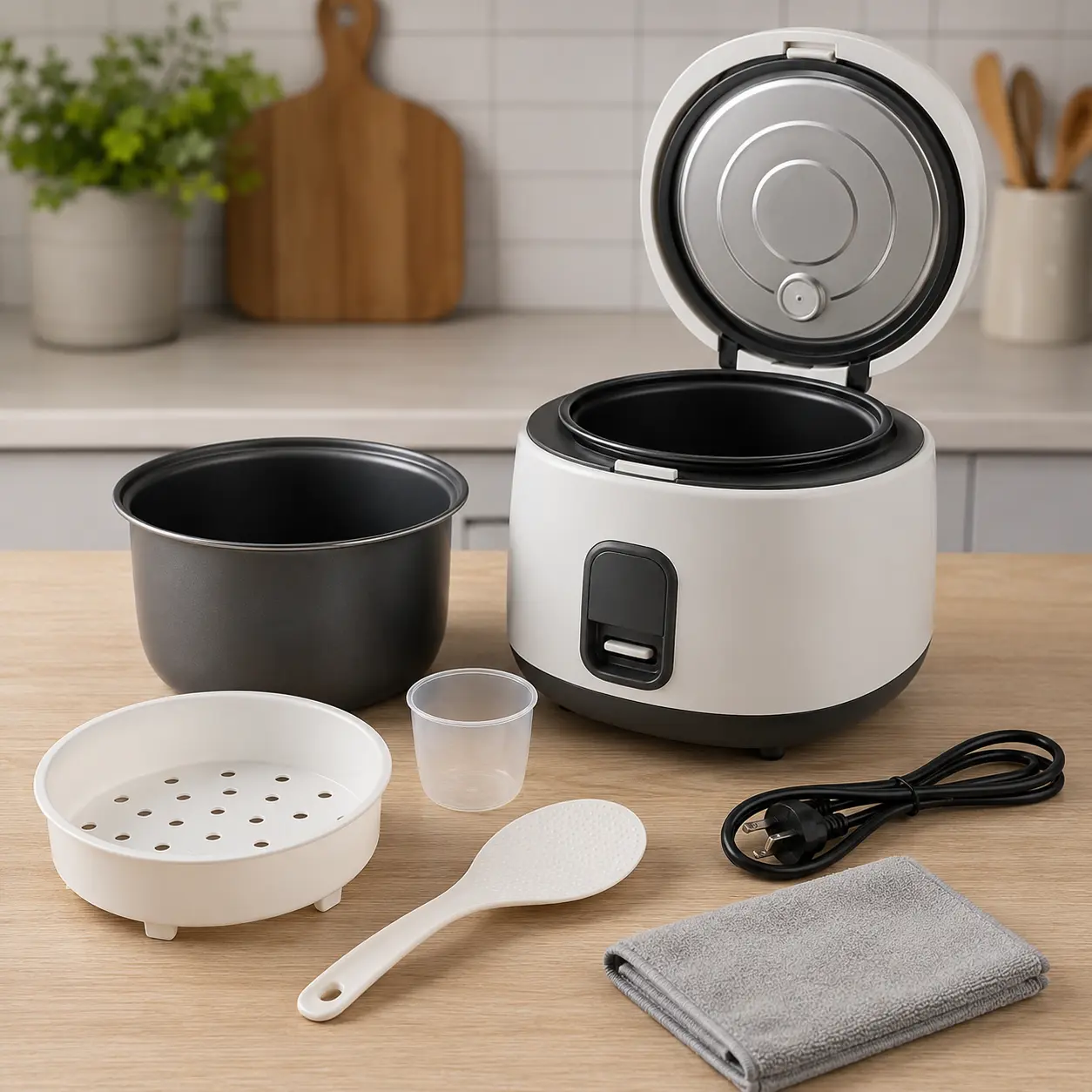
Common accessories may include a rice paddle, measuring cup, steam tray, condensation collector or serving spoon where supplied.
Accessories can make the rice cooker easier to use straight away. A steam tray can add flexibility for vegetables or dumplings where the product supports that use.
Do not assume accessories are included. Check the product page before buying.
Controls And Programmes
Simple rice cookers may use one switch for cook and warm. This can be ideal for buyers who want easy use.
Digital models may include programmes, timers, delayed start, texture settings or smart features where stated. These can be useful, but they can also make the appliance more complicated.
Choose the control style around the user. A shared family kitchen or student kitchen may benefit from simple controls.
Cleaning And Everyday Convenience
Rice cookers need cleaning after every use. The inner bowl, lid, steam vent, condensation area and accessories may all collect starch residue.
If the parts are awkward to remove, the cooker may become frustrating. Easy cleaning is especially important if you use it several times a week.
Check cleaning guidance carefully. Dishwasher safe parts should only be treated as dishwasher safe if the product page or instructions clearly say so.
Kitchen Space And Storage
Rice cookers vary in size. A compact model may fit easily in a cupboard. A larger multi function cooker may need permanent worktop space.
Also consider height. A hinged lid needs room to open. Steam needs space above the appliance during cooking.
Measure your worktop or cupboard before buying.
Product Type Differentiation And Variants
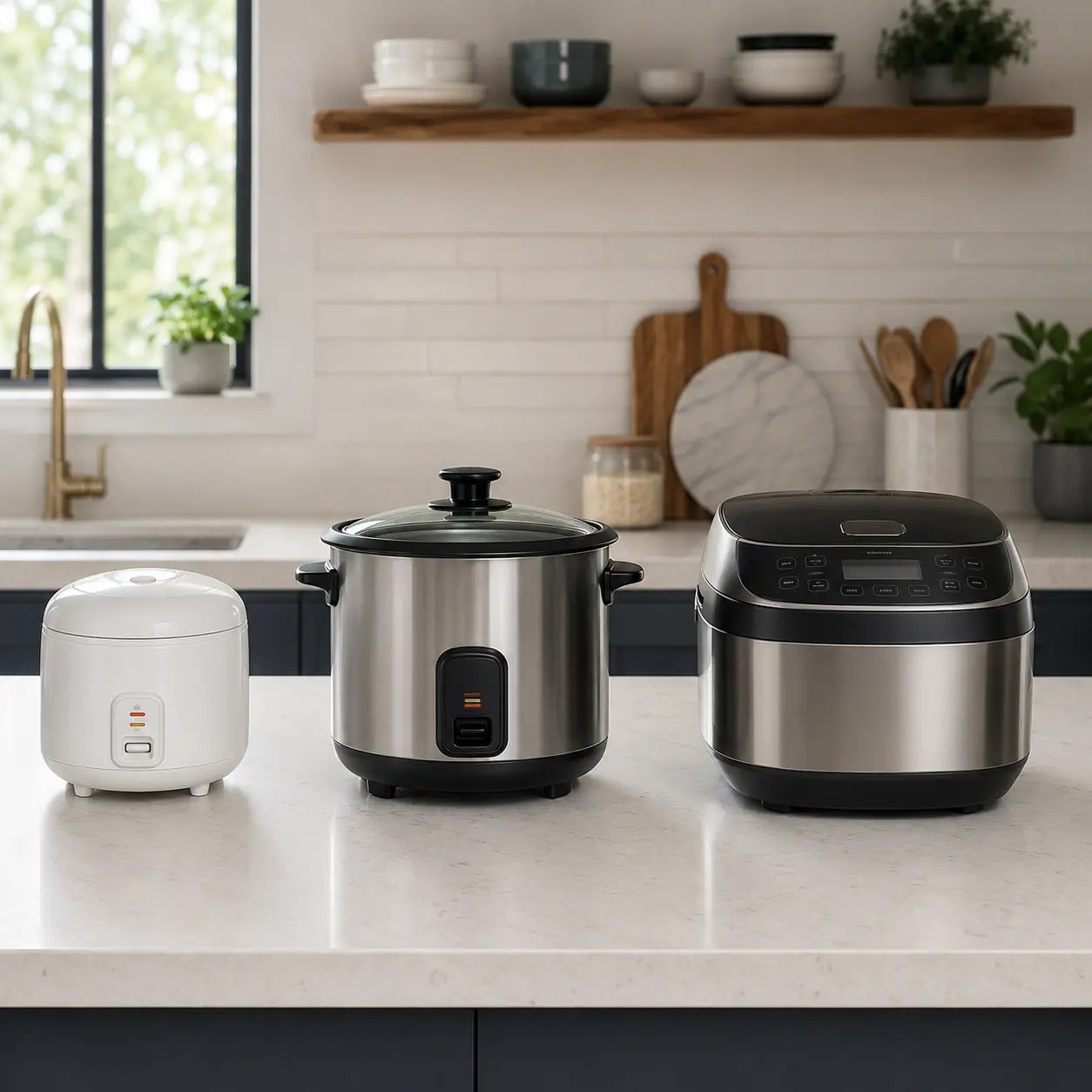
Basic Rice Cookers
Basic rice cookers are designed for simple rice cooking. They may suit buyers who mainly cook white rice and want straightforward operation.
The limitation is flexibility. They may not include separate programmes for brown rice, porridge or steaming.
Compact Rice Cookers
Compact rice cookers suit smaller households, students, flats and small kitchens. They can be easier to store and may reduce wasted space.
The limitation is capacity. They may not suit families or batch cooking.
Large Capacity Rice Cookers
Large capacity rice cookers suit families, entertaining, meal prep and regular batch cooking.
The limitation is size. They take more space and may be less practical for small portions.
Multi Function Rice Cookers
Multi function rice cookers may include settings for different rice types, porridge, steaming or slow cooking where stated.
The limitation is complexity. More programmes can mean more learning and more cleaning.
Smart Rice Cookers
Smart or advanced rice cookers may include digital programmes, sensors, delayed start or app style features where supported.
The limitation is cost and setup. These features are only worthwhile if you will use them.
Pressure Rice Cookers
Some rice cookers use pressure cooking where stated. These may suit buyers who want faster or more controlled cooking for certain rice types.
The limitation is safety and cleaning. Pressure models need careful use according to the instructions.
Specifications vary by model, so always check the individual product page before buying.
Suitability By Buyer Type Or Need
| Buyer Type Or Need | What To Prioritise | What To Be Careful About |
|---|---|---|
| Single person household | Compact capacity and easy storage | Large models may be unnecessary |
| Couple | Small to medium capacity and simple controls | Check portion size guidance |
| Family kitchen | Larger capacity and keep warm function | Compact models may need repeat batches |
| Meal prep buyer | Capacity, keep warm and easy cleaning | Rice storage and food safety matter |
| Student buyer | Simple controls and compact footprint | Check safe placement and cleaning |
| Brown rice user | Specific programme where listed | Basic models may take longer or need adjustment |
| Steaming buyer | Steam tray and suitable guidance | Not every cooker includes a tray |
| Low maintenance buyer | Removable bowl, simple lid and easy vent cleaning | Multi function models can have more parts |
| Small kitchen buyer | Compact size and cord storage | Check lid clearance |
| Gift buyer | Clear controls and useful accessories | Avoid complex models unless wanted |
Common Mistakes And Misunderstandings
Confusing Cooked And Uncooked Capacity
Rice expands during cooking, so cooked capacity and uncooked rice capacity are not the same.
Check the product page carefully before choosing a size.
Using The Wrong Measuring Cup
Many rice cookers use their own supplied cup. A standard kitchen cup may not match the cooker’s markings.
Use the included cup and instructions.
Assuming Every Rice Type Cooks The Same
Different rice types need different water levels and cooking times. Brown rice usually behaves differently from white rice.
Check programme options and cooking guidance.
Buying Too Large For Small Portions
A large rice cooker may not be ideal if you only cook one small portion at a time.
Choose capacity around normal use.
Buying Too Small For Family Meals
A compact cooker may be tidy, but it can be frustrating if it cannot cook enough rice for everyone.
Check serving guidance before buying.
Ignoring Steam Clearance
Rice cookers release steam. Placing one under low cupboards or near sensitive surfaces can be unsuitable.
Check placement guidance before use.
Leaving Rice On Keep Warm Too Long
Keep warm can be useful, but rice still needs safe handling.
Follow the product instructions and food safety guidance.
Using Metal Utensils In A Coated Bowl
Metal utensils may scratch some inner bowls.
Use the supplied paddle or suitable utensils according to the care guidance.
Safety And Suitability Caveats
Rice Cookers should be used only as intended and in line with the manufacturer’s instructions. They involve heat, steam, electricity, hot water and hot food, so careful handling matters.
Place the rice cooker on a stable, heat safe surface with clear space around the steam vent. Do not block the vent or touch escaping steam. Keep children and pets away during and shortly after use.
Do not overfill the inner bowl or use the cooker for foods not supported by the product guidance. Take care when opening the lid, as hot steam may escape quickly.
Use only suitable utensils with the inner bowl. Do not immerse the electrical base, cable or plug in water unless the instructions clearly say a part is washable.
Do not use a damaged cooker, plug, cable or inner bowl. Do not modify, dismantle or attempt to repair the appliance.
Always check the individual product page for capacity, rice type suitability, cooking functions, accessories, cleaning guidance, electrical information, steam safety and intended use before buying.
Maintenance, Storage And Lifespan Considerations
Rice cookers need regular cleaning to stay practical. Wash the inner bowl, lid, paddle, measuring cup and steam tray according to the product guidance.
Clean the steam vent and condensation areas where accessible. Starchy residue can build up if these areas are ignored.
Allow parts to dry before storage. Store accessories together so the rice paddle, measuring cup and steam tray are not lost.
If the bowl has a non stick or coated surface, avoid abrasive cleaning and unsuitable utensils.
The lifespan of a rice cooker depends on model, frequency of use, cleaning, bowl care, steam vent maintenance and how carefully it is handled.
How To Compare Models Efficiently
- Decide how many portions of rice you usually cook.
- Check whether capacity is listed as cooked or uncooked rice.
- Choose compact, standard or large capacity based on household size.
- Review rice type programmes if you cook more than white rice.
- Check keep warm and timer features.
- Look at the inner bowl design and care guidance.
- Check included accessories such as cup, paddle and steam tray.
- Review lid design, steam vent and cleaning access.
- Measure worktop and cupboard storage space.
- Read the individual product page before buying.
Summary Buyer Decision Checklist
Before buying Rice Cookers, check the following:
| Buying Check | Why It Matters |
|---|---|
| Cooker type | Basic, compact and multi function models suit different users |
| Capacity | Should match household portion size |
| Cup measurement | Cooker cups may differ from standard cups |
| Rice type suitability | White, brown and other rice types may need different settings |
| Programmes | Useful only if they match your meals |
| Keep warm function | Helps with timing but needs safe use |
| Inner bowl | Affects cleaning and long term care |
| Lid design | Affects steam handling and cleaning |
| Steam vent | Needs safe placement and maintenance |
| Accessories | Cup, paddle and steam tray may be useful |
| Storage size | Important for small kitchens |
| Product page details | Specifications vary by model |
Frequently Asked Questions
The right size depends on how many portions you usually cook. A compact rice cooker may suit one or two people, while a larger model may suit families or meal prep. Always check whether capacity refers to cooked or uncooked rice.
Some rice cookers include a brown rice programme where stated. Basic models may still cook brown rice, but timing and water levels can differ. Check the product guidance before buying.
Some models are designed mainly for rice. Others may include programmes for porridge, steaming or other foods where stated. Do not assume extra functions are included unless the product page lists them.
Yes, it can be useful if rice finishes before the rest of the meal. However, rice should still be handled safely and not left warming beyond the product guidance.
A steam tray can be useful if you want to steam vegetables or other foods while cooking rice where the model supports that use. If you only cook rice, it may be less important.
Not always. Many rice cookers include their own measuring cup, and instructions may be based on that cup. Use the supplied cup for best results.
Cleaning ease varies by model. Removable bowls, lids, steam vents and accessories can make cleaning easier. Check care guidance before buying.
Only if the product guidance says it is dishwasher safe. Some bowls need hand washing, especially coated bowls.
Usually it is better to avoid metal utensils with coated bowls unless the product guidance says otherwise. Use the supplied paddle or suitable utensils.
Check footprint, lid clearance, cable length, storage space, bowl size and whether the capacity suits your normal portions. A compact cooker may be more practical than a large multi function model.