BUYERS GUIDE
Food Steamer Buyers Guide
Food Steamers are kitchen appliances designed to cook food using hot steam rather than direct contact with water, oil or a heated pan. They are often bought for vegetables, fish, rice where supported, chicken portions, dumplings, eggs, baby food style preparation, batch cooking and healthier everyday meals.
This guide helps you choose the right food steamer by explaining the practical details that matter before buying. The right choice depends on how many people you cook for, how much food you want to steam at once, whether you need multiple tiers, how easy the appliance is to clean, how much kitchen space you have and what foods you plan to cook most often.
A food steamer is not just about having more baskets. Capacity, basket layout, water tank size, timer controls, drip trays, rice bowls, storage and steam safety all affect how practical it feels in daily use. A compact steamer may suit one or two people, while a larger multi tier steamer may suit families or batch cooking.
Specifications vary by model, so always check the individual product page before buying.
Quick Answer
The right Food Steamer is the one that suits your household size, meal style and kitchen space. For simple vegetables or small portions, a compact steamer may be enough. For families, meal prep or cooking several foods at once, a larger multi tier steamer with suitable basket capacity, timer control and easy cleaning may be more practical. Always check capacity, tier layout, water tank size, included bowls, cleaning guidance, storage dimensions, safety features and product page details before buying.
Quick Product Comparison Framework
| Feature | What It Means | Why It Matters | What To Check |
|---|---|---|---|
| Steamer type | Compact, multi tier, digital, microwave style or pan insert design | Different types suit different cooking routines | Match the type to your main use |
| Capacity | How much food the steamer can hold | Too small may mean repeated batches | Check stated capacity and basket size |
| Number of tiers | How many stacked cooking sections are included | Useful for cooking different foods at once | Check basket layout and stacking order |
| Water tank size | How much water the steamer holds | Affects cooking time and refilling needs | Check tank capacity where listed |
| Timer | Manual or digital cooking timer where included | Helps manage cooking time | Check timer range and controls |
| Water level indicator | Shows how much water is left where included | Helps avoid running dry during use | Check visibility and refill guidance |
| External refill | Lets you add water during cooking where supported | Useful for longer steaming sessions | Check whether this feature is included |
| Drip tray | Collects condensation and food juices | Helps reduce mess and flavour transfer | Check whether it is removable |
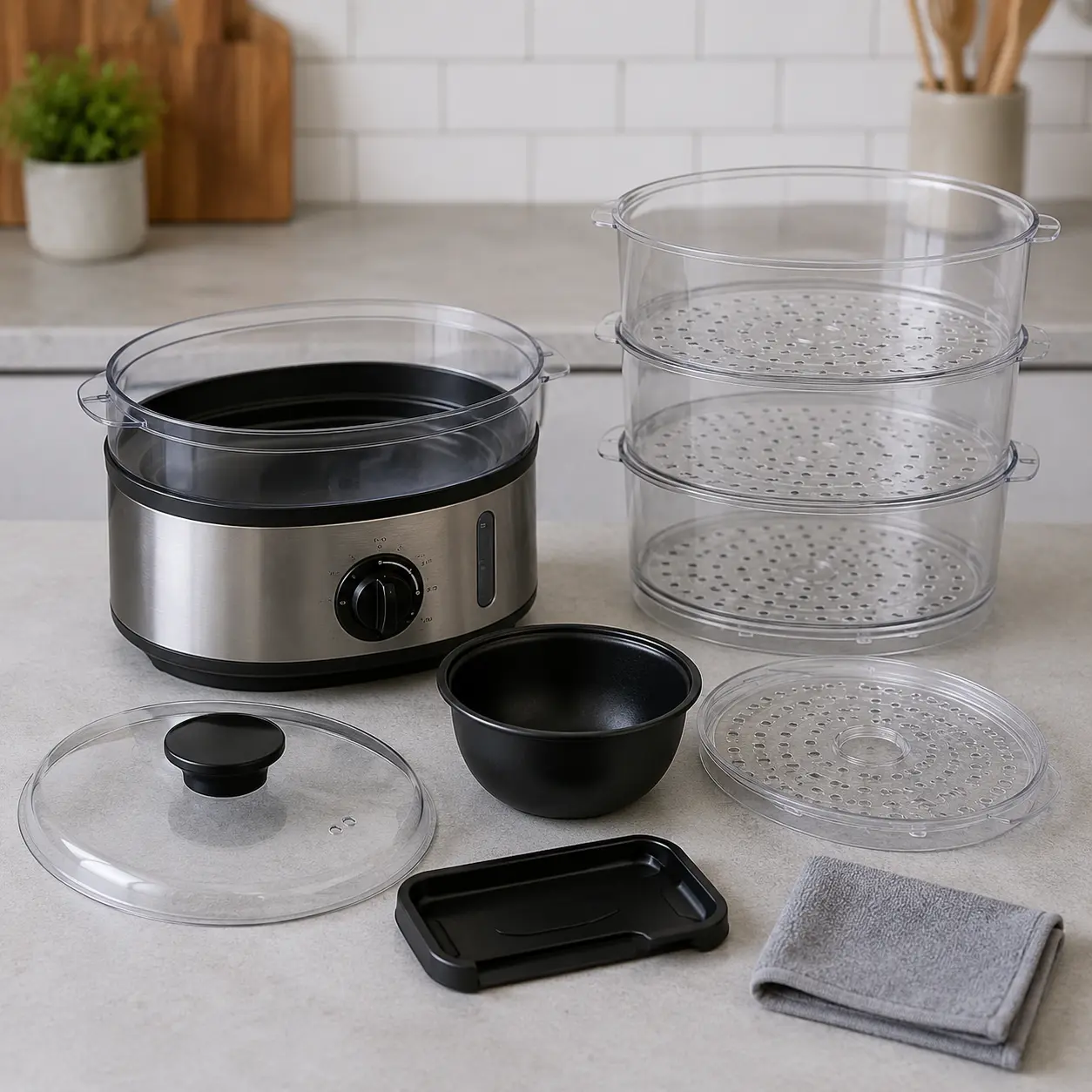
| Rice bowl or food bowl | Extra bowl for rice, grains or saucier foods where supplied | Adds flexibility if supported | Check what is included |
| Basket material | Plastic, glass, stainless steel or other materials where stated | Affects weight, visibility and care | Check material and cleaning guidance |
| Cleaning | How easily baskets, lids and trays clean | Everyday use depends on simple cleaning | Check removable parts and care instructions |
| Storage | How the tiers, base and accessories fit away | Steamers can be bulky | Check dimensions and nesting design |
Key Decision Criteria Explained
Steamer Type
The first decision is the type of food steamer you need. A compact electric steamer may suit small kitchens, single person households or occasional vegetable steaming. A multi tier electric steamer may suit families, meal prep and cooking several foods at once.
Some buyers may consider microwave steamers or pan insert steamers instead of electric models. These can be simpler and easier to store, but they may offer less timing control or capacity depending on the design.
The right choice depends on how often you steam food and whether you want a dedicated appliance or a simple cooking accessory.
Capacity And Household Size
Capacity is one of the biggest buying checks. A small steamer may be fine for one or two people, but it may feel limiting if you cook for a family or prepare several portions at once.
Larger steamers can hold more food, but they also take up more worktop and storage space. They may also need more cleaning because there are more baskets, trays and lids.
Think about your usual meals. If you mainly steam vegetables as a side dish, a smaller model may be enough. If you want to cook fish, rice where supported and vegetables together, a larger multi tier design may be more useful.
Number Of Tiers
Multi tier steamers let you stack different foods in separate baskets. This can be useful if you want to cook vegetables, protein and side dishes in one appliance.
However, tiers are not always equal in use. Steam rises through the appliance, so cooking times can vary depending on food type, basket position and quantity. Some foods may need to be added later or placed in a different tier.
Do not assume more tiers automatically means better results. Look for a layout that suits the meals you actually cook.
Water Tank Size And Refilling
The water tank produces the steam, so its size matters. A larger tank may suit longer cooking times or larger batches, while a smaller tank may be fine for quick vegetables or occasional use.
Refilling design also matters. Some steamers may allow water to be topped up during cooking where stated, while others may need cooling or stopping before refilling.
Check water level visibility, refill method and product guidance before buying.
Timer And Controls
A timer helps manage cooking time. Basic models may use a simple dial, while digital steamers may offer more precise settings, displays or preset style functions where included.
Simple controls can be better for everyday use if you do not need advanced features. Digital controls may suit buyers who want clearer timing or extra cooking options.
Choose controls that feel easy to use, especially if several people in the household will use the steamer.
Food Types And Cooking Flexibility
Food steamers can be useful for vegetables, fish, poultry pieces, eggs, dumplings and other foods where the product page supports that use. Some may include a rice bowl or tray for grains, sauces or smaller ingredients.
Food size and shape matter. Large pieces may need more space, while small items may need a suitable tray or bowl. Strong flavoured foods can also affect other foods if cooked together.
Check the product guidance for suitable foods and cooking methods before relying on one appliance for every meal.
Drip Tray And Flavour Transfer
A drip tray catches condensation and juices. This can help keep the base cleaner and may reduce flavour transfer between foods, depending on the design.
If you steam fish or strongly flavoured foods, drip tray design and cleaning access may be more important. A removable tray can make cleaning easier where included.
Check whether the drip tray is included, removable and easy to handle.
Cleaning And Maintenance
Cleaning is a major practical factor. Food steamers create condensation, food residue and mineral build up from water over time. Baskets, lids, trays and bowls may need washing after every use.
Some parts may be dishwasher safe if stated on the product page, while the base unit usually needs careful wiping rather than washing. Descaling may be needed depending on water hardness and product guidance.
If you plan to use the steamer often, easy cleaning should be near the top of your list.
Storage And Worktop Space
Food steamers can be bulkier than they look. Multi tier models may need space for the base, baskets, lid, drip tray, rice bowl and cable.
Some baskets may nest inside each other for easier storage where designed to do so. Others may take up more cupboard space.
Before buying, check where the steamer will live and whether you will keep it on the worktop or store it between uses.
Steam Safety
Food steamers use hot steam, which can burn if handled carelessly. Lids, baskets and trays may also become hot during use.
Look for stable design, clear handles, secure stacking and simple controls. Safety features may vary by model, so check product details carefully.
Always follow the manufacturer’s instructions when filling, cooking, lifting lids and cleaning.
Product Type Differentiation And Variants
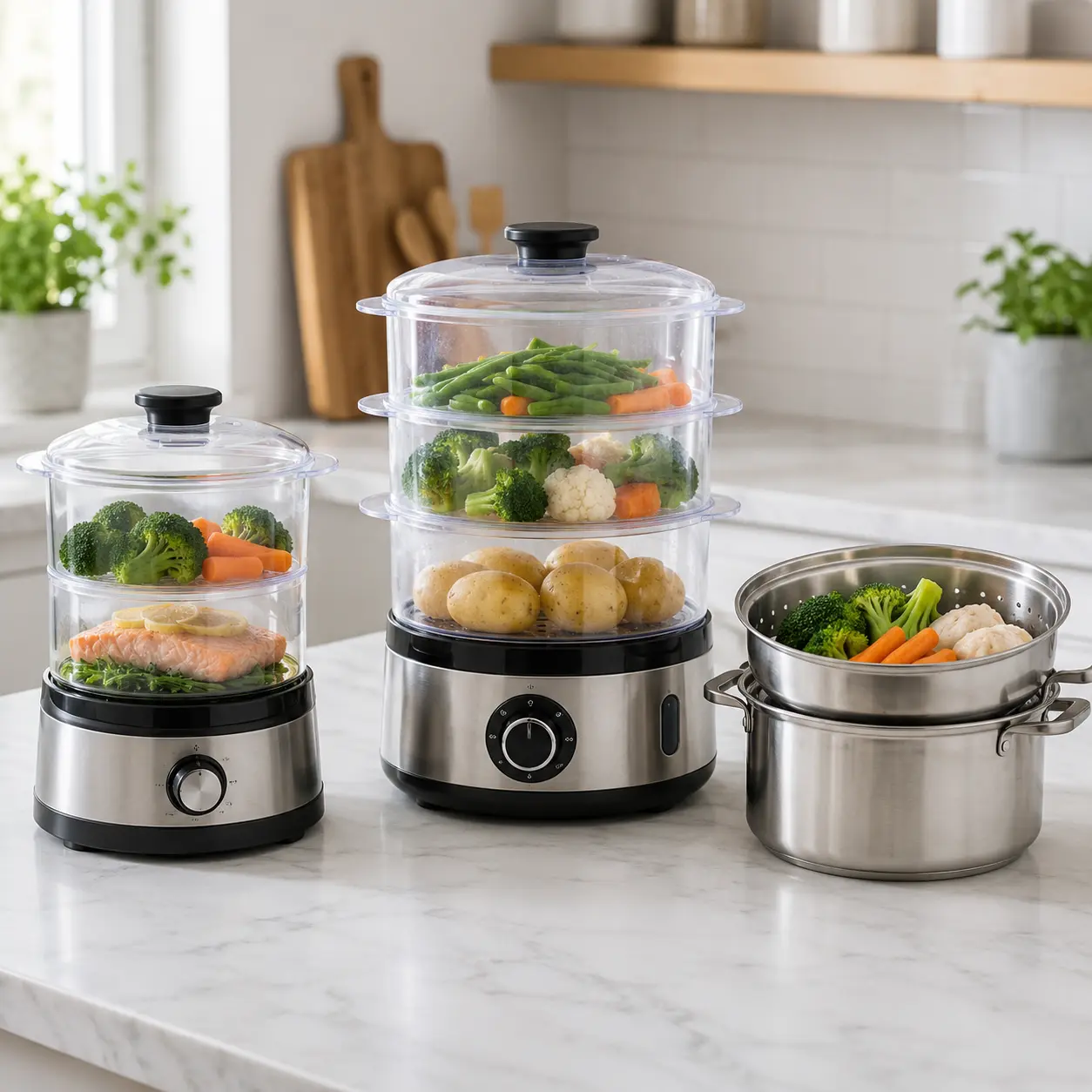
Compact Electric Food Steamers
Compact electric food steamers may suit smaller kitchens, single person households, couples or occasional use. They can be easier to store and may be enough for vegetables or small portions.
The limitation is capacity. They may not suit family meals or cooking several foods at once.
Multi Tier Food Steamers
Multi tier steamers include stacked baskets for cooking multiple foods. They may suit families, meal prep and buyers who want to cook several ingredients at the same time.
The limitation is size and cleaning. More tiers mean more parts to wash and store.
Digital Food Steamers
Digital food steamers may include electronic controls, displays, preset options or more detailed timers where stated.
They may suit buyers who want more control, but they can also be more complex than a simple dial model.
Microwave Food Steamers
Microwave food steamers are usually container based products used inside a microwave. They may suit quick meals and easy storage.
The limitation is that they depend on microwave size, power and product suitability. They are not the same as dedicated electric steamers.
Pan Insert Steamers
Pan insert steamers or steamer baskets are used with a saucepan. They may suit buyers who want a simple non electric option.
The limitation is capacity and manual control. You need a suitable pan and hob use.
Food Steamers With Rice Bowls
Some steamers include a rice bowl or food bowl where stated. This can add flexibility for rice, grains or smaller foods if the model supports that use.
The limitation is that results and suitability vary by model, so check the product guidance carefully.
Specifications vary by model, so always check the individual product page before buying.
Suitability By Buyer Type Or Need
| Buyer Type Or Need | What To Prioritise | What To Be Careful About |
|---|---|---|
| Single person household | Compact size and easy cleaning | Avoid buying more capacity than needed |
| Couple | Medium capacity and simple controls | Check storage space before buying |
| Family kitchen | Larger capacity and multiple tiers | Small steamers may need repeated batches |
| Meal prep buyer | Multi tier layout and suitable water tank size | More baskets mean more cleaning |
| Healthy eating buyer | Vegetable and protein cooking flexibility | Do not rely on broad health claims |
| Small kitchen | Nesting baskets and compact footprint | Multi tier models can be bulky |
| Busy parent | Timer, simple controls and easy cleaning | Check how safely baskets stack |
| Rice buyer | Rice bowl where included and suitable guidance | Not every steamer cooks rice the same way |
| Fish or strong flavour user | Drip tray and easy cleaning | Flavour transfer may need planning |
| Occasional user | Simple design and easy storage | Avoid paying for features you will not use |
Common Mistakes And Misunderstandings
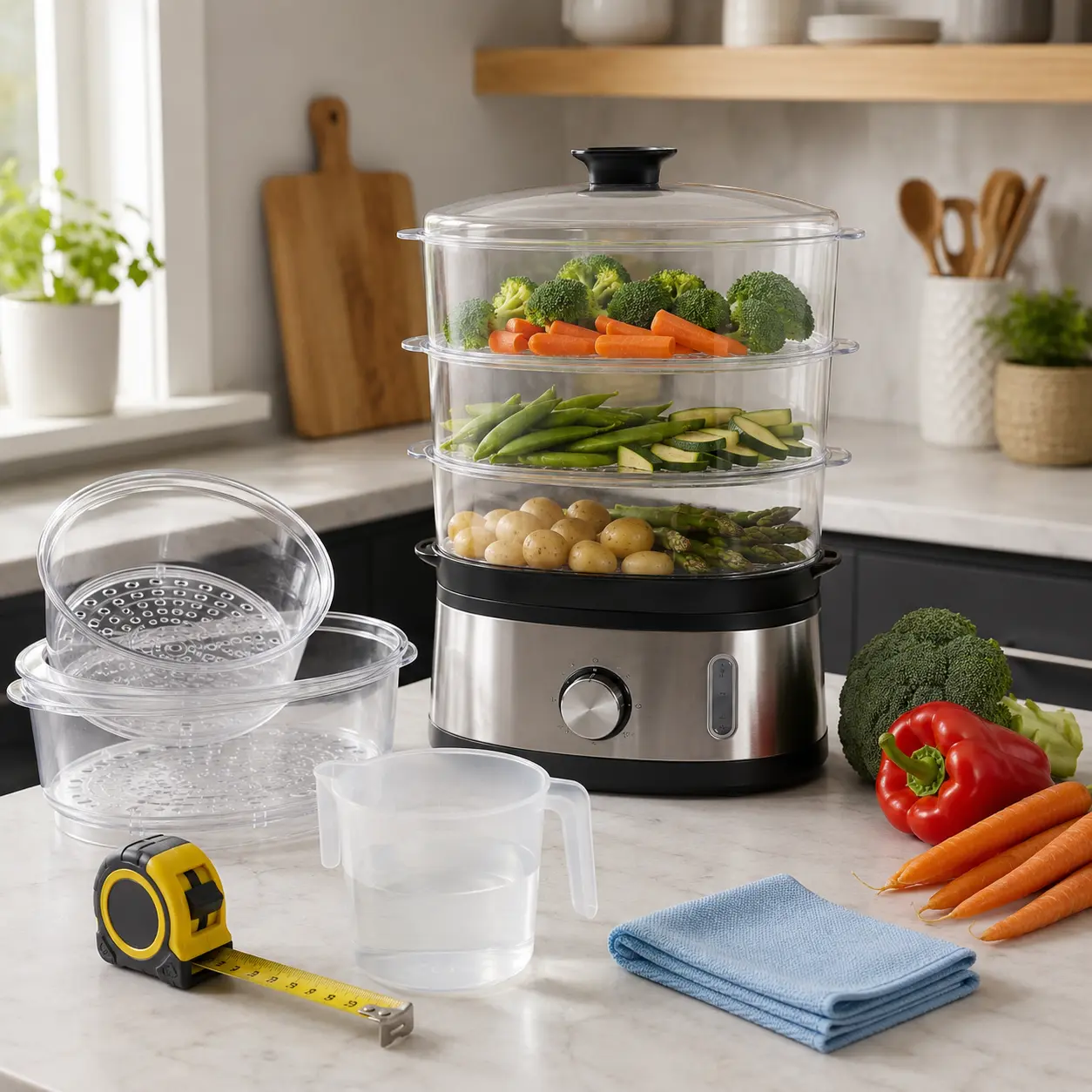
Assuming More Tiers Always Means Better
More tiers can be useful, but they are not automatically better. A large multi tier steamer takes more space and creates more washing up.
Choose the number of tiers around your real meals.
Buying Too Small For Family Use
A compact steamer may be frustrating if you regularly cook for several people. It may mean repeated batches or crowded baskets.
Check capacity before buying.
Ignoring Storage Space
Food steamers can be bulky, especially with several baskets and accessories. If it is awkward to store, it may be used less often.
Check dimensions and nesting design where stated.
Forgetting About Cleaning
Steamers need cleaning after use. Baskets, trays and lids can collect food residue and condensation.
Check removable parts and care guidance before buying.
Assuming All Foods Cook At The Same Speed
Different foods steam at different rates. Carrots, fish, broccoli, rice and chicken pieces may all need different timings.
Follow food and product guidance, and plan basket order carefully.
Ignoring Water Tank Size
A small water tank may need refilling during longer cooking sessions. If the model does not support top up during cooking, this can be inconvenient.
Check tank capacity and refill method.
Opening The Lid Carelessly
Steam can escape quickly when the lid is opened. This can cause burns if handled carelessly.
Always lift lids safely and follow the product instructions.
Assuming Every Part Is Dishwasher Safe
Some parts may be dishwasher safe where stated, but others may need hand washing. The electrical base should be handled carefully.
Check cleaning instructions before buying.
Safety And Suitability Caveats
Food Steamers should be used only as intended and in line with the manufacturer’s instructions. They involve hot steam, hot water, electricity and heated food, so careful handling is important.
Place the steamer on a stable, heat safe surface with clear space around it. Do not overfill the water tank or baskets beyond the product guidance. Keep hands and face away from escaping steam when lifting lids or removing baskets.
Use oven gloves or suitable protection where needed. Keep children and pets away from the steamer during and shortly after use. Do not use the steamer without water unless the product guidance specifically allows a function that requires it.
Do not modify, dismantle or attempt to repair a food steamer. If the appliance appears damaged, leaks, smells unusual or seems unsafe, stop using it and follow the product information.
Always check the individual product page for capacity, tier layout, water tank size, controls, cleaning guidance, electrical information and intended use before buying.
Maintenance, Storage And Lifespan Considerations
Food steamers need regular cleaning to remain practical. Wash baskets, trays, lids and bowls according to the product guidance, and wipe the base unit as instructed.
Water scale may build up over time, especially in hard water areas. Descaling guidance varies by model, so follow the instructions supplied with the appliance.
Allow all parts to dry before storing. Keep baskets, drip tray, lid, rice bowl and cable together so parts are not lost. If baskets nest together, store them in the correct order to save space.
The lifespan of a food steamer depends on model, frequency of use, water quality, cleaning, storage and how carefully it is handled.
How To Compare Models Efficiently
- Decide how many people you usually cook for.
- Choose compact or multi tier capacity based on your meals.
- Check water tank size and refill method.
- Compare timer controls and ease of use.
- Check whether a rice bowl or extra tray is included.
- Review drip tray design and cleaning access.
- Check basket material and care guidance.
- Measure worktop and storage space.
- Review steam safety features and handling.
- Read the individual product page before buying.
Summary Buyer Decision Checklist
Before buying Food Steamers, check the following:
| Buying Check | Why It Matters |
|---|---|
| Steamer type | Electric, microwave and pan insert designs suit different routines |
| Capacity | Should match household portions |
| Number of tiers | Helps cook several foods at once |
| Water tank size | Affects cooking time and refilling |
| Timer | Helps manage cooking |
| Refill method | Useful for longer steaming sessions |
| Drip tray | Helps with mess and flavour management |
| Rice bowl | Useful where included and supported |
| Cleaning guidance | Frequent use depends on easy cleaning |
| Storage space | Multi tier models can be bulky |
| Safety handling | Steam can burn if handled carelessly |
| Product page details | Specifications vary by model |
Frequently Asked Questions
The right size depends on how many people you cook for and what foods you steam. A compact steamer may suit one or two people, while a larger multi tier model may suit families or meal prep. Check basket capacity before buying.
They can be worth it if you regularly cook several foods at once. They may suit vegetables, fish and sides where the model supports those foods. They also take up more space and create more cleaning, so choose based on your routine.
Some food steamers include a rice bowl or support rice cooking where stated. Not every steamer cooks rice in the same way, so check the individual product page and instructions before relying on this feature.
Cleaning ease varies by model. Removable baskets, drip trays and bowls can make cleaning easier, but care instructions differ. Check whether parts are dishwasher safe only where the product page or instructions state this.
Some food steamers can be used for fish, chicken or other foods where the product guidance supports that use. Always follow food safety guidance and make sure food is cooked properly.
Food steamers usually cook with steam rather than oil. Some recipes may use seasoning or added ingredients separately, but the appliance itself is designed around water and steam.
A food steamer cooks with hot steam and is often used for quicker cooking of vegetables, fish and sides. A slow cooker cooks food slowly over several hours in a pot. They are different appliances for different cooking styles.
Only if the model is designed to allow external refilling during use. Some steamers support this, while others do not. Check the product page and instructions before buying.
Material suitability depends on the model and product guidance. Check the listed materials and intended use before buying. Follow the manufacturer’s instructions for heat and cleaning.
Check footprint, basket storage, nesting design, cable storage and whether you really need multiple tiers. A compact steamer or pan insert may be more practical if cupboard space is limited.