BUYERS GUIDE
Deep Fat Fryers Buyers Guide
Deep Fat Fryers are kitchen appliances designed to cook food by immersing it in hot oil. They are often bought for chips, battered foods, fried chicken, doughnuts, snacks, party food and occasional takeaway style meals at home.
This guide helps you choose the right deep fat fryer by explaining the practical details that matter before buying. The right choice depends on cooking capacity, oil capacity, basket size, temperature control, lid design, filtration, cleaning, storage space and how often you plan to use it.
A deep fat fryer is different from an air fryer. An air fryer uses hot air circulation, while a deep fat fryer uses heated oil. That means the buying decision needs to consider oil handling, safe use, cleaning and storage as much as cooking results.
Specifications vary by model, so always check the individual product page before buying.
Quick Answer
The right Deep Fat Fryer is the one that suits your household size, cooking habits and comfort with using hot oil. For occasional chips or snacks, a compact fryer may be enough. For family meals or larger batches, basket capacity, oil capacity, temperature control and cleaning access become more important. Always check capacity, oil management, safety features, lid design, removable parts, storage size and product page details before buying.
Quick Product Comparison Framework
| Feature | What It Means | Why It Matters | What To Check |
|---|---|---|---|
| Fryer type | Compact fryer, family fryer, stainless steel fryer, chip fryer or multi basket fryer | Different types suit different portions and routines | Match the fryer to your main use |
| Food capacity | How much food the basket can hold | Too small may mean repeated batches | Check food capacity where listed |
| Oil capacity | How much oil the fryer holds | Affects cooking quantity, storage and oil handling | Check oil capacity and fill guidance |
| Basket design | The removable basket used to lower and lift food | Affects portion size and handling | Check basket size and handle design |
| Temperature control | How heat is selected and managed | Important for different foods | Check control type and settings |
| Lid design | Fixed, removable, viewing window or filter lid where included | Affects splatter control and cleaning | Check lid features and care guidance |
| Oil filtration | Drainage or filtration features where included | Can make oil handling more practical | Check whether filtration is included |
| Cool touch exterior | Exterior design intended to reduce surface heat where included | Adds reassurance, but does not remove care needs | Check feature details |
| Safety features | Auto shut off, safety locks or indicator lights where included | Useful for practical use | Check product page details |
| Cleaning | Removable bowl, basket, lid or dishwasher safe parts where stated | Cleaning affects everyday ownership | Check removable parts and care guidance |
| Storage | Appliance size and oil storage needs | Deep fryers can be bulky and need careful storage | Check dimensions before buying |
| Odour control | Filters or lid design where included | Frying can create cooking smells | Check filter details and replacement needs |
Key Decision Criteria Explained
Fryer Size And Household Needs
Size is one of the first things to consider. A compact deep fat fryer may suit one or two people, small kitchens or occasional snacks. A larger fryer may be more practical for family meals, batch cooking or entertaining.
The trade off is space and oil use. Larger fryers usually take up more room and may need more oil, depending on the model. A smaller fryer may be easier to store and clean, but it may mean cooking in several batches.
Think about the amount of food you actually cook. If you only fry small portions now and again, a huge fryer may be more trouble than it is worth.
Food Capacity Versus Oil Capacity
Food capacity and oil capacity are not the same. Food capacity relates to how much food the basket can hold, while oil capacity relates to how much oil the fryer uses.
Both matter. A fryer with a large oil capacity may still have a basket that limits portion size. A fryer with a generous basket may still need careful filling and suitable oil levels.
Check both figures on the product page where supplied. Do not assume the biggest looking fryer gives the most practical cooking space.
Basket Design And Handling
The basket affects how easy the fryer is to use. A good basket should suit the portion size, feel steady when lifted and fit neatly into the fryer. Some baskets may include folding handles or detachable handles where stated.
If you cook chips, battered food or smaller items, basket shape and mesh design may affect how practical the fryer feels. A smaller basket may be fine for snacks, while a larger one may suit family portions.
Check whether the basket is removable and how it should be cleaned.
Temperature Control
Temperature control affects how flexible the fryer is for different foods. Some models may use simple dials, while others may include digital controls or preset style settings where stated.
A clear temperature control can help buyers manage different recipes, but it should not replace following product guidance and food cooking instructions. Deep frying involves hot oil, so settings need to be used carefully.
Choose controls that are easy to understand and suitable for the person who will use the fryer most often.
Lid, Viewing Window And Filters
The lid can affect mess, odour and convenience. A lid may help reduce splatter, while a viewing window may let you check food without opening the fryer where included.
Some fryers may have filters designed to help manage odours. These can be useful, but filter performance and replacement needs vary by model.
A removable lid can make cleaning easier, depending on the design. Check lid care guidance before buying.
Oil Handling And Filtration
Oil handling is one of the biggest differences between deep fat fryers and other cooking appliances. Oil needs to be added, used, cooled, filtered or changed according to product and food guidance.
Some fryers include oil drainage, filtration or storage features where stated. These can make ownership more practical, especially for regular users.
If you dislike handling oil or want the lowest maintenance option, think carefully before buying a deep fat fryer. Cleaning and oil management are part of the ownership experience.
Cleaning And Removable Parts
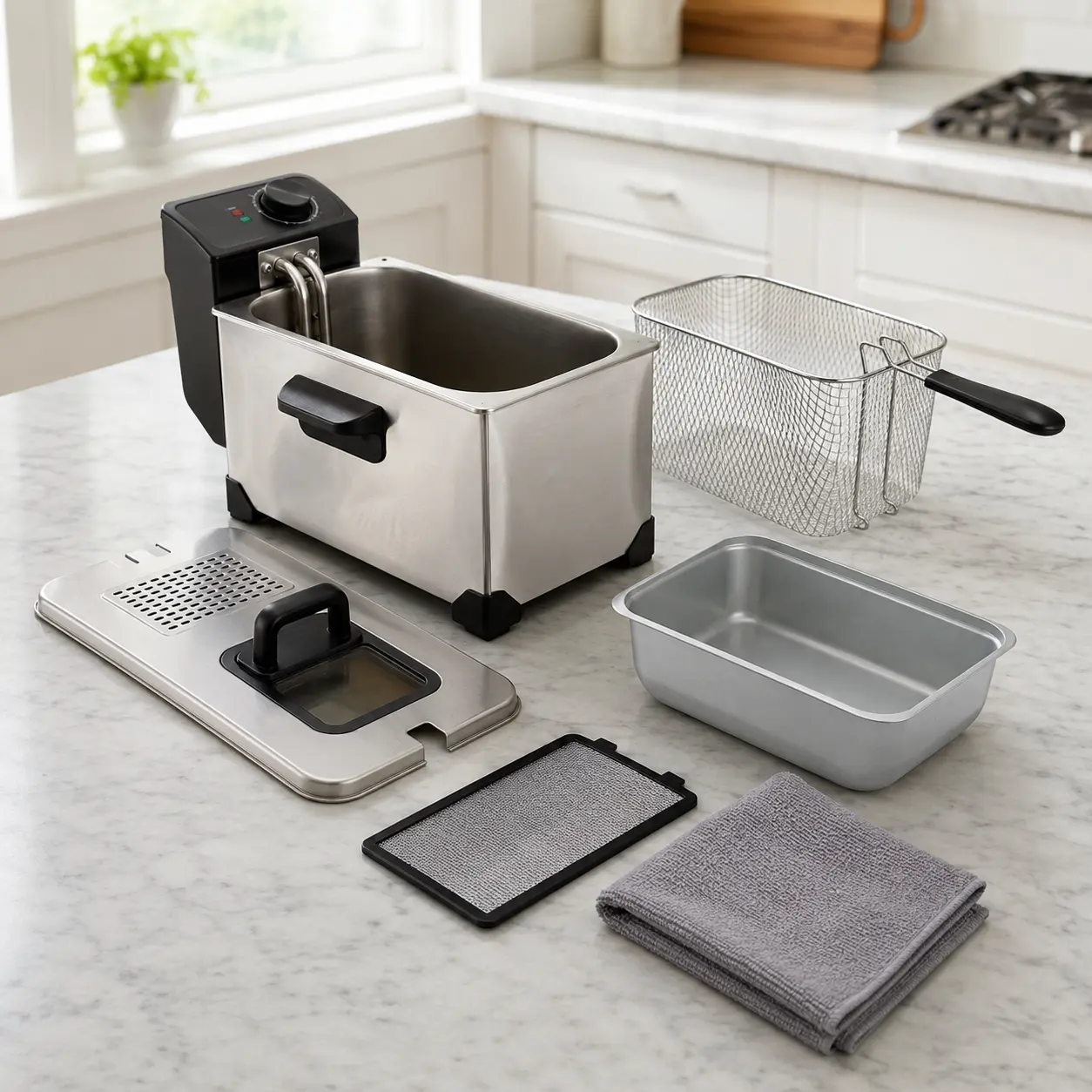
Cleaning matters a lot with deep fat fryers. Oil residue can build up on baskets, lids, bowls and outer surfaces. A fryer with removable parts may be easier to clean, but care instructions vary by model.
Some parts may be dishwasher safe if stated on the product page. Others may need hand washing. Non stick style surfaces may require careful cleaning to avoid damage.
If you plan to use the fryer often, cleaning access should be treated as a main buying factor, not a small detail.
Worktop Space And Storage
Deep fat fryers need safe worktop space during use and suitable storage when not in use. A compact fryer may fit neatly into a cupboard, while a larger family model may take up more room.
You also need to think about oil storage and where accessories will be kept. If the fryer is awkward to lift, move or clean, it may end up rarely used.
Check dimensions and weight before buying.
Odour And Ventilation
Deep frying can create cooking smells. Lid design, filters and kitchen ventilation can all affect how noticeable this is, but no home fryer should be assumed to eliminate odour completely.
If you have an open plan kitchen, small flat or limited ventilation, odour control may matter more. Check whether the model includes filters and whether they need replacement.
Safety Features And Everyday Care
Deep fat fryers involve hot oil, heat and electricity, so safety features matter. Some models may include indicator lights, cool touch handles, auto shut off, locking lids or stable bases where stated.
These features can be useful, but they do not remove the need for careful use. A fryer still needs space, attention and sensible handling.
Always follow the manufacturer’s instructions.
Product Type Differentiation And Variants
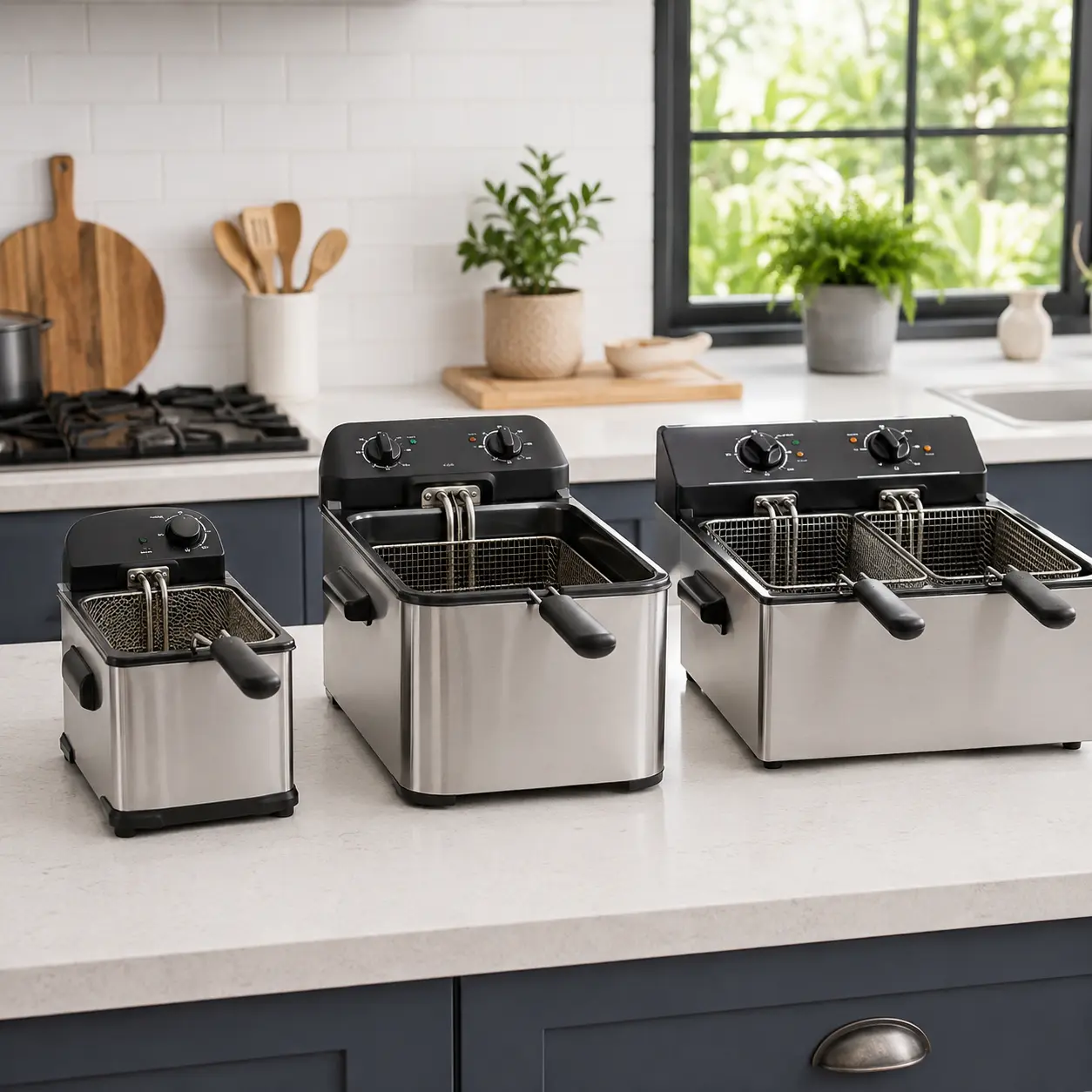
Compact Deep Fat Fryers
Compact deep fat fryers are usually designed for smaller portions, occasional use and kitchens with limited space. They may suit single person households, couples or buyers who only fry now and again.
The limitation is capacity. A compact fryer may need repeated batches for family meals.
Family Size Deep Fat Fryers
Family size fryers may suit larger portions, shared meals and more regular frying. They may offer more basket space and oil capacity depending on the model.
The limitation is that they can be bigger, heavier and more involved to clean or store.
Stainless Steel Deep Fat Fryers
Some deep fat fryers use stainless steel style bodies or finishes. These may appeal to buyers who want a more robust or kitchen appliance style appearance.
The limitation is that finish does not guarantee ease of cleaning, cooking capacity or suitability. Check practical details as well as appearance.
Multi Basket Fryers
Some fryers may include two baskets or divided cooking areas where stated. These can be useful if you want to cook different foods separately or manage portions.
The limitation is that multi basket designs may use more space and still need careful oil management. Check capacity and cleaning guidance.
Deep Fat Fryers With Oil Filtration
Some models include filtration or drainage features to help manage used oil. These may suit regular users who want a more organised oil handling process.
The limitation is that filtration systems still need cleaning and care. Check exactly how the feature works before buying.
Traditional Chip Fryers
Some buyers choose a deep fat fryer mainly for chips. A straightforward basket fryer may suit this use if the size and controls match your needs.
The limitation is versatility. If you want to cook a wider range of foods, check temperature control, basket size and lid design.
Specifications vary by model, so always check the individual product page before buying.
Suitability By Buyer Type Or Need
| Buyer Type Or Need | What To Prioritise | What To Be Careful About |
|---|---|---|
| Occasional user | Compact size, simple controls and easy storage | Avoid buying more capacity than needed |
| Family household | Basket size, oil capacity and easy cleaning | Small fryers may need repeated batches |
| Chip lover | Basket design and suitable capacity | Check cleaning and oil handling |
| Small kitchen | Compact footprint and storage space | Fryers still need safe use space |
| Frequent fryer | Oil filtration, removable parts and sturdy design | Maintenance becomes more important |
| Buyer wanting less mess | Lid design, basket handling and removable parts | Splatter and odour may still happen |
| Buyer worried about odour | Lid filters and kitchen ventilation | Filters may need replacement |
| Gift buyer | Simple controls and clear product information | Avoid specialist features unless wanted |
| Batch cooking buyer | Larger capacity and stable design | Larger fryers can be harder to clean |
| Low maintenance buyer | Easy cleaning and removable parts | Deep frying always involves oil management |
Common Mistakes And Misunderstandings
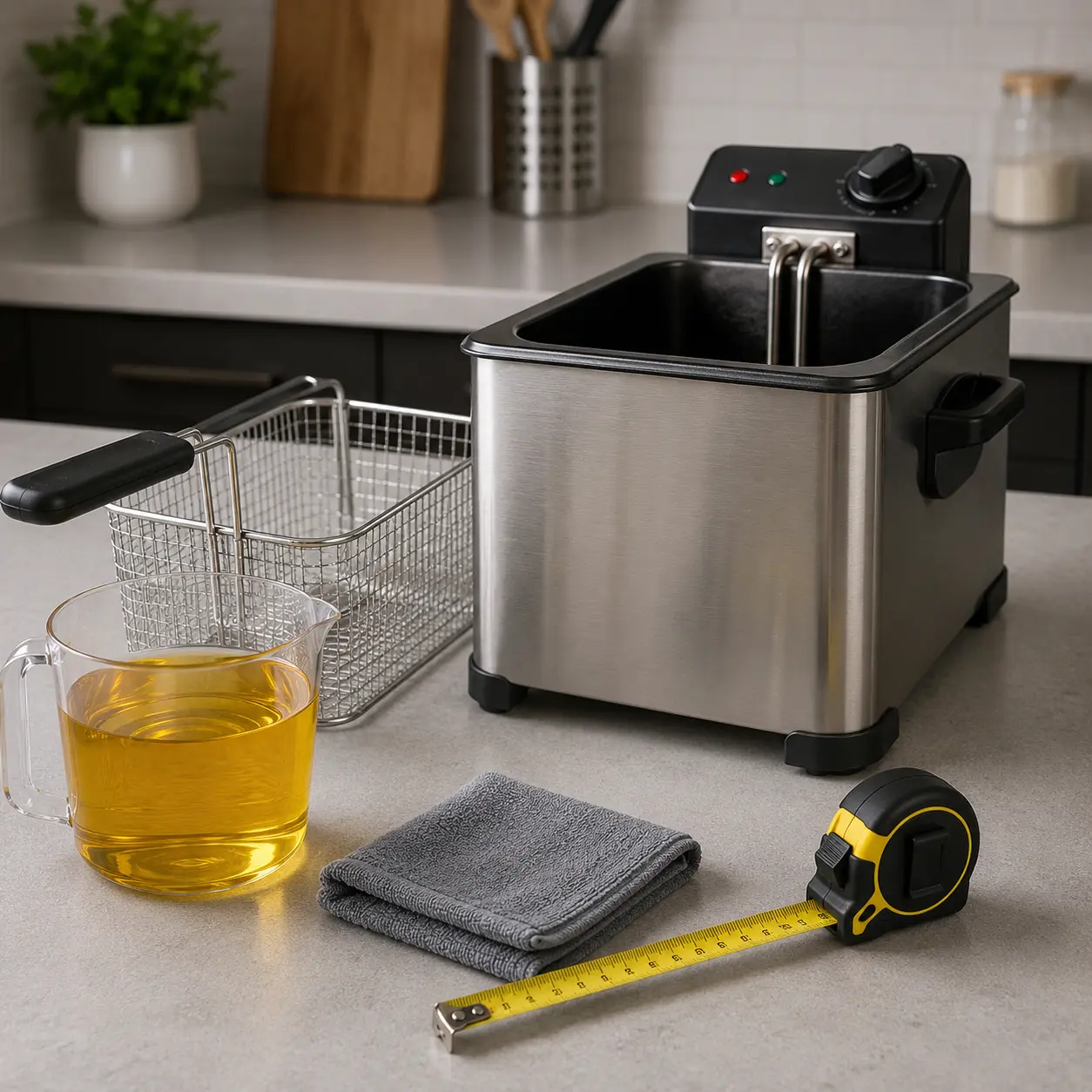
Confusing Deep Fat Fryers With Air Fryers
Deep fat fryers and air fryers are different appliances. A deep fat fryer cooks food in hot oil, while an air fryer uses hot air circulation.
Choose the appliance based on the cooking method you actually want.
Buying Too Small For Family Portions
A compact fryer can be useful, but it may feel frustrating if you regularly cook for several people. Repeated batches can take longer and require more attention.
Check food capacity before buying.
Buying Too Large For Occasional Use
A large fryer may be unnecessary if you only fry small snacks. It may take up more space, use more oil and feel harder to clean.
Match the fryer to your real habits.
Ignoring Oil Management
Deep fat frying involves oil. It needs filling, cooling, cleaning, filtering or replacing according to guidance.
If you do not want to handle oil, a deep fat fryer may not be the most practical appliance for you.
Overlooking Cleaning
Oil residue can make cleaning more involved than buyers expect. Basket, bowl, lid and exterior care all matter.
Check removable parts and cleaning guidance before buying.
Assuming Filters Remove All Smells
Filters may help manage odour where included, but frying can still create cooking smells.
Kitchen ventilation and cleaning habits matter too.
Forgetting Storage Space
Deep fat fryers can be bulky, and some need space for oil, baskets and accessories. A fryer that is awkward to store may not be used often.
Check dimensions before buying.
Treating Safety Features As A Substitute For Care
Cool touch surfaces, indicator lights or shut off features can be useful, but they do not remove the need for careful use around hot oil.
Always follow the manufacturer’s instructions.
Safety And Suitability Caveats
Deep Fat Fryers should be used only as intended and in line with the manufacturer’s instructions. They involve hot oil, high heat and electricity, so careful handling is essential.
Place the fryer on a stable, suitable surface with enough clear space around it. Keep the appliance away from items that could be affected by heat, splatter or oil. Do not overfill the fryer or use unsuitable oil, food or accessories.
Allow oil and parts to cool according to the product guidance before cleaning, moving or storing. Keep children and pets away from the fryer during and after use while it remains hot.
Do not modify, dismantle or attempt to repair a deep fat fryer. If the appliance appears damaged, leaks, smells unusual or seems unsafe, stop using it and follow the product information.
Always check the individual product page for oil capacity, food capacity, safety features, temperature control, cleaning guidance, electrical information and intended use before buying.
Maintenance, Storage And Lifespan Considerations
Deep fat fryers need regular cleaning to stay practical. Baskets, lids, bowls and exterior surfaces can collect oil residue. Removable parts may make cleaning easier where supplied, but care instructions vary by model.
Oil should be handled according to the product and food guidance. Some models may include filtration or drainage features, but these still need cleaning and sensible storage.
Allow the fryer to cool fully according to the instructions before storing. Keep the basket, lid and any accessories together so they are not lost.
The lifespan of a deep fat fryer depends on model, frequency of use, cleaning, oil management, storage and how carefully it is handled.
How To Compare Models Efficiently
- Decide how often you will deep fry.
- Choose the right fryer size for your household.
- Check food capacity and oil capacity separately.
- Compare basket size and handle design.
- Review temperature controls and indicators.
- Check lid design, viewing window and filters where included.
- Look at removable parts and cleaning guidance.
- Consider oil filtration or drainage features where useful.
- Check storage dimensions and weight.
- Read the individual product page before buying.
Summary Buyer Decision Checklist
Before buying Deep Fat Fryers, check the following:
| Buying Check | Why It Matters |
|---|---|
| Fryer size | Should suit your household and portions |
| Food capacity | Affects how much you can cook at once |
| Oil capacity | Affects oil use and handling |
| Basket design | Affects lifting, draining and portion control |
| Temperature control | Helps suit different foods |
| Lid design | Can affect splatter, viewing and cleaning |
| Filter features | May help manage odour where included |
| Removable parts | Makes cleaning more practical |
| Oil management | Deep frying always involves oil care |
| Storage space | Larger fryers can be bulky |
| Safety features | Useful, but careful use still matters |
| Product page details | Specifications vary by model |
Frequently Asked Questions
The right size depends on how many people you usually cook for and how often you fry. A compact fryer may suit occasional snacks, while a larger fryer may be more practical for family portions. Check both food capacity and oil capacity before buying.
No. A deep fat fryer cooks food in hot oil, while an air fryer uses hot air circulation. They create different cooking experiences and have different cleaning and maintenance needs.
Cleaning varies by model. Removable baskets, bowls and lids can make cleaning easier where included. Oil residue still needs careful attention, so check cleaning guidance before buying.
Deep frying can create cooking smells. Lids, filters and ventilation may help, but no fryer should be assumed to remove odour completely. Cleaning the fryer properly can also help manage smells.
Oil suitability varies by appliance and food use. Follow the manufacturer’s instructions and food guidance. Do not assume every oil is suitable for every fryer.
They can be used at home when used correctly and in line with the manufacturer’s instructions. They involve hot oil and heat, so careful handling, supervision and safe placement are important.
Some buyers cook different foods in the same fryer, but flavours, crumbs and oil condition can be affected. Multi basket models may help separate foods where included. Follow product and food guidance.
Oil filtration is a feature on some models that helps manage used oil. The exact design varies, and it still needs cleaning and care. Check the product page before relying on this feature.
Compact fryers can be useful for small kitchens, occasional use and smaller portions. They may not suit families or larger batches. They are best when the capacity matches your normal cooking needs.
Check dimensions, oil capacity, storage space, cord position and cleaning access. A compact fryer may be more practical, but it still needs safe worktop space during use.