BUYERS GUIDE
Food Mixer Buyers Guide
Food Mixers are kitchen appliances designed to mix, beat, whisk, knead and combine ingredients with less manual effort than mixing by hand. They are often bought for baking cakes, making bread dough, whipping cream, preparing batters, mixing icing, making pastry and handling regular kitchen prep.
This guide helps you choose the right food mixer by explaining the practical details that matter before buying. The right choice depends on the type of mixing you do, how often you bake, how much capacity you need, what attachments are included, how easy the mixer is to clean and how much space you have in the kitchen.
A food mixer is not just about power. A compact hand mixer may suit occasional cakes and quick whisking, while a stand mixer may suit regular baking, heavier mixtures and bread dough where the model supports it. The best choice is the one that fits your recipes, kitchen space and everyday routine.
Specifications vary by model, so always check the individual product page before buying.
Quick Answer
The right Food Mixer is the one that suits how often you bake, the recipes you make and the space available in your kitchen. For occasional cakes, batters and whisking, a hand mixer may be enough. For regular baking, larger batches or dough mixing, a stand mixer with suitable bowl capacity, attachments and speed control may be more practical. Always check mixer type, bowl size, motor information, included tools, cleaning guidance, dimensions, weight and product page details before buying.
Quick Product Comparison Framework
| Feature | What It Means | Why It Matters | What To Check |
|---|---|---|---|
| Mixer type | Stand mixer, hand mixer or compact food mixer | Different types suit different recipes and routines | Match the type to your main use |
| Bowl capacity | The amount the mixing bowl can hold | Too small may mean repeated batches | Check stated bowl size and usable capacity |
| Motor information | Power or performance details listed for the model | Heavier mixtures may need a suitable motor | Check product specifications |
| Speed settings | Different mixing speeds available | Helps control texture and reduce splashing | Check number and type of settings |
| Pulse or boost | Short bursts of extra mixing where included | Useful for some mixing tasks | Check whether the feature is listed |
| Attachments | Beaters, dough hooks, whisks or paddles where supplied | Determines what the mixer can do | Check what is included in the box |
| Bowl design | Stainless steel, glass or other bowl material where stated | Affects weight, cleaning and visibility | Check bowl material and care guidance |
| Tilt head or fixed head | How a stand mixer opens or loads ingredients | Affects access to bowl and attachments | Check design and clearance needs |
| Weight and stability | How heavy and steady the mixer is | Important for dough and thicker mixtures | Check weight and base design |
| Cleaning | How easy the bowl, tools and body are to clean | Frequent use depends on simple cleaning | Check removable parts and care guidance |
| Storage | Space needed for the mixer and attachments | Stand mixers can be bulky | Check dimensions before buying |
| Noise | Mixing motors can be loud during use | Important in open plan kitchens | Consider where it will be used |
Key Decision Criteria Explained
Mixer Type
The first decision is the type of food mixer you need. A hand mixer is compact, usually lighter and easy to store. It may suit occasional baking, quick cake mixtures, cream, egg whites and lighter batters.
A stand mixer sits on the worktop and holds the bowl in place while the machine mixes. This can be useful for regular baking, larger quantities and tasks that take longer, such as kneading dough where the product page supports that use.
A compact stand mixer may offer a middle ground for smaller kitchens, but capacity and motor suitability still need checking.
Choose the mixer type around your real recipes. If you bake once in a while, a hand mixer may be enough. If you bake every week or make dough regularly, a stand mixer may be more practical.
Bowl Capacity
Bowl capacity matters because it affects how much mixture you can make in one go. A small bowl may suit simple cakes and smaller households, while a larger bowl may suit batch baking, bread dough or family cooking.
However, bigger is not always better. A very large bowl may be awkward for small quantities, and a larger mixer will usually take up more storage or worktop space.
Check stated capacity, but also think about usable capacity. Mixing ingredients often need space to move, and overfilling the bowl can lead to mess or poor results.
Motor Power And Mixing Suitability
Motor information can help compare mixers, but it should not be the only buying factor. The design of the mixer, attachment quality, bowl shape, speed control and intended use all matter.
Light mixtures such as cake batter or cream may not need the same capability as bread dough, thick cookie dough or heavy mixtures. If you want to make dough regularly, check that the model is suitable for dough mixing rather than assuming all mixers can handle it.
Specifications vary by model, so always check the individual product page before buying.
Speed Settings
Speed settings help control how ingredients are mixed. A low speed can help reduce flour clouds and splashing at the start. Higher speeds may suit whisking, beating or finishing lighter mixtures.
Some mixers may include a pulse or boost setting where stated. This can be useful for short bursts of mixing, but it is not essential for every buyer.
Clear speed control matters more than a long list of settings. A mixer should let you move from gentle mixing to faster whisking in a way that suits your recipes.
Attachments Included
Attachments define what the mixer can actually do. Common tools may include beaters, dough hooks, balloon whisks, flat beaters or mixing paddles depending on the model.
A whisk may suit cream, egg whites and light mixtures. A beater or paddle may suit cake mixes and batters. Dough hooks may suit bread dough where the mixer is designed for that use.
Do not assume every attachment is included. Check the product page carefully and confirm what comes in the box.
Stand Mixer Stability
Stand mixers need to stay stable during use. This matters most with heavier mixtures or dough, where the machine may move more than with light whisking.
A heavier base can feel more stable, but it may also make the mixer harder to move or store. Suction feet, base design and bowl locking mechanisms may also affect stability where included.
If you plan to store the mixer in a cupboard, think about whether you will want to lift it in and out regularly.
Hand Mixer Comfort
For hand mixers, comfort matters because you hold the appliance while using it. Weight, grip, button position and cord placement can all affect ease of use.
A lighter hand mixer may be easier for quick jobs, but it still needs enough capability for your recipes. Check whether the beaters are easy to remove and how the cable stores.
If you have limited grip strength, handle comfort should be a major buying factor.
Kitchen Space And Storage
Food mixers can take up more space than expected. A hand mixer may fit in a drawer or cupboard, while a stand mixer may live permanently on the worktop.
Before buying a stand mixer, measure where it will sit. Also check the height if it has a tilt head, as it may need extra clearance under wall cupboards.
Attachments, bowls, splash guards and recipe accessories also need storage space.
Cleaning And Everyday Convenience
Cleaning is one of the biggest practical factors. Bowls, beaters, whisks, dough hooks and splash guards can all collect mixture. Some parts may be dishwasher safe where stated, while others may need hand washing.
The main mixer body should usually be kept away from water and wiped according to the product guidance. Sticky mixtures, dough and icing can make cleaning more involved.
If you bake often, easy cleaning will make the mixer much more enjoyable to own.
Noise During Use
Food mixers can be noisy, especially on higher speeds or with heavier mixtures. This may matter in open plan kitchens, flats or homes where baking is done early or late in the day.
Noise varies by model, speed and mixture type. If quiet use matters, check product information and buyer expectations carefully.
Product Type Differentiation And Variants
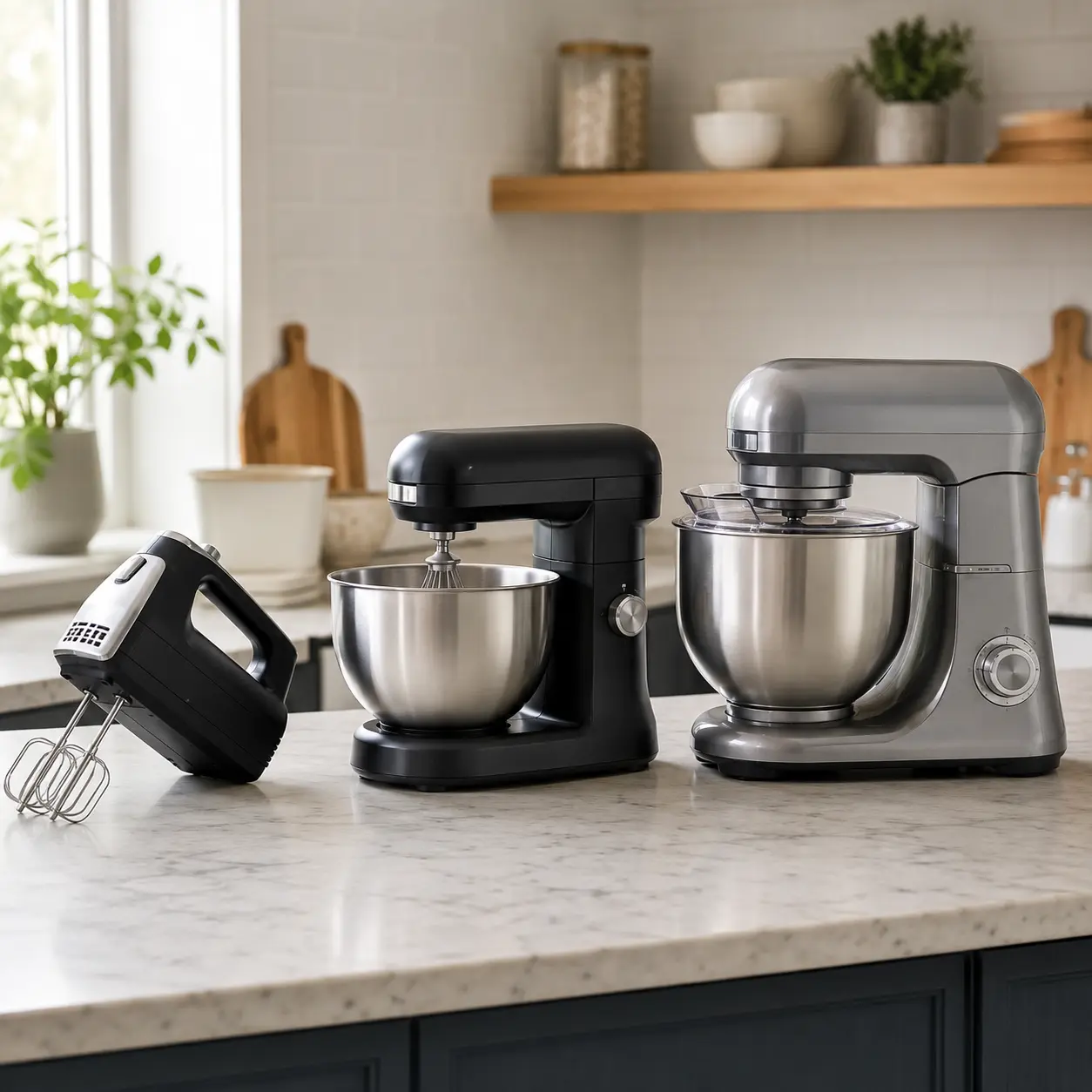
Hand Mixers
Hand mixers are compact appliances held by hand while mixing. They may suit occasional baking, lighter mixtures, small kitchens and buyers who want easy storage.
The limitation is that you need to hold the mixer while using it, and it may be less suitable for heavy mixtures or long mixing sessions.
Stand Mixers
Stand mixers sit on the worktop and mix ingredients in a bowl held by the machine. They may suit regular bakers, larger batches, cakes, batters, icing and dough where supported by the model.
The limitation is size and weight. Stand mixers can be bulky and may need permanent worktop space.
Compact Stand Mixers
Compact stand mixers may suit smaller kitchens or buyers who want some stand mixer convenience without a very large appliance.
The limitation is capacity and power suitability. They may not suit bigger batches or heavier mixtures.
Tilt Head Stand Mixers
Tilt head stand mixers allow the head to lift up for bowl access and attachment changes. They can be convenient for adding ingredients and removing the bowl.
The limitation is clearance. You need enough space above the mixer for the head to tilt back.
Bowl Lift Stand Mixers
Some larger stand mixers use a bowl lift design where the bowl moves up into position. These may suit heavier use where stated by the product page.
The limitation is that they can be larger, heavier and more expensive.
Food Mixers With Extra Attachments
Some food mixers include or support extra accessories such as splash guards, extra bowls, specialist beaters or food preparation attachments where stated.
The limitation is compatibility. Do not assume accessories fit every mixer, even if they look similar.
Specifications vary by model, so always check the individual product page before buying.
Suitability By Buyer Type Or Need
| Buyer Type Or Need | What To Prioritise | What To Be Careful About |
|---|---|---|
| Occasional baker | Hand mixer or compact mixer with simple controls | Avoid overbuying features you will not use |
| Regular baker | Stand mixer, suitable bowl capacity and included tools | Check storage and cleaning needs |
| Bread dough maker | Dough hook and model suitability for kneading | Not every mixer suits heavy dough |
| Cake baker | Beater, bowl size and speed control | Very large bowls may be awkward for small cakes |
| Small kitchen | Compact size and easy storage | Stand mixers can be bulky |
| Family kitchen | Larger bowl capacity and stable base | Check worktop space before buying |
| Student or first time buyer | Simple controls and useful basic attachments | Avoid complex accessories if not needed |
| Batch baker | Larger bowl, steady design and practical cleaning | Larger machines may be heavy |
| Buyer with limited grip strength | Stand mixer or lightweight hand mixer | Hand mixer weight matters |
| Gift buyer | Clear included attachments and easy use | Avoid specialist models unless wanted |
Common Mistakes And Misunderstandings
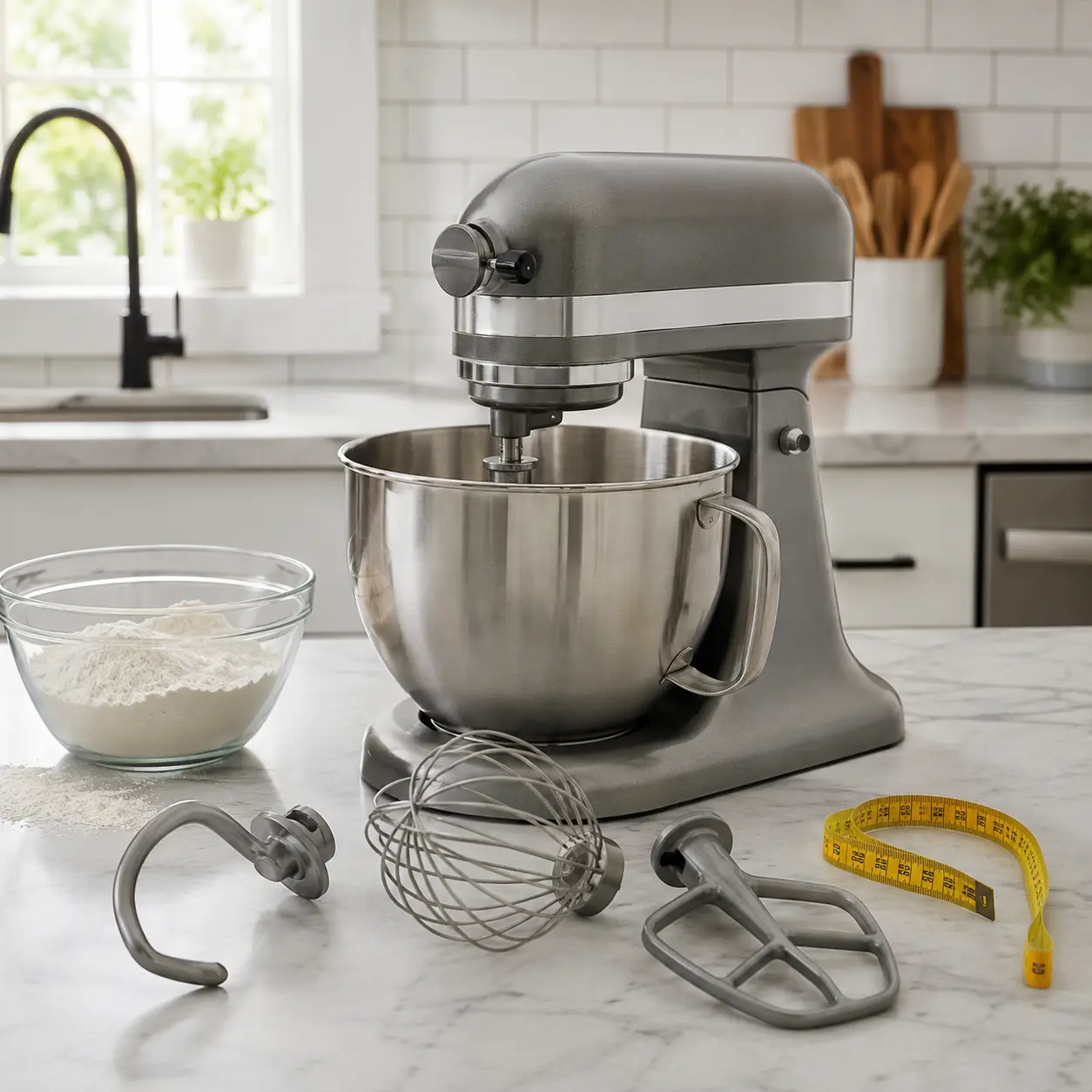
Assuming Every Food Mixer Can Knead Dough
Not every food mixer is suitable for bread dough or heavy mixtures. Dough can put more strain on the motor and attachments.
Check the product page before buying for dough making.
Buying Too Small For Batch Baking
A small mixer can be easy to store, but it may be frustrating if you regularly bake large cakes, multiple batches or bread.
Check bowl capacity and intended use.
Buying Too Large For Occasional Use
A large stand mixer can look impressive, but it may be unnecessary if you only bake occasionally. It may also take up valuable worktop space.
Choose around your real routine.
Ignoring Attachment Compatibility
Attachments vary by model. A dough hook, whisk, beater or splash guard may not fit another mixer even if it looks similar.
Check what is included and what is compatible.
Choosing By Power Alone
Power information is useful, but it does not tell the whole story. Bowl design, speed control, stability and intended use all matter.
Use motor information as one comparison point, not the whole decision.
Forgetting About Cleaning
Mixing can be messy. Bowls, beaters and splash guards need cleaning after use. If cleaning is awkward, you may use the mixer less often.
Check care guidance before buying.
Overlooking Worktop Clearance
Tilt head stand mixers need room to open. A mixer may fit under a cupboard when closed but not when in use.
Measure the full usable space before buying.
Expecting A Mixer To Replace Every Kitchen Appliance
A food mixer is designed for mixing, whisking, beating and kneading where suitable. It is not automatically a blender, food processor or grinder unless compatible attachments are clearly supplied or supported.
Check intended functions carefully.
Safety And Suitability Caveats
Food Mixers should be used only as intended and in line with the manufacturer’s instructions. They involve moving parts, electricity, bowls, attachments and sometimes heavy mixtures, so correct setup matters.
Make sure attachments are fitted properly before use. Keep hands, utensils, loose clothing and hair away from moving tools. Do not overload the bowl or use the mixer for mixtures that the product information does not support.
Unplug the mixer before changing attachments or cleaning where the product guidance requires it. Do not immerse the main motor body in water unless the instructions clearly say a part is suitable for washing.
Do not modify, dismantle or attempt to repair a food mixer. If the appliance appears damaged, smells unusual, overheats or seems unsafe, stop using it and follow the product information.
Always check the individual product page for mixer type, bowl capacity, motor information, attachments, cleaning guidance, dimensions, electrical information and intended use before buying.
Maintenance, Storage And Lifespan Considerations
Food mixers need regular cleaning and careful storage. Wash bowls and attachments according to the product guidance, and wipe the main body as instructed. Mixtures such as dough, icing and batter can collect around attachment points, so check these areas after use.
Store attachments together so beaters, whisks, dough hooks and splash guards are not lost. If the mixer has a cord storage feature, use it as directed.
A stand mixer used frequently may need more care than a hand mixer used occasionally. Heavy dough use, frequent baking and poor cleaning can all affect long term practicality.
The lifespan of a food mixer depends on model, frequency of use, mixture type, cleaning, storage and how carefully it is handled.
How To Compare Models Efficiently
- Decide whether you need a hand mixer or stand mixer.
- Think about the recipes you make most often.
- Check bowl capacity against your usual batch size.
- Review motor information and suitability for heavier mixtures.
- Compare speed settings and control style.
- Check which attachments are included.
- Review cleaning guidance for bowls and tools.
- Measure worktop and storage space.
- Consider weight, stability and portability.
- Read the individual product page before buying.
Summary Buyer Decision Checklist
Before buying Food Mixers, check the following:
| Buying Check | Why It Matters |
|---|---|
| Mixer type | Hand and stand mixers suit different routines |
| Bowl capacity | Should match your recipe quantities |
| Motor information | Helps compare suitability for heavier mixtures |
| Speed settings | Useful for control and texture |
| Attachments | Determines what the mixer can do |
| Dough suitability | Important for bread makers and heavy mixes |
| Bowl material | Affects weight, cleaning and handling |
| Stability | Matters for stand mixers and dough |
| Cleaning guidance | Frequent use depends on easy cleaning |
| Storage space | Stand mixers can be bulky |
| Accessory compatibility | Extra tools may be model specific |
| Product page details | Specifications vary by model |
Frequently Asked Questions
The best type depends on how often you bake. A hand mixer may suit occasional cakes and light mixtures, while a stand mixer may be better for regular baking, larger batches and dough where the model supports it.
A stand mixer can be worth it if you bake regularly, make larger batches or want hands free mixing. It may be less practical if you bake rarely or have very limited kitchen space.
No. Bread dough can be demanding, and not every mixer is designed for kneading. Check whether the model includes dough hooks and whether the product page supports dough mixing.
Choose bowl size based on your usual recipes. Smaller bowls may suit occasional cakes and smaller households, while larger bowls may suit batch baking and family use. Do not choose the largest bowl unless you need it.
Hand mixers can be suitable for lighter mixing, whisking and occasional baking. They may not suit heavy dough or long mixing sessions. Check product suitability before buying.
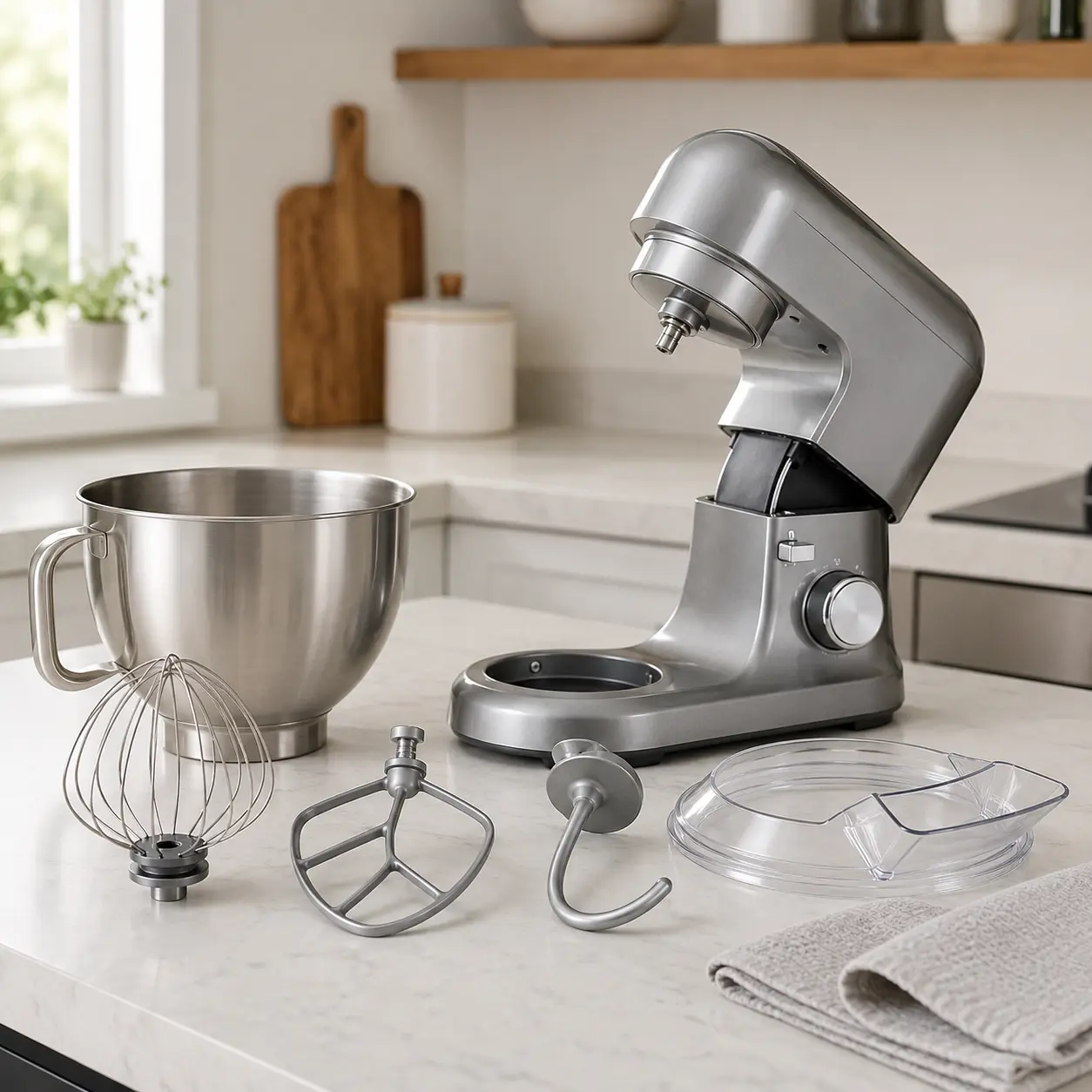
Useful attachments often include beaters, whisks and dough hooks where supplied. Stand mixers may include a flat beater or paddle, dough hook and whisk. Always check the product page for what is included.
No. Attachments are usually model specific. Do not assume a whisk, beater, bowl or splash guard will fit another mixer unless compatibility is clearly listed.
Cleaning ease varies by model. Removable bowls and attachments help, and some parts may be dishwasher safe where stated. Check cleaning guidance before buying.
Check dimensions, weight, storage space, bowl size and attachment storage. A compact hand mixer or compact stand mixer may be more practical than a large worktop model.
Usually no. A food mixer is mainly for mixing, whisking, beating and kneading where suitable. A food processor is usually designed for chopping, slicing and other food prep tasks. Some mixers may support extra attachments, but only where stated.