BUYERS GUIDE
Kettle Buyers Guide
Kettles are kitchen appliances designed to heat water quickly for tea, coffee, hot drinks, instant meals, cooking prep and everyday household use. They are often bought for family kitchens, offices, student rooms, caravans, small flats, travel use, guest rooms and replacing an older kettle that has become slow, noisy or difficult to clean.
This guide helps you choose the right kettle by explaining the practical details that matter before buying. The right choice depends on capacity, boil speed, water level visibility, handle comfort, spout design, filter access, noise level, limescale care, safety features, storage space and how often the kettle will be used.
A kettle is not just about boiling water. A compact model may suit one person or a small kitchen, while a larger jug kettle may suit a family or busy office. A temperature control kettle may suit buyers who make different drinks, while a simple everyday kettle may be enough for most homes.
Specifications vary by model, so always check the individual product page before buying.
Quick Answer
The right Kettle is the one that suits your household size, drink habits and kitchen space. For family use, a larger capacity kettle with a clear water level window, comfortable handle and easy filling may be more practical. For smaller homes, a compact kettle may save space and reduce unnecessary boiling. If you make green tea, speciality coffee or baby related hot water routines where suitable, temperature control may be useful. Always check capacity, boil features, safety shut off, filter access, limescale cleaning, cord storage, noise information and product page details before buying.
Quick Product Comparison Framework
| Feature | What It Means | Why It Matters | What To Check |
|---|---|---|---|
| Kettle type | Jug, dome, compact, travel, stovetop or temperature control kettle | Different types suit different routines | Match the type to your main use |
| Capacity | How much water the kettle can hold | Affects how many cups can be made at once | Check stated litre capacity |
| Minimum boil amount | The smallest amount of water recommended | Helps avoid boiling more than needed | Check fill guidance |
| Power information | Rated power where listed | Can affect boil speed | Check product specifications |
| Water level window | Shows how much water is inside | Helps avoid overfilling or underfilling | Check visibility and markings |
| Spout design | How water pours from the kettle | Affects control and dripping | Check pour design and user guidance |
| Lid design | Flip top, removable or push button lid where included | Affects filling and cleaning | Check lid access |
| Filter | Removable limescale filter where included | Useful in hard water areas | Check filter access and cleaning |
| Base design | Cordless 360 degree base or fixed cable design | Affects daily convenience | Check base and cord storage |
| Temperature control | Lets you select different water temperatures where included | Useful for some teas and coffee routines | Check available settings |
| Keep warm function | Maintains water temperature for a period where included | Useful for repeated hot drinks | Check timing and energy guidance |
| Safety features | Auto shut off, boil dry protection or cool touch design where included | Important for everyday use | Check product details carefully |
Key Decision Criteria Explained
Kettle Type
The first decision is the type of kettle you need. A jug kettle is one of the most common choices for everyday kitchens. It is usually easy to lift, fill and pour, depending on the design.
A dome kettle may suit buyers who prefer a more traditional look. A compact kettle may suit small kitchens, single person households, student rooms or travel where supported by the product page.
Temperature control kettles allow selected water temperatures where included. These may suit buyers who prepare different teas, speciality coffee or drinks that do not always need fully boiling water.
So, start with the way you actually use hot water each day.
Capacity
Capacity matters because it affects how many drinks you can make before refilling. A larger kettle may suit family homes, guests or offices. A smaller kettle may suit one or two people and can be easier to store.
However, bigger is not always better. A large kettle may feel heavy when full and may encourage boiling more water than needed.
Think about your normal routine. If you often make one or two cups, a clear minimum fill level may matter more than maximum capacity.
Boil Speed And Power
Some kettles are designed to boil quickly where stated by the product page. Power information can help compare models, but it should not be the only buying factor.
A fast boiling kettle can be convenient in busy mornings. However, boil speed can vary depending on water amount, starting temperature and model design.
Also consider noise, weight, pouring comfort and limescale care. A kettle that boils quickly but is awkward to use may still become frustrating.
Water Level Window
A clear water level window helps you fill the kettle accurately. This can reduce overfilling and make it easier to boil only what you need.
Water windows vary. Some are on one side, some are on both sides and some can be harder to read in certain lighting. Cup markings may also vary by model.
If several people use the kettle, clear fill markings can make everyday use easier.
Handle Comfort And Weight
A kettle can become heavy when full. Handle shape, grip position and balance affect how safe and comfortable it feels to lift and pour.
This matters for older users, anyone with reduced hand strength, or households that often boil larger amounts of water.
A comfortable handle is more important than it looks. Check product images and weight details before buying.
Spout And Pour Control
Spout design affects how neatly the kettle pours. A good spout should help water flow into a mug, teapot or pan without excessive dripping or splashing.
Some buyers may prefer a narrower, more controlled pour. Others may simply want quick everyday pouring.
If you use the kettle for pour over coffee or more controlled pouring, a gooseneck style kettle may be worth comparing where suitable.
Lid And Filling Access
The lid affects how easy the kettle is to fill and clean. Some kettles have a flip top lid, while others have a removable lid. Some can also be filled through the spout where suitable.
A wide opening can make cleaning and descaling easier. A stiff or awkward lid can become annoying over time.
Check how the lid opens before buying, especially if the kettle will be used many times a day.
Limescale Filter And Cleaning
Limescale can build up inside kettles, especially in hard water areas. A removable limescale filter may help catch small scale particles when pouring where included.
However, a filter does not remove the need to descale the kettle. Cleaning guidance varies by model, so always follow the product instructions.
If you live in a hard water area, filter access and easy cleaning should be high on your checklist.
Temperature Control
Temperature control kettles allow you to choose different water temperatures where included. This can be useful for drinks that do not always need boiling water.
For example, some tea and coffee routines may use lower temperatures. Also, some buyers like the extra control for repeated hot drinks.
However, not everyone needs it. If you mainly make standard tea and instant drinks, a simple kettle may be enough.
Noise Level
Kettles can be noisy while boiling. This may not matter in a busy family kitchen, but it can be noticeable in open plan rooms, flats, offices or early morning routines.
Noise information is not always presented in the same way across products. So, treat quiet operation as a practical preference rather than a guaranteed feature unless clearly stated.
If noise matters, compare product details carefully.
Base, Cord And Storage
Many electric kettles use a cordless jug on a separate base. A 360 degree base can be convenient because the kettle can be placed down from different angles.
Cord storage can help keep worktops tidy. This matters in small kitchens or where the kettle sits near other appliances.
Before buying, check where the kettle will stand and whether the cable can safely reach the plug socket.
Product Type Differentiation And Variants
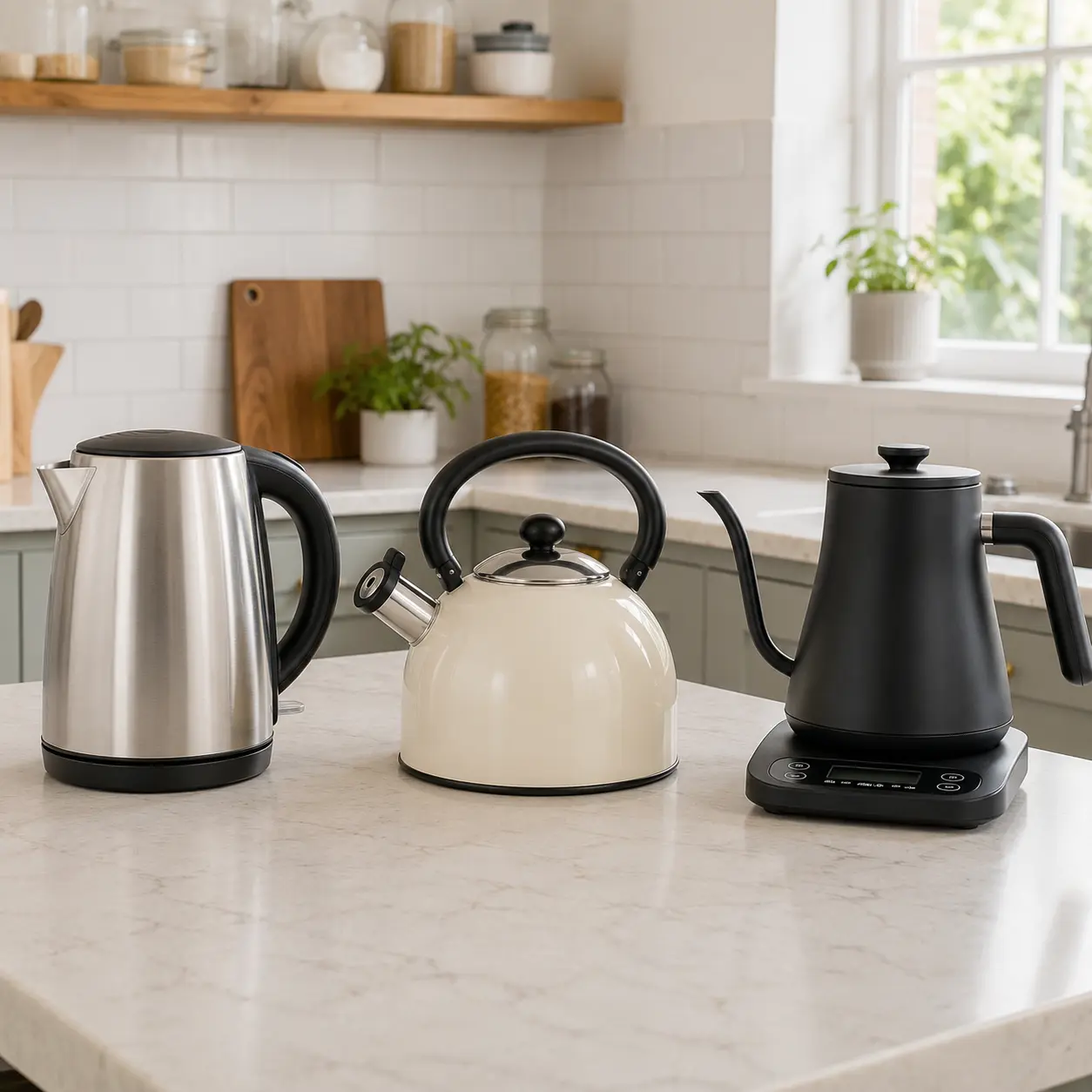
Jug Kettles
Jug kettles are common electric kettles with an upright shape and handle. They suit everyday kitchens, families and regular hot drink routines.
The limitation is that designs vary widely. Some may be easier to fill, lift and pour than others.
Dome Kettles
Dome kettles usually have a more traditional rounded look. They may suit buyers who care about kitchen style as well as function.
The limitation is that water level visibility and filling access can vary. Check the practical details, not just the design.
Compact Kettles
Compact kettles suit small kitchens, single person households, caravans, offices or occasional use.
The limitation is smaller capacity. They may not suit busy family kitchens or multiple drinks at once.
Travel Kettles
Travel kettles are designed for portability where stated. They may suit holidays, work trips, caravans or hotel use.
The limitation is capacity and performance. They are usually chosen for convenience rather than full household use.
Temperature Control Kettles
Temperature control kettles let you select different water temperatures where included. They may suit speciality drinks or buyers who want more control.
The limitation is cost and complexity. A simple kettle may be more practical if you only need boiling water.
Gooseneck Kettles
Gooseneck kettles have a narrow curved spout designed for controlled pouring. They may suit pour over coffee or careful pouring tasks.
The limitation is speed and capacity. They may not be the most practical choice for a busy family tea round.
Specifications vary by model, so always check the individual product page before buying.
Suitability By Buyer Type Or Need
| Buyer Type Or Need | What To Prioritise | What To Be Careful About |
|---|---|---|
| Family household | Larger capacity, clear water window and comfortable handle | Full kettles can be heavy |
| Single person household | Compact size and clear minimum fill level | Large kettles may encourage overfilling |
| Tea drinker | Capacity, pour control and filter access | Temperature control may only matter for some teas |
| Coffee buyer | Gooseneck or temperature control where useful | Not every kettle suits controlled pouring |
| Small kitchen | Compact footprint and cord storage | Check worktop space before buying |
| Office kitchen | Larger capacity and simple controls | Noise and durability expectations matter |
| Older user | Lightweight design, comfortable handle and clear markings | Heavy kettles may be awkward |
| Hard water area | Removable filter and easy descaling | Limescale still needs maintenance |
| Travel buyer | Compact size and travel guidance | Check voltage and plug requirements |
| Style conscious buyer | Finish, shape and matching appliances | Do not choose looks over usability |
Common Mistakes And Misunderstandings
Common Mistakes And Misunderstandings
Buying A Kettle That Is Too Big
A large kettle can be useful, but it can also be heavy when full. It may also make people boil more water than they need.
Choose capacity around normal daily use.
Ignoring Minimum Fill Level
The minimum fill level matters if you usually make one drink at a time. A kettle with a high minimum fill may be less practical for small households.
Check fill guidance before buying.
Choosing By Looks Alone
A stylish kettle may look good on the worktop, but the handle, spout, lid and water window matter every day.
Practical use should come first.
Forgetting About Limescale
Limescale can affect appearance, pouring and long term use. This is especially relevant in hard water areas.
Check filter access and descaling guidance.
Overlooking Pour Control
A kettle that drips or splashes can be frustrating and unsafe. Spout design matters, especially when pouring boiling water.
Check product images and user guidance carefully.
Assuming Temperature Control Is Essential
Temperature control can be useful, but not everyone needs it. If you only use boiling water, a simple kettle may be more practical.
Choose features you will actually use.
Ignoring Noise
Some kettles can be loud during boiling. This may matter in open plan kitchens, flats and offices.
Check noise details where supplied.
Forgetting About Cord Position
A kettle needs to sit safely near a socket. A short cable or awkward base can make placement difficult.
Check base and cord storage before buying.
Safety And Suitability Caveats
Kettles should be used only as intended and in line with the manufacturer’s instructions. They involve boiling water, steam, electricity and hot surfaces, so careful handling is important.
Place the kettle on a stable, suitable surface. Keep the cable positioned safely and away from hot surfaces. Do not overfill the kettle, as boiling water may spill or spit from the spout.
Keep hands, face, children and pets away from escaping steam. Allow the kettle to cool before cleaning or descaling where the product guidance recommends it.
Do not use a damaged kettle, plug, base or cable. Do not modify, dismantle or attempt to repair the appliance. If the kettle leaks, smells unusual, fails to switch off or seems unsafe, stop using it and follow the product information.
Always check the individual product page for capacity, power information, safety features, filter details, water level markings, cleaning guidance, electrical information and intended use before buying.
Maintenance, Storage And Lifespan Considerations
Kettles need regular cleaning and descaling to stay practical. Limescale build up can happen over time, especially in hard water areas. Follow the product guidance for safe descaling and cleaning.
Clean the exterior only as instructed. Do not immerse the base or electrical parts in water. If the kettle has a removable filter, clean it according to the guidance and make sure it is replaced correctly.
Store the kettle on its base in a dry, stable position. Keep the cable tidy using cord storage where supplied.
The lifespan of a kettle depends on model, water quality, frequency of use, cleaning, descaling and how carefully it is handled.
How To Compare Models Efficiently
- Decide how many cups you usually make at once.
- Choose the right capacity for your household.
- Check minimum fill guidance for small amounts.
- Compare water level window visibility.
- Review handle comfort and kettle weight.
- Check spout design and lid access.
- Look for filter access if limescale matters.
- Decide whether temperature control is useful.
- Check base design, cord storage and worktop fit.
- Read the individual product page before buying.
Summary Buyer Decision Checklist
Before buying Kettles, check the following:
| Buying Check | Why It Matters |
|---|---|
| Kettle type | Jug, dome, compact and temperature control kettles suit different users |
| Capacity | Should match household drink habits |
| Minimum fill level | Important for one cup use |
| Water level window | Helps avoid overfilling |
| Handle comfort | Affects safe lifting and pouring |
| Spout design | Helps reduce dripping and splashing |
| Lid access | Affects filling and cleaning |
| Filter access | Useful for limescale management |
| Temperature control | Useful for some drinks where included |
| Noise level | Matters in open plan homes and offices |
| Cord storage | Keeps worktops tidier |
| Product page details | Specifications vary by model |
Frequently Asked Questions
The right size depends on how many drinks you usually make at once. A larger kettle may suit families and offices, while a compact kettle may suit one or two people. Check both maximum capacity and minimum fill level before buying.
It can be worth considering if you make drinks that use different water temperatures, such as some teas or pour over coffee. If you mainly need boiling water, a simple kettle may be enough.
The minimum fill level is the smallest amount of water the kettle is designed to boil safely. It matters if you often make one cup and want to avoid boiling more water than needed.
Neither is automatically better. Glass kettles let you see the water clearly but may show limescale more easily. Stainless steel kettles can look smart and durable, but water level visibility depends on the design. Check the full product details.
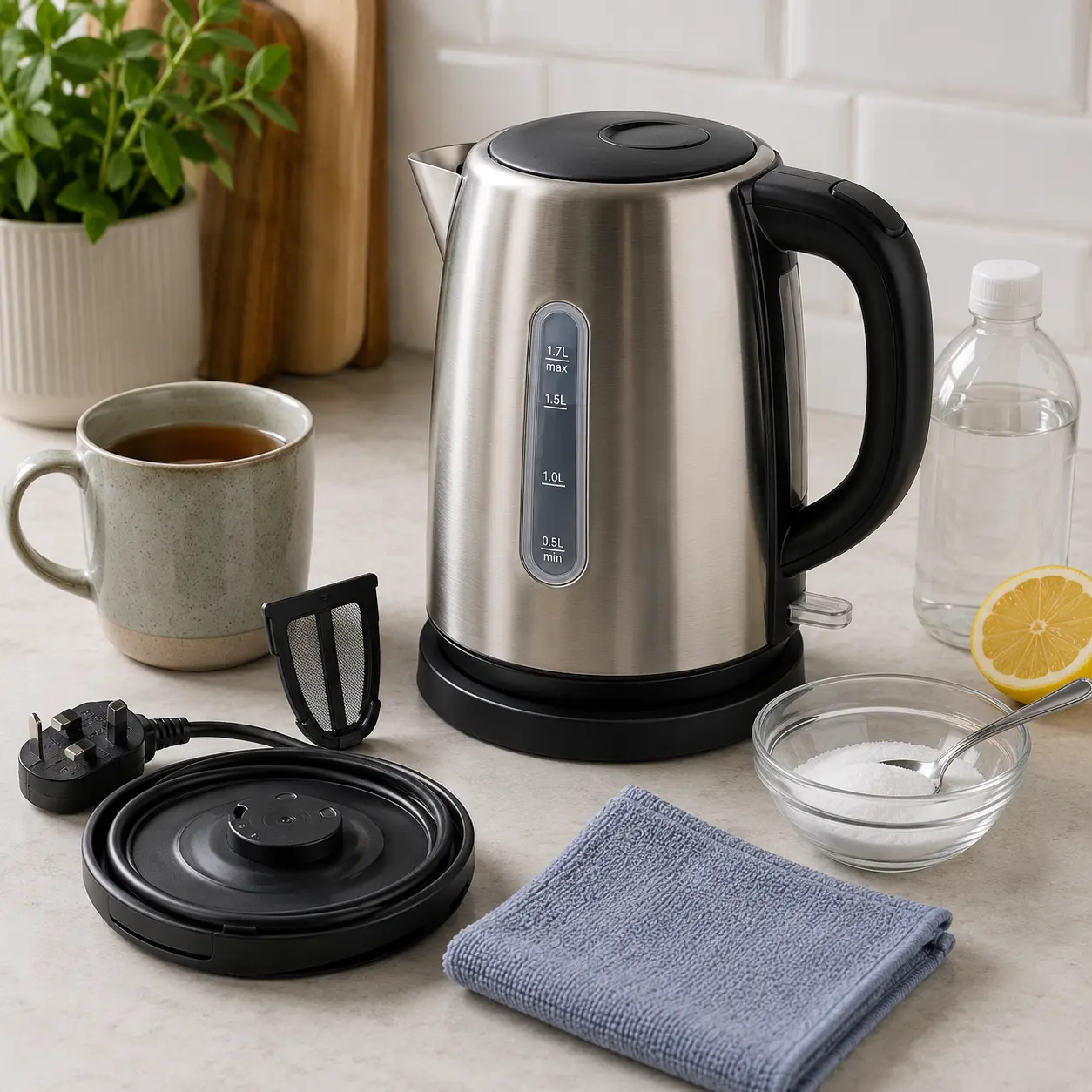
A limescale filter is usually a small removable filter near the spout. It can help catch scale particles when pouring where included. It does not replace regular descaling.
Yes, many kettles need descaling over time, especially in hard water areas. Follow the manufacturer’s descaling instructions and avoid unsuitable cleaning products.
For office use, check capacity, handle comfort, water level visibility, simple controls, safety shut off and durability expectations. Noise may also matter in shared workspaces.
Travel kettles are usually designed for portability and occasional use. They may have smaller capacity and different performance from household kettles. Check intended use before buying.
A gooseneck kettle has a narrow curved spout for more controlled pouring. It may suit pour over coffee or careful pouring tasks. It may not be the quickest choice for large tea rounds.
Check the recipient’s kitchen space, preferred design, capacity needs, colour preference, water hardness area and whether they would actually use features such as temperature control.