BUYERS GUIDE
Microwave Oven Buyers Guide
Microwave Ovens are kitchen appliances designed to heat, defrost and cook food using microwave energy. They are often bought for reheating meals, warming drinks, defrosting frozen food, quick lunches, student kitchens, family homes, offices, small flats and replacing an older microwave that has become too small, slow or awkward to clean.
This guide helps you choose the right microwave oven by explaining the practical details that matter before buying. The right choice depends on kitchen space, internal capacity, power level, control style, cooking functions, turntable design, cleaning needs, noise, safety features and how often the appliance will be used.
A microwave oven is not just about reheating food. A basic solo microwave may suit simple everyday tasks, while a grill microwave or combination microwave may suit buyers who want more cooking flexibility. A compact microwave may suit a small kitchen, while a larger model may suit family meals and bigger plates.
Specifications vary by model, so always check the individual product page before buying.
Quick Answer
The right Microwave Oven is the one that suits your kitchen space, food habits and cooking needs. For simple reheating and defrosting, a solo microwave may be enough. For browning or crisping certain foods where supported, a grill microwave may be useful. For wider cooking flexibility, a combination microwave may be worth comparing. Always check capacity, wattage, internal dimensions, turntable or flatbed design, control type, cleaning guidance, ventilation needs, safety features and product page details before buying.
Quick Product Comparison Framework
| Feature | What It Means | Why It Matters | What To Check |
|---|---|---|---|
| Microwave type | Solo, grill, combination, compact, flatbed or built in design | Different types suit different cooking routines | Match the type to your main use |
| Capacity | Internal size, usually shown in litres | Affects plate size and food quantity | Check litre capacity and internal dimensions |
| Power level | Microwave output, usually shown in watts | Can affect heating and cooking time | Check wattage and power settings |
| Turntable design | Rotating glass plate inside the microwave | Helps food rotate during heating | Check turntable size |
| Flatbed design | No rotating plate where included | Can give more usable internal space | Check cooking guidance and cleaning access |
| Grill function | Adds grill heating where included | Useful for browning certain foods | Check whether grill is included |
| Combination cooking | Uses microwave with oven or grill functions where supported | Adds flexibility beyond reheating | Check cooking modes carefully |
| Control type | Dials, buttons, touch controls or digital menus | Affects ease of use | Choose controls that suit the user |
| Preset programmes | Auto cook, defrost or reheating options where included | Can simplify regular tasks | Check programme list |
| Interior coating | Painted, ceramic style, stainless steel or other finish where stated | Affects cleaning and durability expectations | Check care guidance |
| Door style | Pull handle or push button opening | Affects daily comfort | Check door design and clearance |
| Ventilation needs | Space required around the appliance | Important for safe placement | Check placement guidance |
Key Decision Criteria Explained
Microwave Oven Type
The first decision is the type of microwave oven you need. A solo microwave is designed for basic heating, reheating and defrosting. It may suit most everyday users who mainly warm food and drinks.
A grill microwave adds a grill element where stated. This can help with browning or finishing some foods, although results depend on the model and food type.
A combination microwave offers more cooking modes where included. It may combine microwave cooking with grill or convection style heating. This can suit buyers who want more flexibility, but it may also mean more controls, more cleaning and a larger appliance.
So, start with what you actually cook.
Capacity And Internal Space
Capacity is usually listed in litres, but the internal shape matters too. A microwave may have a decent litre capacity yet still feel awkward if the turntable is small or the interior height is limited.
If you use dinner plates, large bowls, baby bottle equipment, microwave rice cookers or meal prep containers, check internal dimensions carefully.
For small kitchens, a compact microwave can save space. However, it may not fit larger plates. For family homes, a larger capacity model may be more practical.
Wattage And Power Settings
Wattage affects how quickly a microwave can heat or cook food. Higher wattage may reduce cooking time, but it also means you need to follow food instructions carefully.
Many food packets give cooking times based on specific microwave power levels. If your microwave is different, timings may need adjusting according to the food guidance.
Power settings are useful because not every task needs maximum power. Defrosting, softening butter or reheating delicate foods may need lower settings.
Turntable Versus Flatbed
A turntable microwave uses a rotating glass plate. This is common and familiar. It helps move food around during heating, although the plate size can limit what fits inside.
A flatbed microwave does not use a rotating plate where included. This can make the interior easier to use for rectangular dishes and larger containers. It can also make cleaning simpler in some designs.
However, flatbed cooking behaviour varies by model. Check the product page and cooking guidance before choosing.
Solo, Grill Or Combination
A solo microwave is often the simplest choice. It suits reheating, defrosting and everyday microwave meals.
A grill microwave may suit buyers who want to add some browning or crisping where the model supports that use. However, it will not always replace a full grill or oven.
A combination microwave may suit buyers with limited oven space, small flats or those who want one appliance for several cooking styles. The trade off is size, cost and more complex cleaning.
Choose the functions you will actually use.
Controls And Ease Of Use
Controls matter every day. Some buyers prefer simple dials because they are quick and easy. Others prefer digital buttons because they give more precise timing.
Touch controls and preset menus can be useful, but they may feel less simple for some users. A microwave used by several people should have controls that everyone can understand.
If the microwave is for an older user, office kitchen or student space, simple controls may be better than a long menu system.
Auto Cook And Defrost Programmes
Preset programmes can help with common tasks such as defrosting, reheating drinks or cooking certain foods where listed. They may save time for buyers who do not want to guess settings.
However, presets vary by model and food type. They should not replace food safety guidance or cooking instructions.
Use preset programmes as helpful shortcuts, not as a reason to ignore the product manual.
Size, Worktop Space And Door Clearance
A microwave oven needs enough worktop or built in space. Width, height and depth all matter, but door clearance and ventilation matter too.
Freestanding models need safe space around them according to the product guidance. Built in models must match cabinet and ventilation requirements carefully.
Before buying, measure where the microwave will sit. Also check whether the door can open fully without hitting a wall, cupboard or other appliance.
Cleaning And Interior Finish
Microwaves can quickly collect food splashes. A smooth interior, removable turntable and easy wipe surfaces can make daily cleaning simpler.
Some models may have ceramic style, stainless steel or other interior finishes where stated. These may affect cleaning expectations, but care still depends on the model.
If you reheat sauces, soups or family meals often, cleaning access should be a main buying factor.
Noise, Beeps And Display Lights
Microwaves can make noise while running, including fan noise, turntable movement and end beeps. Some display lights may stay on or be bright in darker kitchens.
This may not matter for everyone. However, it can matter in open plan kitchens, offices, flats and late night use.
Check product details where supplied, especially if quiet use matters.
Product Type Differentiation And Variants
Solo Microwave Ovens
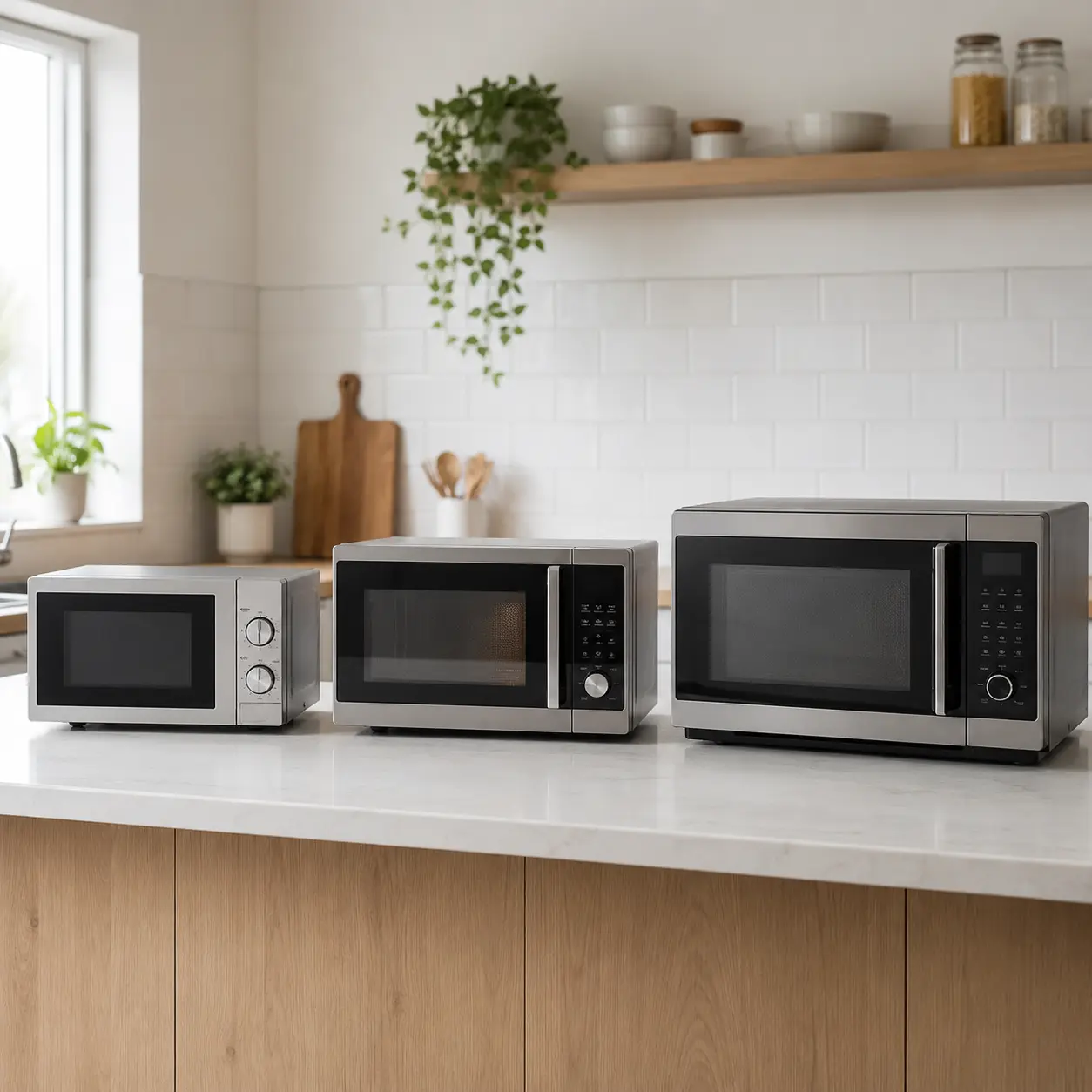
Solo microwave ovens are designed mainly for reheating, defrosting and basic microwave cooking. They may suit everyday households, students, offices and buyers who want simple controls.
The limitation is that they do not usually brown or crisp food like a grill or oven.
Grill Microwave Ovens
Grill microwave ovens include a grill function where stated. They may suit buyers who want more flexibility than a basic solo microwave.
The limitation is that grill results vary by food and model. They may not replace a dedicated oven grill.
Combination Microwave Ovens
Combination microwave ovens may combine microwave power with grill or convection style cooking where included. They can suit buyers who want a more versatile appliance.
The limitation is complexity. They may be larger, heavier, more expensive and more involved to clean.
Compact Microwave Ovens
Compact microwaves suit small kitchens, student rooms, offices or occasional use where supported by the product page.
The limitation is internal space. Larger plates and bowls may not fit.
Flatbed Microwave Ovens
Flatbed microwaves remove the rotating turntable where included. They may offer more usable internal space and simpler wiping.
The limitation is that heating patterns and cooking guidance vary by model. Check the instructions carefully.
Built In Microwave Ovens
Built in microwaves are designed to fit into kitchen cabinetry. They may suit fitted kitchens where a cleaner integrated look is preferred.
The limitation is installation. Cabinet size, ventilation, electrical requirements and fitting guidance must be checked carefully.
Specifications vary by model, so always check the individual product page before buying.
Suitability By Buyer Type Or Need
| Buyer Type Or Need | What To Prioritise | What To Be Careful About |
|---|---|---|
| Everyday reheating user | Solo microwave, simple controls and easy cleaning | Avoid paying for grill functions you will not use |
| Family household | Larger capacity, easy controls and wipe clean interior | Compact models may be too small |
| Student buyer | Compact size, simple controls and safe use guidance | Check plate size and placement space |
| Office kitchen | Durable controls, simple operation and easy cleaning | Shared use can create more mess |
| Small kitchen | Compact footprint and suitable ventilation | Check internal space, not just outer size |
| Keen cook | Combination functions and useful programmes | More functions can mean more cleaning |
| Buyer replacing old microwave | Matching dimensions and familiar controls | Do not assume all plates fit |
| Older user | Clear controls, easy door opening and visible display | Complex menus may be frustrating |
| Built in kitchen buyer | Correct cabinet fit and ventilation guidance | Installation must be checked carefully |
| Low maintenance buyer | Simple interior and removable parts | Grill elements can add cleaning effort |
Common Mistakes And Misunderstandings
Choosing By Capacity Alone
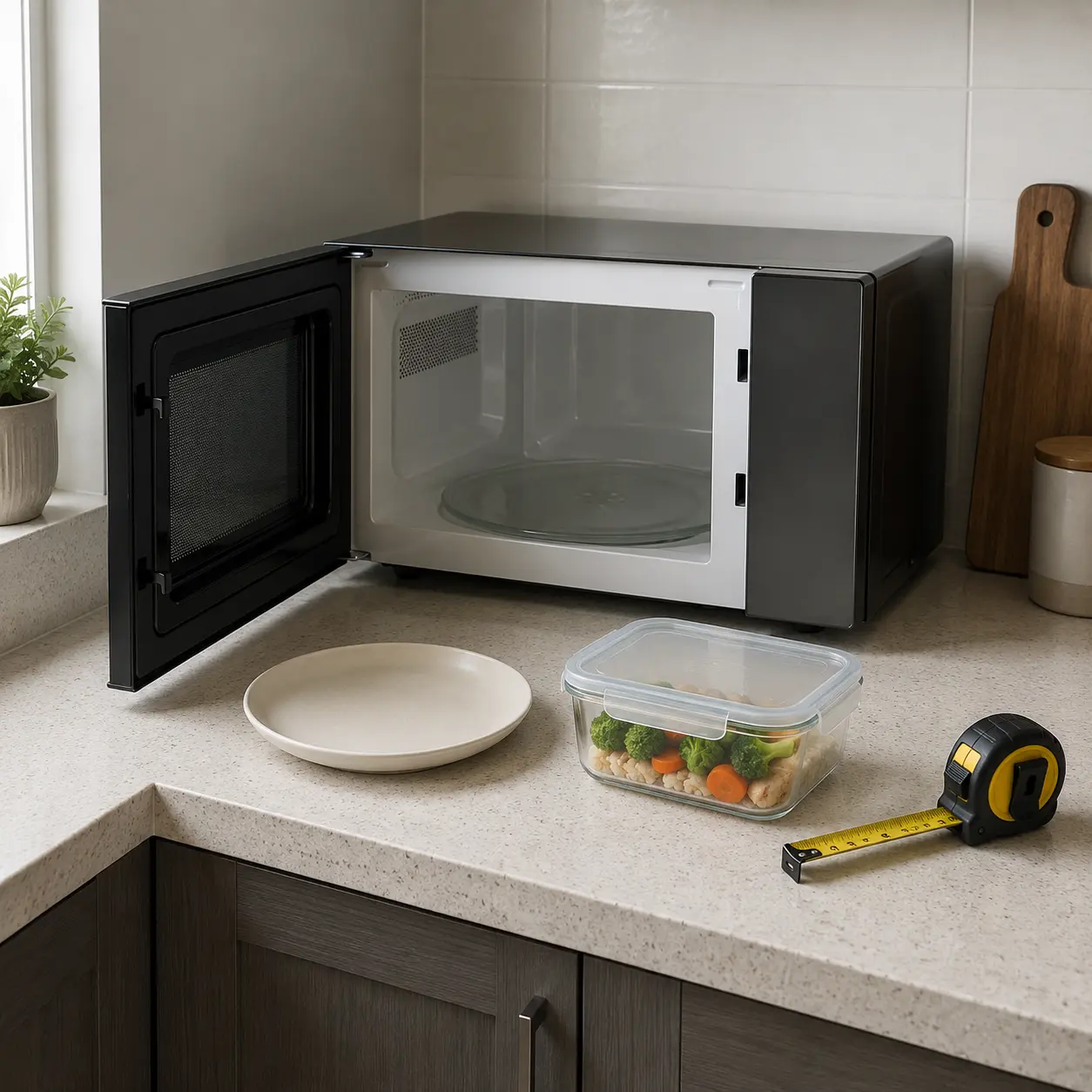
Litres are useful, but they do not tell the full story. Plate size, turntable diameter, interior height and door opening all matter.
Check internal dimensions before buying.
Buying Too Small For Normal Plates
A compact microwave may save space, but it may not fit larger dinner plates or rectangular dishes.
Measure your plates and containers before choosing.
Assuming Grill Means Oven Results
A grill microwave can add browning where supported, but it may not perform like a full oven or dedicated grill.
Choose it for extra flexibility, not as a guaranteed oven replacement.
Ignoring Ventilation Space
Microwaves need suitable ventilation. Placing one too tightly in a gap can be unsafe or unsuitable.
Always follow the placement guidance.
Using Unsuitable Containers
Not every container is microwave safe. Metal, foil, certain plastics and sealed containers can be unsafe or unsuitable.
Always check container guidance before use.
Overlooking Cleaning
Food splashes can build up quickly. If the interior is awkward to wipe, the microwave may become unpleasant to use.
Check cleaning access and removable parts.
Choosing Overcomplicated Controls
Lots of programmes can look useful, but they may be annoying if you only want quick reheating.
Choose controls that match your routine.
Forgetting Door Clearance
The microwave may fit on the worktop but still be awkward if the door cannot open fully.
Check door swing and surrounding space.
Safety And Suitability Caveats
Microwave Ovens should be used only as intended and in line with the manufacturer’s instructions. They involve electricity, heat, steam, hot food, hot containers and microwave energy, so correct use matters.
Use microwave safe containers only. Do not use metal, foil or unsuitable materials unless the product guidance clearly supports a specific use. Do not heat sealed containers, as pressure can build up.
Take care when heating liquids, as they can become very hot and may boil or splash unexpectedly. Stir food where suitable, allow standing time when required and check food is heated properly before eating.
Keep vents clear and place the microwave according to the product guidance. Do not use a damaged microwave, damaged door seal, faulty plug or appliance that appears unsafe. Do not modify, dismantle or attempt to repair a microwave oven.
Always check the individual product page for capacity, wattage, functions, controls, ventilation needs, cleaning guidance, electrical information and intended use before buying.
Maintenance, Storage And Lifespan Considerations
Microwave ovens need regular cleaning to stay practical. Wipe spills and splashes quickly, clean the turntable or flatbed area as instructed and keep the door seals clean.
If the microwave has a grill element, take extra care when cleaning around it and follow the product guidance. Do not use abrasive cleaners unless the instructions allow them.
Keep vents clear of dust and obstruction. Make sure the appliance is placed on a stable surface with the required ventilation space.
The lifespan of a microwave oven depends on model, frequency of use, cleaning, ventilation, door condition and how carefully it is handled.
How To Compare Models Efficiently
- Decide whether you need solo, grill or combination cooking.
- Measure the space where the microwave will sit.
- Check external dimensions and ventilation needs.
- Check internal capacity and plate size.
- Compare wattage and power settings.
- Choose turntable or flatbed design.
- Review controls and preset programmes.
- Check cleaning access and interior finish.
- Consider door opening, noise and display features.
- Read the individual product page before buying.
Summary Buyer Decision Checklist
Before buying Microwave Ovens, check the following:
| Buying Check | Why It Matters |
|---|---|
| Microwave type | Solo, grill and combination models suit different routines |
| Capacity | Should match plates, bowls and household needs |
| Internal dimensions | More useful than litres alone |
| Wattage | Affects heating and cooking times |
| Power settings | Useful for defrosting and gentler heating |
| Turntable or flatbed | Affects usable space and cleaning |
| Controls | Should be easy for daily use |
| Preset programmes | Helpful only if you will use them |
| Cleaning guidance | Food splashes need regular cleaning |
| Ventilation space | Important for safe placement |
| Door clearance | Affects kitchen usability |
| Product page details | Specifications vary by model |
Frequently Asked Questions
For everyday reheating and defrosting, a solo microwave is often enough. If you want browning, a grill microwave may be useful. If you want more cooking flexibility, a combination microwave may be worth comparing.
The right size depends on your plates, bowls, containers and household needs. Check litre capacity, but also check internal dimensions and turntable size before buying.
A flatbed microwave can offer more usable internal space and may be easier to wipe. A turntable microwave is common and familiar. The better choice depends on your containers, cleaning preference and model details.
Wattage is the microwave output power. It can affect how quickly food heats or cooks. Food packet instructions may need adjusting depending on the microwave wattage.
A grill microwave can be useful if you want some browning or finishing where supported. It may not replace a full oven or dedicated grill, so check expectations carefully.
A combination microwave may combine microwave heating with grill or convection style cooking where included. It can add flexibility, but it may be larger and more complex than a solo microwave.
Usually no. Metal and foil can be unsafe unless the product guidance clearly supports a specific accessory or mode. Always follow the manufacturer’s instructions.
Check external dimensions, ventilation space, door clearance and internal capacity. A compact microwave may save space, but it still needs to fit your plates and containers.
Cleaning ease varies by model. Removable turntables, flatbed interiors and smooth surfaces can help. Wipe splashes quickly and follow the product cleaning guidance.
Check cabinet dimensions, ventilation requirements, fitting method, power connection and whether the microwave is designed for built in installation. Do not use a freestanding microwave as built in unless the product guidance supports it.