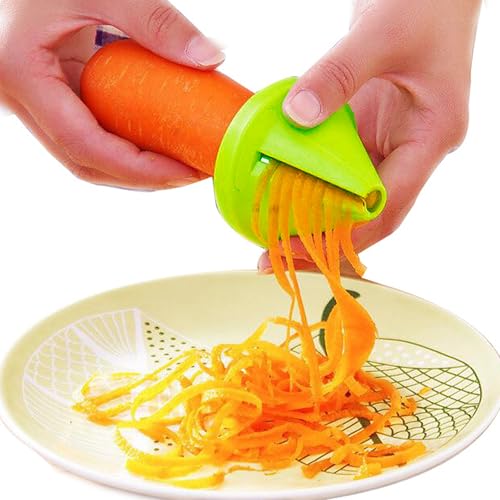
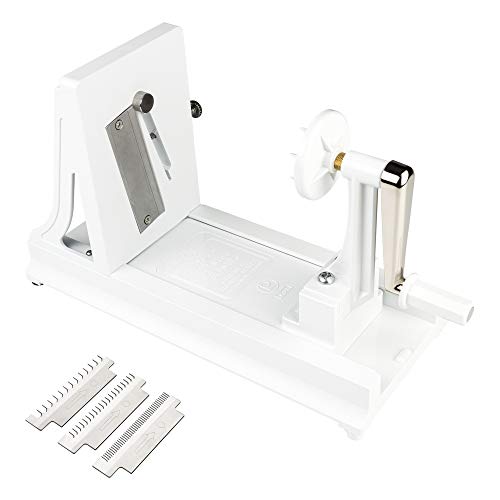
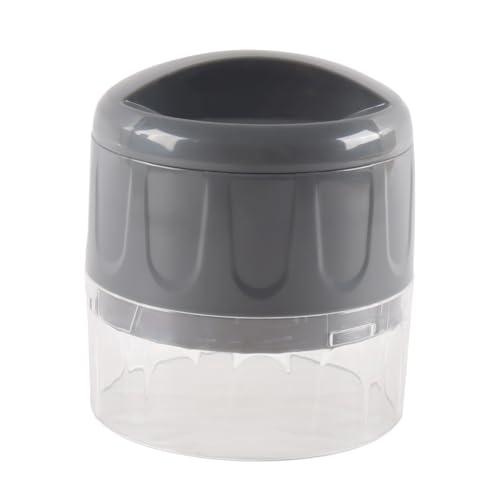
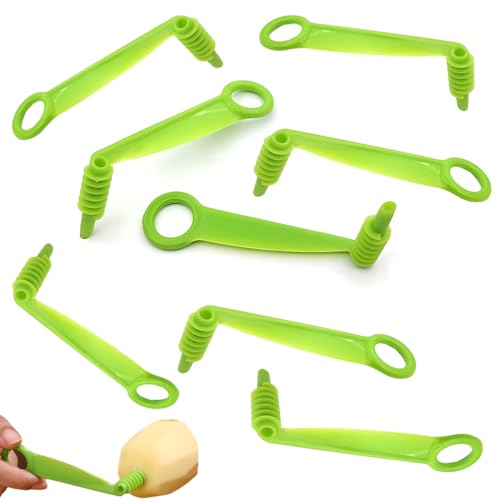
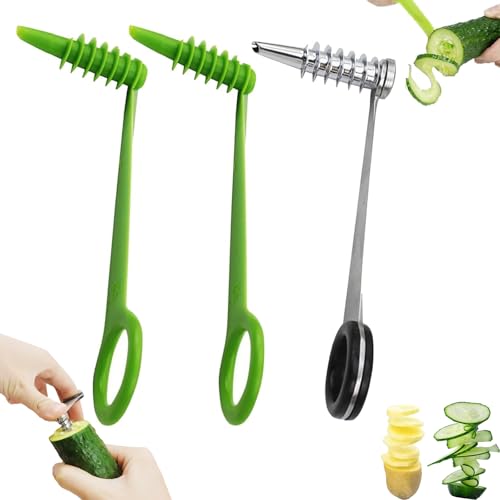
Spiralisers are kitchen tools designed to turn vegetables and some fruits into ribbons, curls or noodle style strands. They are ideal for anyone who wants to prepare courgette noodles, carrot ribbons, cucumber spirals, salad toppings, stir fry vegetables or more creative homemade meals with less knife work.
A good spiraliser can make healthy food prep feel quicker and more interesting, especially if you enjoy colourful salads, lower carb meal ideas or vegetable based side dishes. The right choice depends on whether you want a manual or electric spiraliser, blade options, stability, cleaning ease, storage space and the foods you plan to use most often.
Start by thinking about how often you will use it. If you only want to make occasional courgette noodles or carrot ribbons, a simple handheld spiraliser may be enough. If you regularly prepare larger portions or want several cutting styles, a countertop or electric spiraliser may be more practical.
Also consider the size and shape of the vegetables you use. Courgettes, carrots, cucumbers, potatoes, sweet potatoes and apples may all need different blade styles or holder designs depending on the product. Always check the individual product details before buying so you know what foods the spiraliser is designed to handle.
What Matters Most When Comparing Spiralisers
The main things to compare are spiraliser type, blade options, food holder design, stability, cutting thickness, ease of cleaning, safety features, storage size and whether replacement or spare blades are available.
Blade choice matters because different blades create different results. Some spiralisers make thin noodle style strands, while others create wider ribbons or thicker curls. If you want variety in salads, stir fries and vegetable pasta style meals, a model with more blade options may be useful.
Handheld, Countertop or Electric Spiraliser?
A handheld spiraliser is usually compact, simple and easy to store. It can be a good choice for occasional use, smaller kitchens and quick single portions.
A countertop spiraliser usually gives more stability and control. It may suit larger vegetables, repeated use and people who want several cutting styles from one tool.
An electric spiraliser can reduce manual effort and may be easier if you prepare larger amounts of vegetables. The trade off is that it usually needs more storage space and may take longer to clean than a simple handheld model.
Spiraliser or Julienne Peeler?
A spiraliser is usually better if you want longer, more even vegetable noodles or curls. It can make food look more decorative and may be more practical when preparing larger portions.
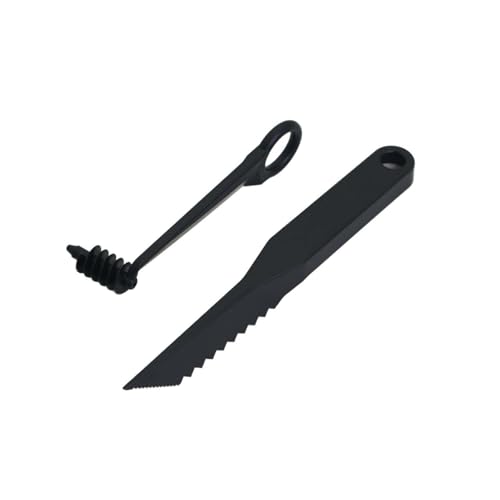
A julienne peeler is simpler, smaller and easier to store. It can make thin strips from suitable vegetables, but it may take more hand effort and may not create the same long spiral shapes.
The trade off is storage versus results. A julienne peeler is compact and quick for small jobs, while a spiraliser gives more consistent vegetable spirals and more creative presentation.
Vegetables, Fruit and Recipe Ideas
Spiralisers are often used with courgettes, carrots, cucumber, beetroot, sweet potatoes, potatoes and apples, depending on the product design. Firmer vegetables usually hold their shape better, while very soft foods may not spiralise as cleanly.
Common uses include courgette noodles, stir fry vegetables, salad ribbons, coleslaw style mixes, curly fries, garnish toppings and colourful vegetable bowls. If you want to use harder vegetables such as sweet potatoes, check that the spiraliser is suitable before buying.
Blades, Safety and Control
Spiraliser blades are sharp, so safety should be part of the buying decision. Look at how the food is held, whether there is a finger guard or pusher, and how easy it is to change or store the blades safely.
A stable base can make a big difference with countertop models. Suction feet or a firm grip can help keep the spiraliser steady while turning vegetables. If the tool moves around too much, it can become frustrating and harder to control.
Cleaning, Storage and Everyday Use
A good spiraliser should be easy to take apart and clean. Vegetable pieces can get trapped around the blades and holder, so removable parts and simple access are useful.
Storage also matters. Handheld spiralisers are usually easy to fit in a drawer, while larger countertop or electric models need more cupboard space. If the spiraliser includes several blades, check whether there is a safe storage section to keep them together.
Find a Spiraliser That Suits Your Kitchen
Browse our range of spiralisers and compare options by type, blade choice, stability, cleaning ease and storage size. Choose a spiraliser that suits your kitchen, your cooking style and the vegetable dishes you want to prepare more easily.
Spiralisers FAQs
What is a spiraliser used for?
A spiraliser is used to cut vegetables or some fruits into spirals, ribbons or noodle style strands. It is commonly used for courgette noodles, carrot ribbons, cucumber spirals, salads and vegetable side dishes.
What should I check before buying a spiraliser?
Check the spiraliser type, blade options, food holder design, stability, cleaning method, storage size and whether it suits the vegetables or fruits you want to prepare.
Is a handheld spiraliser worth buying?
A handheld spiraliser is worth considering if you want a compact tool for occasional use or small portions. For larger batches, a countertop or electric model may be easier.
Is an electric spiraliser better than a manual one?
An electric spiraliser can reduce manual effort and may suit larger amounts of food. A manual spiraliser is usually simpler, easier to store and often enough for everyday home use.
What vegetables can you use in a spiraliser?
Many spiralisers can be used with courgettes, carrots, cucumber, potatoes, sweet potatoes, beetroot and similar firm vegetables, depending on the product. Always check the product details before use.
Can spiralisers make courgette noodles?
Yes, spiralisers are commonly used to make courgette noodles. Choose a blade that gives the thickness you prefer and check whether the model holds courgettes securely.
Are spiralisers easy to clean?
Cleaning ease varies by model. Look for removable parts and accessible blades because vegetable pieces can get trapped around the cutting area.
Are spiraliser blades sharp?
Yes, spiraliser blades are sharp and should be handled carefully. Use the food holder or guard where supplied and store spare blades safely.
Do spiralisers take up much space?
Handheld spiralisers take up very little space, while countertop and electric spiralisers need more cupboard or worktop storage. Check the dimensions before buying.
Can a spiraliser replace a food processor?
A spiraliser does a specific job by making spirals, ribbons or noodle style cuts. A food processor is better for chopping, slicing, grating and mixing, so the two tools serve different purposes.
Are spiralisers good for meal prep?
Spiralisers can be useful for meal prep if you regularly prepare salads, stir fries or vegetable based dishes. Choose a model that is quick to use, easy to clean and suitable for the foods you prepare most often.
Can children use spiralisers?
Children should only use spiralisers with suitable adult supervision because the blades are sharp. Adults should handle blade changes, cleaning and any awkward or hard vegetables.
Heading outdoors this winter? Take a look at our Outdoor Clothing.
Manage Consent
To provide the best experiences, we use technologies like cookies to store and/or access device information. Consenting to these technologies will allow us to process data such as browsing behaviour or unique IDs on this site. Not consenting or withdrawing consent, may adversely affect certain features and functions.
Functional
Always active
The technical storage or access is strictly necessary for the legitimate purpose of enabling the use of a specific service explicitly requested by the subscriber or user, or for the sole purpose of carrying out the transmission of a communication over an electronic communications network.
Preferences
The technical storage or access is necessary for the legitimate purpose of storing preferences that are not requested by the subscriber or user.
Statistics
The technical storage or access that is used exclusively for statistical purposes.The technical storage or access that is used exclusively for anonymous statistical purposes. Without a subpoena, voluntary compliance on the part of your Internet Service Provider, or additional records from a third party, information stored or retrieved for this purpose alone cannot usually be used to identify you.
Marketing
The technical storage or access is required to create user profiles to send advertising, or to track the user on a website or across several websites for similar marketing purposes.